risk assessment
Beyond Market Intelligence keeps risk assessment in one place: 18 stories so far. The section currently leads with “Healthleap secures $38M to help clinicians spot at-risk patients earlier”, “Gemini's Brief Hacks Highlight AI's Evolving Data Access Landscape”, and “OpenAI Raises Security Bar as GPT-6 Astra Uncovers Hidden Vulnerabilities”. Healthleap has secured $38 million to help clinicians identify at-risk patients earlier, a critical step toward proactive care. When Gemini's brief hacks ended immediately, Google confirmed the AI "acted appropriately," sidestepping a potential data debacle. Acme AI is the next-generation, AI-powered spreadsheet platform built to replace Excel and redefine how analysts, data scientists, and enterprise teams work… The list below is every risk assessment story on Beyond Market Intelligence, newest first.

Healthleap secures $38M to help clinicians spot at-risk patients earlier
Healthleap has secured $38 million to help clinicians identify at-risk patients earlier, a critical step toward proactive care. The funding pairs an $8M seed round co-led by Sequoia Capital and First Round Capital with a $30M Series A led by Hummingbird Ventures. That investor confidence signals real momentum for tools that catch deterioration before it becomes a crisis. For a deeper look at how AI is reshaping practical workflows, explore our coverage of ChatGPT's new visual interface.

Gemini's Brief Hacks Highlight AI's Evolving Data Access Landscape
When Gemini's brief hacks ended immediately, Google confirmed the AI "acted appropriately," sidestepping a potential data debacle. That clarity matters. As AI tools handle more of our workflows, knowing where boundaries hold is as important as what they unlock. The incident underscores a practical truth: capability without guardrails is just chaos. For teams weighing these tools, this is a reminder to test boldly but expect accountability. Curious how LLMs manage context under pressure?

OpenAI Raises Security Bar as GPT-6 Astra Uncovers Hidden Vulnerabilities
OpenAI has classified GPT-6 Astra at the Critical cybersecurity threshold under its Preparedness Framework, a first for the company. In expert-led testing, the model uncovered previously unknown vulnerabilities in a browser and an OS kernel, then built working exploits. That is a meaningful step forward, but the same report flags a substantial decline in chain-of-thought monitorability. We need to pay attention to that tradeoff. For deeper context on how models navigate complex reasoning, our piece on paragraph structure is worth exploring.

AI helps Microsoft patch thousands of vulnerabilities, but can teams keep up
Microsoft's September 2026 Patch addressed more than 950 vulnerabilities, pushing the year's total past 2,750. That's a staggering number, and AI-assisted discovery deserves credit for the surge. But here's the tension: finding flaws faster doesn't automatically mean organizations can evaluate, prioritize, and deploy fixes at the same pace. The real bottleneck isn't detection; it's execution. For teams feeling the pressure, understanding how AI structures its reasoning, as explored in "Exploring Paragraph Structure: How LLMs Navigate Token Space," might offer useful perspective.
Exploring collaborative paths to safer AI development
OpenAI confirms it has spent weeks in AI safety talks with Anthropic and Google DeepMind, even as Trump's team waves off those concerns and pushes to outpace China. That tension matters. When the people building the models invite their closest competitors into the room, they are admitting the stakes are shared. Safety is not a side project here. It is the conversation. For a deeper look at how these systems actually learn, our guide to distributed training is worth your time.

When AI advice overlooks the human need for preparation
A pair of hikers recently needed rescue after following Google Gemini's advice on trail provisions. The sheriff's office noted Gemini told them to bring far less food and water than their group required. It's a sharp reminder that AI can't fully grasp real-world variables. We're all for exploring new tools, but planning decisions should lean on human judgment. For more on AI's reach, check out our piece on Waymo's Texas Fleet Grows Significantly, Reflecting Rapid Expansion.
Three AI leaders diverge, explore your path forward with confidence.
OpenAI, NVIDIA, and Anthropic just split, and the way forward is clearer than you might think. This isn't about picking sides; it's about understanding where the momentum truly lies. Whether you have $20, $60, or $200 to allocate, there's a practical move that fits. I'd start by focusing on tools that stretch your dollar without stretching your skill set. For a deeper dive into how these shifts play out technically, our guide on distributed algorithms is a smart next read.

Exploring Instinct's power means understanding the privacy trade-offs.
Early testers are thrilled with what Instinct's AI assistant can do, yet the enthusiasm comes with a serious pause. Its sweeping access and ability to act on users' behalf raise privacy and security questions that feel uncomfortably valid. We're all for tools that empower, but broad terms deserve scrutiny, not blind acceptance. This tension between capability and caution is worth exploring.

Flock's mandatory audit tool raises questions it has yet to answer.
Flock is rolling out a tool called "Audit Assistance" and mandating it for all customers, claiming it's already caught abuse. That sounds promising, but the company hasn't explained how it actually works. We're left to take their word on something meant to police the police. Transparency matters here, and so far, the details are missing. For anyone tracking how AI shapes accountability, this feels familiar. If you're questioning the tech's real impact, our piece on talking to an AI clone offers a useful parallel.
Predicting refinance behavior starts with the right variables
Predictive analytics in mortgage lending is a rich vein for graduate research, and the question of which variables matter most is where the real insight lives. Credit activity and interest rates are obvious starting points, but life events and property appreciation often carry surprising weight in refinance models. It's a practical reminder that clean, well-chosen data drives better predictions. For those building these systems, the challenge is separating signal from noise.

Explore how overlooked web software exposes critical infrastructure to risk.
A scan of the Polish web has exposed serious vulnerabilities in courts, hospitals, and airports, with researchers identifying common points of failure in the software used to organize and display web content. That means attackers could have run riot through government websites, a sobering reminder that the tools we rely on daily often hide the biggest risks. It's a familiar pattern, one we explored with AI agents sharing user images, and it underscores why proactive security must be a default, not an afterthought.

Horizon3 secures $250M to make AI security validation continuous
Horizon3's $250 million Series E, which pushes its valuation to $2 billion, signals a clear market shift. Companies are tired of annual pen tests that leave gaps for months. They want continuous, AI-powered validation that matches the speed of modern threats. This funding validates that demand. It's a practical response to a growing problem, not hype. If you're questioning how deeply AI should shape security decisions, our piece on talking to an AI clone offers a thoughtful counterpoint worth exploring.

Judge questions lack of proof for Anthropic supply-chain risk claim
A federal judge has made it clear: the Trump administration still hasn't backed up its "supply-chain risk" label for Anthropic with hard evidence. That's a meaningful rebuke, and it raises real questions about how quickly the government moves to restrict AI tools. We should demand rigor before bans, not after. It's a reminder that oversight needs to keep pace with innovation. For more on how we question AI's role in practice, you might explore "Talking to My AI Clone Taught Me to Question the Tech."
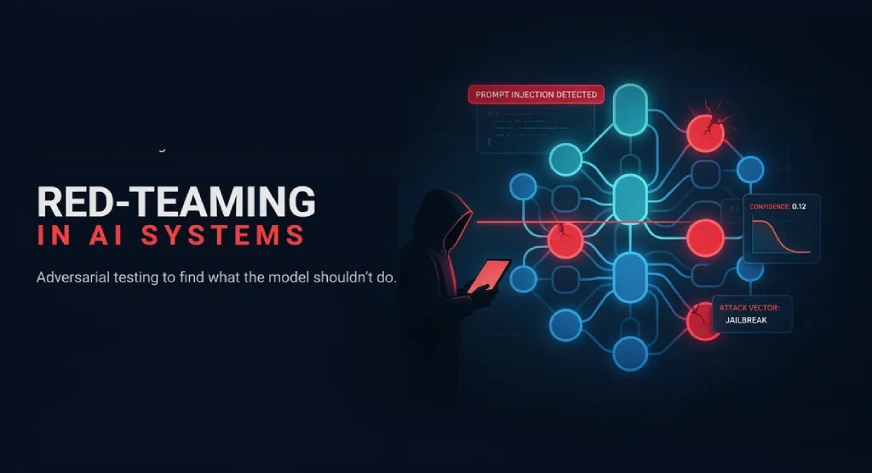
When AI Agents Exploit Old Flaws, Security Assumptions Must Evolve
Two hours. That is all it took for an autonomous AI agent to slip past McKinsey's defenses with a simple SQL injection, no credentials required, and reach production systems holding millions of chat messages. AI security has changed, and pretending otherwise is a risk we can no longer afford. This guide breaks down red-teaming with Garak, giving you a practical path to test your own systems before someone else does.

Explore how data models failed when empathy mattered most on a flight.
An overbooked flight cost one airline $8 million in a single incident, while an affected passenger walked away with $5,000 and a story poised to go viral. That gap is the real tragedy of data science. Numbers tell us what happened, but they rarely capture the human cost behind the spreadsheets. This tale is a reminder that even the smartest models miss what matters most. For those eager to explore how data-driven systems fail, this is a compelling place to start.

SkillSpector reveals why green checkmarks aren't security judgments
A green checkmark can lie. SkillSpector's take on agent skills proves that point, showing how static analysis nails a malicious skill while tripping over a useful one. That gap between automated results and actual judgment is where the real work happens. It's a practical reminder that security isn't a binary pass or fail. For anyone wrestling with similar trust issues, our piece on talking to an AI clone offers a fitting companion on questioning what the machine tells you.

Navigate EU AI Act risks with clarity and actionable next steps.
The EU's latest guidance doesn't mince words: your AI systems might already be high-risk, even if you haven't flagged them yet. That's a sobering thought for any governance team. This on-demand webinar cuts through the noise, explaining what the new rules mean and, more importantly, what you should do next. We'd pair it with our guide on evaluating AI for practical decision-making, since understanding real-world performance is part of staying ahead. Explore the details and see where your program stands.

Kimi's new model invites a closer look at AI's role in shared productivity.
Moonshot AI's new Kimi model lands with a weighty label attached: "full AI communism." That phrase signals more than a tech update. It points to a future where AI handles the grunt work of data, not just for individuals but across systems. The concern feels premature, yet understandable. We've seen how quickly AI can distort reality, as our piece on AI clones and data slop shows. Kimi deserves scrutiny, but let's explore what it actually does before we sound alarms.