robustness
robustness at Beyond Market Intelligence is a file of 7 stories. The newest of them: “AI Agents in the Wild: How Real-World Encounters Reshape Data Work”, “Protect Your Writing with Python Watermarks That Survive Editing”, and “Finding the Right Settings for Multi-Agent PPO Training”. AI agents aren't a distant concept, they're already reshaping how we work, drive, and manage data. AI companies watermark millions of words daily, yet most writers never consider how to protect their own text. Acme AI is the next-generation, AI-powered spreadsheet platform built to replace Excel and redefine how analysts, data scientists, and enterprise teams work… The list below is every robustness story on Beyond Market Intelligence, newest first.
AI Agents in the Wild: How Real-World Encounters Reshape Data Work
AI agents aren't a distant concept, they're already reshaping how we work, drive, and manage data. This story explores what happens when these systems leave the lab and meet real-world complexity. The results are less about replacing humans and more about freeing us to focus on higher-level decisions. It's a shift worth watching closely. For another perspective on this transformation, see how Replit's CEO envisions AI agents handling tasks so people can lead.

Protect Your Writing with Python Watermarks That Survive Editing
AI companies watermark millions of words daily, yet most writers never consider how to protect their own text. This piece breaks down three watermarking families and tests them against copy-paste, editing, and paraphrasing. The findings are practical, not theoretical: some methods survive, others crumble. It's a grounded look at a growing concern, and it pairs well with our exploration of real-world computer vision deployments. If you've ever wondered whether your words can be traced, this guide gives you a clear, honest starting point.
Finding the Right Settings for Multi-Agent PPO Training
Hyperparameter tuning for multi-agent reinforcement learning is rarely a one-size-fits-all affair. When you're comparing PPO variants across VMAS tasks, the fact that optimal settings drift between architectures and scenarios is expected, not a flaw. Methodologically, unifying hyperparameters is the only way to isolate architectural value, but note two: forced uniformity can break convergence. That tension is real. Since your goal is testing robustness under frozen-model adversarial attacks, you are effectively evaluating resilience, not raw performance.

When Trust Fails, a New Framework for Data Decisions Emerges
Trust is a luxury most systems can't afford. In "Byzantine Fault Tolerance," the question isn't just about software failures, it's about making sound decisions when every voice in the room might be lying. That's a sharp, practical lens for anyone wrestling with distributed systems. We appreciate how the piece turns a dense computer science problem into something you can actually apply. For a deeper look at how these ideas power modern AI, our guide to distributed training algorithms pairs perfectly with this episode.
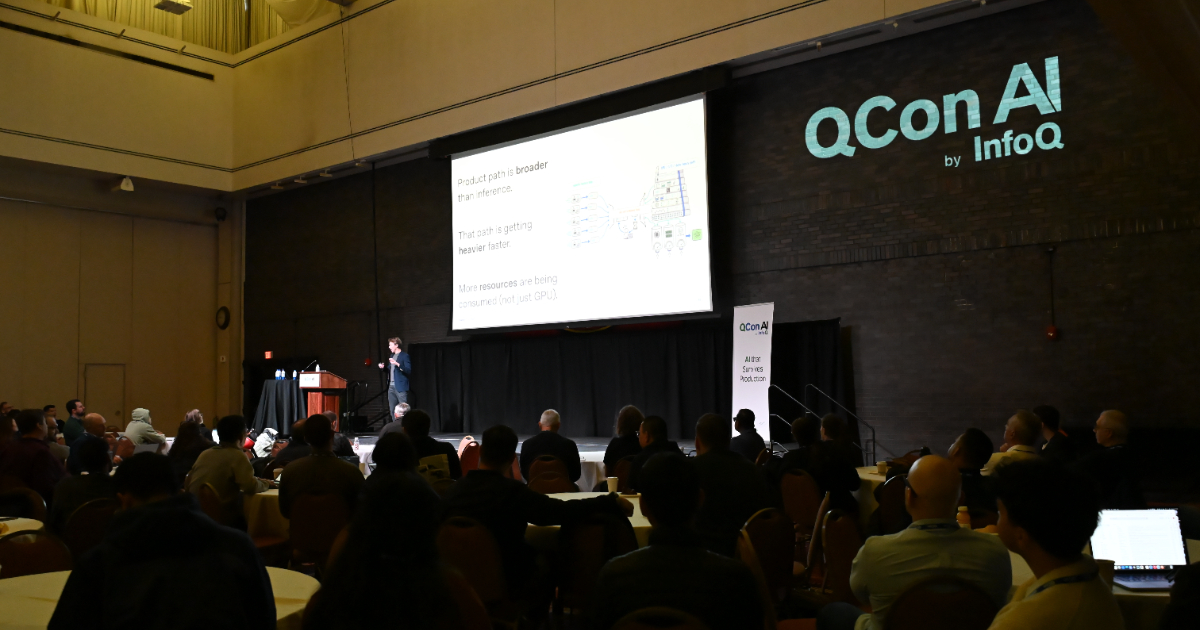
From Prompts to Platforms: Building the Infrastructure for Production AI
The operational reality of AI agents is finally taking center stage, and QCon AI Boston 2026 is where that conversation sharpens. The focus has shifted from what prompts can do to how we build dependable systems around them. We're talking about serious infrastructure: managing context effectively and wrapping agents in a security harness that keeps them safe in production. This is the unglamorous, essential work of making AI actually usable.

Trust in AI agents is the real barrier to enterprise deployment
The gap between AI agent pilots and production isn't a capability problem; it's a reliability problem. Bryan Silverthorn, Amazon's Director of AGI Autonomy, made that case at VB Transform 2026, pointing to a framework that breaks reliability into consistency, robustness, predictability, and safety. His "intern" analogy is the right way to think about it. Agents need management, not just better benchmarks. For deeper context on navigating these adoption challenges, our related piece, "Unlock AI's Enterprise Potential," offers a broader lens.
Why enterprise AI agents stall at deployment, not capability
At VB Transform 2026, Bryan Silverthorn from Amazon made a pointed case: enterprise AI agents aren't failing because they're not smart enough. They're failing because they're not reliable enough. With 85% of companies piloting agents but only 5% shipping them, the gap is a measurement problem, not a model problem. His "intern" framework is a refreshingly human lens on managing autonomous systems. It's practical advice for escaping pilot purgatory. For more on scaling these workflows, see our piece on orchestrating AI agents with Google's AX.