ROI
6 stories filed under ROI on Beyond Market Intelligence. The newest of them: “When you shift marketing spend, does your MMM finally tell the truth?”, “Rippling launches a tool to track what teams actually spend on AI”, and “The talent gap in AI narrows to just 2,000 engineers who deliver results.”. A shift in marketing spend timing can expose an MMM's blind spots, because the model only learns from data that never held the right answers. Rippling spent millions on AI in months before realizing it had no idea where the money went. Acme AI is the next-generation, AI-powered spreadsheet platform built to replace Excel and redefine how analysts, data scientists, and enterprise teams work… The list below is every ROI story on Beyond Market Intelligence, newest first.
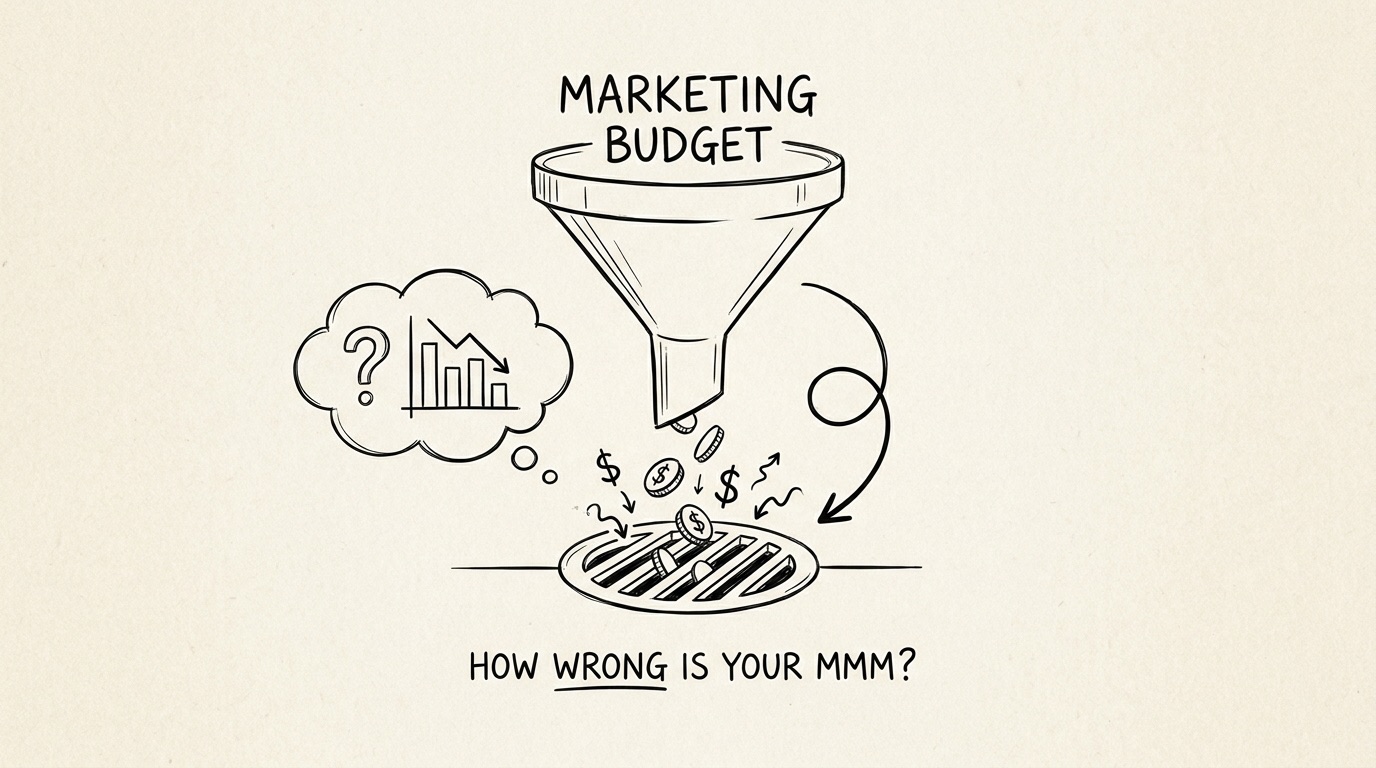
When you shift marketing spend, does your MMM finally tell the truth?
A shift in marketing spend timing can expose an MMM's blind spots, because the model only learns from data that never held the right answers. Testing when you spend, not just how much, reveals whether the model can finally tell the truth. It is a practical challenge to a tool many trust too easily. For deeper coverage on AI-driven analysis, see "Beyond the Search Box: Defining Real Research in AutoResearch."

Rippling launches a tool to track what teams actually spend on AI
Rippling spent millions on AI in months before realizing it had no idea where the money went. That wake-up call led to AI Spend Console, a tool that tracks individual and team AI spending. It's a practical response to an expensive blind spot. For anyone who has wondered whether their AI tools are worth the cost, this product offers clarity.

The talent gap in AI narrows to just 2,000 engineers who deliver results.
Two thousand engineers. That's the entire talent pool equipped to turn enterprise AI investments into tangible returns, according to a new study. As organizations scramble to deploy AI at scale, the forward-deployed engineer has become the industry's most sought-after role. We see this as a healthy correction. It signals a move past hype and toward practical implementation, where understanding user needs matters as much as model architecture.

Unlock AI's true ROI by empowering teams, not just individuals
Atlassian's research points to a truth most organizations haven't caught yet: AI delivers value at the team level, not just for individuals. Dr. Molly Sands and her team found that while 89% of executives see individual speed improving, only 6% can name clear ROI. That gap is telling. The teams that succeed share context, redesign workflows, and build a learning culture. It's a practical, human-centered approach. For more on questioning AI's limits, see "Talking to My AI Clone Taught Me to Question the Tech."
Stop optimizing individuals and start designing AI for teams
Most companies treat AI as a personal productivity hack. Atlassian's Dr. Molly Sands argues that's the wrong lens. Her team's research found 89% of executives see individual speed improving, yet only 6% can point to clear ROI. That gap isn't a technology problem. It's a collaboration problem. The winning 14% of teams shared context, redesigned workflows, and built cultures that encouraged experimentation. AI doesn't create new management issues; it exposes old ones. That's a bracing, useful insight for any leader.

Optimizing AI costs without sacrificing accuracy is now within reach.
Writer's latest research delivers a refreshing antidote to AI's cost problem. The team didn't touch the model; they fixed the harness around it. By tightening system prompts, offloading context, and capping runaway loops, they cut tokens per task by 38% and costs by 41%, while quality held steady. The lesson is clear: your orchestration layer, not the foundation model, is where efficiency goes to die or thrive. It's a practical win for teams ready to stop bleeding budgets.