SaaS
7 stories filed under SaaS on Beyond Market Intelligence. The newest of them: “Discover how AI transforms video search across massive datasets.”, “Your CRM now lives inside Claude, transforming how you manage relationships.”, and “Omilia secures $67M to expand AI-powered customer support solutions”. Clipto just crossed $250 million in valuation, and it's easy to see why. Salesforce just told the world its own screens are optional. Acme AI is the next-generation, AI-powered spreadsheet platform built to replace Excel and redefine how analysts, data scientists, and enterprise teams work… The list below is every SaaS story on Beyond Market Intelligence, newest first.

Discover how AI transforms video search across massive datasets.
Clipto just crossed $250 million in valuation, and it's easy to see why. The three-year-old startup hit $15 million in annual recurring revenue and turned profitable before raising another $15 million. That's a discipline most founders skip. It proves you can build sustainable AI tools without burning through capital first. If you're curious how such systems handle massive video data, our piece on real-world computer vision deployments pairs well with this story.

Your CRM now lives inside Claude, transforming how you manage relationships.
Salesforce just told the world its own screens are optional. The company spent 27 years perfecting the CRM interface, then spent Tuesday arguing sellers should live inside Claude instead. That takes nerve, and it's also the smartest thing they've done in years. The value was never the buttons; it's the data and workflow logic buried underneath. By handing that to Anthropic's model, they're betting on usage over seats. For anyone tired of clicking through a deal pipeline, that's not a threat. It's relief.

Omilia secures $67M to expand AI-powered customer support solutions
Omilia has raised $67 million in a Series B round, its second fundraise since 2020, and the numbers tell a compelling story. The company's annual recurring revenue has grown 10x to $60 million in that span. That kind of growth signals real momentum in customer support, where AI is moving from novelty to necessity. We're watching a platform scale with purpose, not hype.

The browser is the new frontline. Why security hasn't caught up.
The browser has become the enterprise's central operating environment, yet most security architecture still guards the device instead of the session where work, and attacks, actually happen. That gap is growing urgent as AI-assisted hacking accelerates. CloudMosa's Shioupyn Shen argues for a fundamental shift: isolate execution in the cloud, keeping risky code away from endpoints entirely. It's a bet on prevention over detection, and one worth exploring. For more on how AI reshapes foundational tech, see our piece on how LLMs navigate token space.
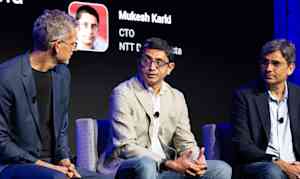
Beyond identity: securing enterprise AI agents for real-world resilience
Shared credentials are a known risk, but at VB Transform 2026, NTT DATA AIVista and Snowflake made the case that fixing identity alone won't secure enterprise AI agents. Mukesh Karki and Mayank Upadhyay argued for action-level authorization and tamper-resistant audit trails built into every interaction. That provability, as Karki put it, is your license to operate. It's a practical framework for scaling autonomous systems safely, and it pairs well with our coverage of recent agentic security incidents.

Explore the AI Stage at TechCrunch Disrupt 2026 with Google for Startups
The AI Stage at TechCrunch Disrupt 2026, presented by Google for Startups, cuts through the noise to tackle what actually matters: the SaaS reckoning and the widening agent security gap. We appreciate a program that moves past hype and toward the practical friction points teams face today. If you have ever questioned how deeply we should trust these systems, our piece on talking to an AI clone offers a timely counterpoint. Expect a focused, honest conversation about building responsibly.
Choose the Right Architecture for Your Multi-Tenant Data Platform
Choosing between fine-tuning and a shared RAG layer isn't about sophistication; it's about where truth lives. Your instinct on Option 1 is sound. Fine-tuning is costly and slow to update, while a curated global knowledge base gives you control over accuracy and citations. For Sri Lankan context, pair a global RAG with your user-specific stores. This scales cleanly and keeps sensitive data isolated. For deeper architectural trade-offs, our piece on "Exploring Paragraph Structure" offers useful context on how LLMs navigate token spaces.