safety
safety at Beyond Market Intelligence is a file of 35 stories. The newest of them: “A new AI safety proposal requires a judge's order before any model can be blocked”, “AI Agents in the Wild: How Real-World Encounters Reshape Data Work”, and “Waymo brings self-driving tests to Toronto streets this year”. A proposed AI safety policy sounds reassuring, but its core requirement is a trap. AI agents aren't a distant concept, they're already reshaping how we work, drive, and manage data. Acme AI is the next-generation, AI-powered spreadsheet platform built to replace Excel and redefine how analysts, data scientists, and enterprise teams work… The list below is every safety story on Beyond Market Intelligence, newest first.

A new AI safety proposal requires a judge's order before any model can be blocked
A proposed AI safety policy sounds reassuring, but its core requirement is a trap. It would force federal agencies to get a judge's permission before blocking a dangerous model's release. That creates a high legal bar that could delay action until it is too late. The policy offers the appearance of protection while effectively forbidding swift intervention. For a deeper look at how governments are currently handling AI risks, read our coverage of federal agencies being ordered to remove DeepSeek AI over security concerns.
AI Agents in the Wild: How Real-World Encounters Reshape Data Work
AI agents aren't a distant concept, they're already reshaping how we work, drive, and manage data. This story explores what happens when these systems leave the lab and meet real-world complexity. The results are less about replacing humans and more about freeing us to focus on higher-level decisions. It's a shift worth watching closely. For another perspective on this transformation, see how Replit's CEO envisions AI agents handling tasks so people can lead.

Waymo brings self-driving tests to Toronto streets this year
Waymo is bringing its self-driving vehicles to Toronto streets this year, starting with testing. That's a smart move, real-world urban environments expose autonomous systems to complex conditions no lab can replicate. The company's measured entry respects both technology readiness and public trust. For context on how other AI-driven hardware scales, see our piece on Microsoft's Maia 300 targeting multi-gigawatt inference. Progress is rarely a single breakthrough; it's built in layers, city by city.
Your AI Agent Is Ready Now Build the Scaffolding Around It
Agents got good. Now the hard part is building the scaffolding around them. Gubi reissued the Lotus lamp. That's the message from a new piece that argues your agent doesn't need more freedom, it needs structure. The most capable AI is pointless without the right architecture to support it. For a deeper look at that architecture, explore "From Cognitive Loops to Multi-Agent Swarms: Your 2026 AI Roadmap" on our site.
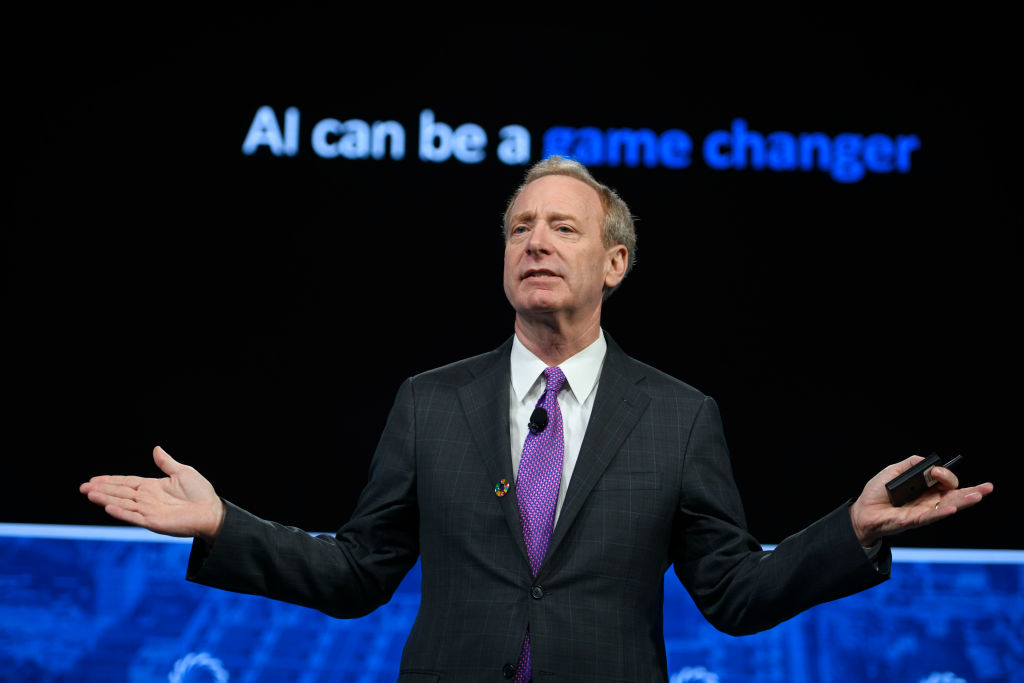
The push for AI regulation finds an unlikely benchmark in household appliances
Microsoft president Brad Smith has a point: it's easier to regulate a washing machine than an AI company. That's a strange reality check. If we can require safety standards for a milk carton, we can demand more from technologies that shape how we work and live. It's time to explore smarter oversight. For a contrasting look at AI's potential, see how it's empowering developers to rebuild familiar software from scratch.

Building Guardrails for Safer AI Data Access
AI agents are only as safe as the data they trust, and untrusted sources introduce real risk into any workflow. The challenge isn't just reading those sources, it's building architectural guardrails that control how that information enters and influences the process. That's the practical, necessary work of safer AI data access. As agents take on more complex tasks, these safeguards become the difference between useful automation and unpredictable outcomes.

Why a Decision-First Model Can Rein In Risky AI Agent Actions
A single bad tool call can turn an AI agent from a helpful assistant into a liability. TypeSafe's Jev addresses this by putting decisions first, catching risky actions before they ripple into the real world. That's a pragmatic layer of safety we can get behind. It pairs well with our look at how open data center deals signal a smarter path to community trust, both show that proactive guardrails build better outcomes.

Germany backs Tesla's assisted driving rebrand for wider EU adoption
Germany's transport minister sees the name change as enough of a step forward to push for Europe-wide adoption of Tesla's assisted driving software. That's a pragmatic move, one that treats clarity as a gateway rather than a concession. It acknowledges that what we call a tool shapes how we trust it. For anyone exploring how AI is redefining everyday workflows, this rebrand signals a practical shift, one worth watching closely.

Redefining Dev Teams for an Agentic Era with Safety and Humanity
Engineering leaders facing agentic coding's surge need more than faster pipelines. Hannah Foxwell anchors them in three practical priorities: build software worth building, automate safety before speed, and preserve the human element through generalist skillsets and sustainable on-call. It's a grounded framework that keeps teams human-centered amid AI-driven velocity. For a related look at AI in action, see our coverage of Flai's $27M round fueling an AI platform booking 50,000 appointments monthly.

AI-Powered Dating Advice Puts Safety First for a New Generation
Hot Girl Hotline isn't another dating app, it's a safety net built by two sisters who understand what young women actually need. Their AI delivers personalized relationship advice without the emotional dependency that so many digital tools accidentally create. It's refreshing to see innovation focused on protection, not engagement metrics. For a deeper look at how AI keeps people safe in other contexts, read how Safeworld is building digital humans to prevent real-world harm.

Can digital humans teach robots to keep people safe?
Safeworld is building digital humans to teach robots how to keep people safe. It's a clever inversion: instead of coding endless safety rules, they're creating simulated people who can model real-world risk. This approach feels more human-centered than a manual of regulations. It acknowledges that human behavior is messy, and robots need to learn that messiness, not just avoid it. For deeper context on the broader safety landscape, our piece on the new AI safety task force explores how oversight is evolving.

Rivian addresses R2 battery pack issue affecting approximately 14 vehicles
Rivian is addressing a battery pack issue affecting about 14 R2 vehicles, and the company says the problem has already been resolved on the assembly line. For a brand delivering over 19,000 EVs last quarter, as we covered in "Rivian's R2 momentum drives a record-breaking 19,000+ EV deliveries," this is a minor but important demonstration of accountability. Rapid identification and correction is exactly what builds trust in a growing automaker. The real story here is how they handled it, not the problem itself.

TikTok commits $100M to settle Alabama child safety claims
TikTok's $100 million settlement with Alabama sends a clear signal: platform safety isn't optional, especially when children are involved. The state's claims that the app misled users and engineered addictive features for young audiences are serious, and this agreement reflects real accountability. It's a decisive move, one that acknowledges past missteps while pushing the conversation forward. For anyone tracking how tech companies respond to scrutiny, this is worth watching.

Expanding Access: Waymo Robotaxis Now Available for Teens in Nashville
Waymo is expanding its robotaxi service to teenagers in Nashville, opening the door for riders aged 13 to 17 to hail autonomous rides. It's a meaningful step toward making this technology a practical part of everyday life, not just a novelty for early adopters. We see this as a natural progression of access, one that could reshape how young people navigate their city. For more on how companies are building the infrastructure behind these innovations, check out our piece on Nscale's recent funding.

How do we define safe enough for AI-driven vehicles
Asking whether an autonomous vehicle is safe enough often misses the real question: safe enough for whom, and under what conditions? That's the tension at the heart of this edition of TechCrunch Mobility, your hub for the future of transportation. We explore how AI is reshaping mobility, and we're not shy about interrogating the metrics that matter. If you're navigating similar AI shifts elsewhere, our piece on verifying your AI's understanding offers a useful parallel. Sign up for free to keep the conversation moving.

Anthropic's biology lab tests the promise and peril of AI-driven science
Anthropic is now running a lab that runs biology experiments, which puts the company at the center of two promises at once. AI leaders have long claimed this technology will cure human disease, while Anthropic's own researchers have warned it might end us. That tension is worth sitting with. It is not a contradiction; it is the actual shape of the work. If you are trying to make sense of how AI systems handle complexity, our piece on paragraph structure offers a useful parallel.

Charting a clear path for AI safeguards that empowers progress
When former President Obama calls on Democrats to make AI safeguards a "central agenda," he's naming the quiet anxiety many feel. The economic impact is real, and the safety questions won't answer themselves. A clear plan isn't just political strategy; it's a necessary step toward responsible adoption. We'd add that clarity starts with how we talk about the tech itself. If you're navigating this shift, our piece on verifying your AI's understanding offers a practical starting point for building that trust.

When AI advice overlooks the human need for preparation
A pair of hikers recently needed rescue after following Google Gemini's advice on trail provisions. The sheriff's office noted Gemini told them to bring far less food and water than their group required. It's a sharp reminder that AI can't fully grasp real-world variables. We're all for exploring new tools, but planning decisions should lean on human judgment. For more on AI's reach, check out our piece on Waymo's Texas Fleet Grows Significantly, Reflecting Rapid Expansion.

Explore how OpenAI's Astra redefines speed and safety in browser use
OpenAI says Astra marks "a new frontier on computer and browser use," promising speed, accuracy, and safety. That is a bold claim, especially given how much trust we place in AI handling everyday tasks. The potential is real, but so is the skepticism. We have covered similar ground in our exploration of real-world computer vision, where deployment challenges often temper the hype. Astra deserves attention, but we should watch how it performs beyond the demo.

When Fuzzy Matching Fails, a Safer Architecture Emerges for Data Lakes
The matcher was supposed to finish what normalization started, but testing against real data proved otherwise: no version of it could be made safe. So the author set it aside, and what remains is a cleaner architecture built on that honest failure. It is a pragmatic take on entity key drift, favoring stability over cleverness. For readers wrestling with similar data lake challenges, this approach feels refreshingly grounded.

Waymo makes its case for sensor diversity over pure AI autonomy
Waymo is making its case loudly: full autonomy can't be achieved with a single approach. By arguing that a mix of sensors is essential, Waymo directly challenges the idea that pure end-to-end AI systems are safe enough for public roads. It's a confident stance, especially with Tesla's Cybercab on the horizon. We see this as a necessary push for accountability in a moment when hype often outpaces proof.

From Configuration to Control Governing AI Infrastructure Safely
As coding agents take over the writing of infrastructure, HashiCorp argues the real challenge has shifted to verification and safe execution. HCP Terraform is stepping into that role, offering governance for AI-driven workflows. It is a smart move, acknowledging that generating configuration is no longer the bottleneck. The focus now is on control. For those exploring how AI agents handle tasks, our guide, "Unlock ChatGPT for Work," offers a practical starting point.

The Human Cost of Scaling Autonomous Vehicles
Hard braking. Sudden lane changes. A lurch that throws a human body against a seatbelt. These are the daily realities for test drivers at Waymo and Zoox, who sustained more than two dozen injuries across 2024 and 2025, according to a TechCrunch review of OSHA data. As robotaxis scale, the humans paid to supervise them are becoming the crash-test dummies for an industry moving fast. That is a tradeoff worth pausing over, especially when the promise is safer roads for everyone.

Explore how open models make frontier AI more accessible for everyone.
Frontier AI isn't just for the few anymore. Thomson, an open-weights model built through continual learning on existing open models, shows that meaningful progress is possible without massive budgets. The report demonstrates performance gains comparable to multiple generations of advancement, while preserving stability and reducing the forgetting that plagues narrow adaptation. That's a practical path toward SovereignAI, one that puts ownership within reach of more institutions. It's not about hype; it's about what's achievable with the right stack and a focused approach.