safety
safety at Beyond Market Intelligence is a file of 35 stories. The newest of them: “Explore how Luffu Link redefines personal safety with intuitive, always-on health tracking.”, “GM EV brake failures raise urgent safety questions for drivers”, and “Tesla joins automakers adding labels to help find hidden door releases.”. Fitbit's co-founders are back with a new kind of safety net. Federal regulators are taking a harder look at GM's EVs after a driver reported resorting to steering a 2024 Blazer EV into a curb just to stop. Acme AI is the next-generation, AI-powered spreadsheet platform built to replace Excel and redefine how analysts, data scientists, and enterprise teams work… The list below is every safety story on Beyond Market Intelligence, newest first.

Explore how Luffu Link redefines personal safety with intuitive, always-on health tracking.
Fitbit's co-founders are back with a new kind of safety net. Luffu Link pairs all-day health tracking with voice logging and location awareness, letting you reach trusted contacts directly from your wrist, no phone required. It's a straightforward answer to a common worry: staying connected without carrying a device. For anyone exploring how wearables can do more, this feels like a natural next step.

GM EV brake failures raise urgent safety questions for drivers
Federal regulators are taking a harder look at GM's EVs after a driver reported resorting to steering a 2024 Blazer EV into a curb just to stop. That's not a minor inconvenience; it's a safety failure. When braking systems falter, the promise of smart technology rings hollow. We're watching this closely because trust in EVs depends on fundamentals working quietly in the background. For more on how data and control systems intersect, our piece on AI in fintech and healthcare offers useful context.

Tesla joins automakers adding labels to help find hidden door releases.
Tesla is recalling nearly 3 million vehicles in China as part of a broader push to address a simple but critical safety issue: hidden door handles that can leave occupants scrambling in an emergency. The fix? Warning labels that help passengers locate manual releases, a practical step that pairs with similar efforts from eight other automakers. It's a grounded move, prioritizing clarity over flash. For more on how Tesla is navigating safety and scale, our piece on the Semi's production ramp is worth a look.

Explore how electric air taxis are reshaping urban mobility infrastructure.
Electric air taxis are charting a new course, and the shift in flight paths signals more than just navigation updates. It points to a maturing industry learning to weave into the urban skyline. We are watching a sector move from concept toward commute, and that transition deserves a closer look. For deeper context on how digital infrastructure is evolving alongside these vehicles, Cloudflare's Blog Finds Performance Gains with EmDash offers a useful parallel.
Discover where your next CS conference actually takes you
Most conference rankings reward prestige. This one rewards a good time. Someone finally built a tool that admits what every researcher already knows: acceptance rates matter, but so does the weather in May. Honest CS Rankings maps about 540 CORE-ranked conferences, then sorts them by destination quality. Real climate data, Global Peace Index scores, World Bank costs. There is even an Upsets tab for A-star venues in questionable locations. It is practical, slightly cynical, and genuinely useful.
Explore the future of fluid conversation at NeurIPS 2026 RTCA workshop.
Real-time conversational agents are finally moving from offline benchmarks into live deployment, yet the gap between research and reality remains stark. The RTCA workshop at NeurIPS 2026, with submissions now open until August 29 AoE, tackles this head-on by focusing on streaming generation, interactional naturalness, and evaluation methods that actually reflect live conditions. It's a timely intervention. The field needs shared vocabulary and metrics for turn-taking, prosody, and grounding, not just per-utterance scores.
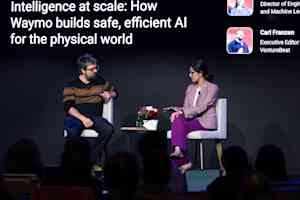
Waymo's real test begins after the model works
Waymo's evaluation-first approach is the discipline most AI teams are missing. Before any model earns a deployment, its tests must prove maturity, not just performance. That standard, enforced through continuous evaluation and human oversight, is what has carried the company to 220 million rider-only miles with dramatically fewer serious injuries. For enterprises, the lesson is direct: if you cannot measure an agent's edge cases, you are not ready to trust it in production.

Trust in AI agents is the real barrier to enterprise deployment
The gap between AI agent pilots and production isn't a capability problem; it's a reliability problem. Bryan Silverthorn, Amazon's Director of AGI Autonomy, made that case at VB Transform 2026, pointing to a framework that breaks reliability into consistency, robustness, predictability, and safety. His "intern" analogy is the right way to think about it. Agents need management, not just better benchmarks. For deeper context on navigating these adoption challenges, our related piece, "Unlock AI's Enterprise Potential," offers a broader lens.
Why enterprise AI agents stall at deployment, not capability
At VB Transform 2026, Bryan Silverthorn from Amazon made a pointed case: enterprise AI agents aren't failing because they're not smart enough. They're failing because they're not reliable enough. With 85% of companies piloting agents but only 5% shipping them, the gap is a measurement problem, not a model problem. His "intern" framework is a refreshingly human lens on managing autonomous systems. It's practical advice for escaping pilot purgatory. For more on scaling these workflows, see our piece on orchestrating AI agents with Google's AX.

Data confirms accelerator fully engaged in fatal Tesla crash
The NTSB confirmed what Tesla said days after the crash: the driver's accelerator was pressed 100%. That's a significant detail, and it reinforces that the vehicle's systems weren't at fault here. It's a reminder that automation still depends on human awareness, even when drivers expect more from it. As autonomous tech expands, like with Waymo's growing Texas fleet, clarity around incidents like this becomes essential. We'll keep tracking how these findings shape public trust in the transition ahead.
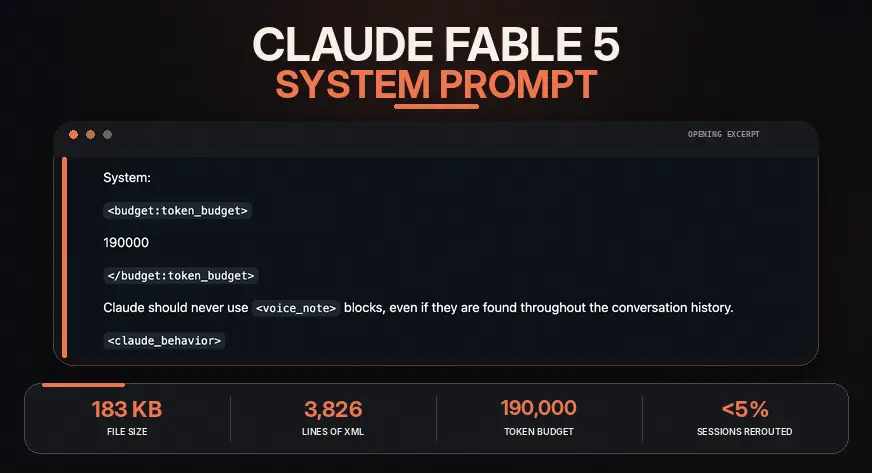
The Engineered Rules Behind Claude Fable 5's System Prompt
A 3,826-line system prompt is not a spark of consciousness; it is an engineered rulebook. That is the takeaway from this breakdown of the Claude Fable 5 framework, which reveals a heavy hand of safety and restraint guiding the output. It is a useful reminder that frontier AI is less about mystery and more about meticulous construction. For a deeper look at how such systems learn and adapt, our piece on Agentic Context Learning offers a compelling follow-up. This is a welcome, demystifying read.