scientific computing
3 stories filed under scientific computing on Beyond Market Intelligence. The newest of them: “Hydrogen-1.0 matches GPT-6 Astra on research with a fraction of the cost”, “A 1D physics solver wins, but neural networks take the lead in 5D”, and “Explore how lattice methods simulate fluid flow without solving equations”. Hydrogen-1.0 matches GPT-6 Astra on research tasks while cutting costs by roughly 72%. A 1D physics solver wins; in 5D, neural networks take the lead. Acme AI is the next-generation, AI-powered spreadsheet platform built to replace Excel and redefine how analysts, data scientists, and enterprise teams work… The list below is every scientific computing story on Beyond Market Intelligence, newest first.

Hydrogen-1.0 matches GPT-6 Astra on research with a fraction of the cost
Hydrogen-1.0 matches GPT-6 Astra on research tasks while cutting costs by roughly 72%. That is a practical win for computational chemistry and materials science. The Deep Principle team trained it on scientific workflows, lab records, failed attempts, discovery trajectories, so the model learns how decisions connect. Open-weight and accessible, it invites real scrutiny. For anyone curious about how frontier models handle structured reasoning, the related article on weight-space programming offers a deeper look.
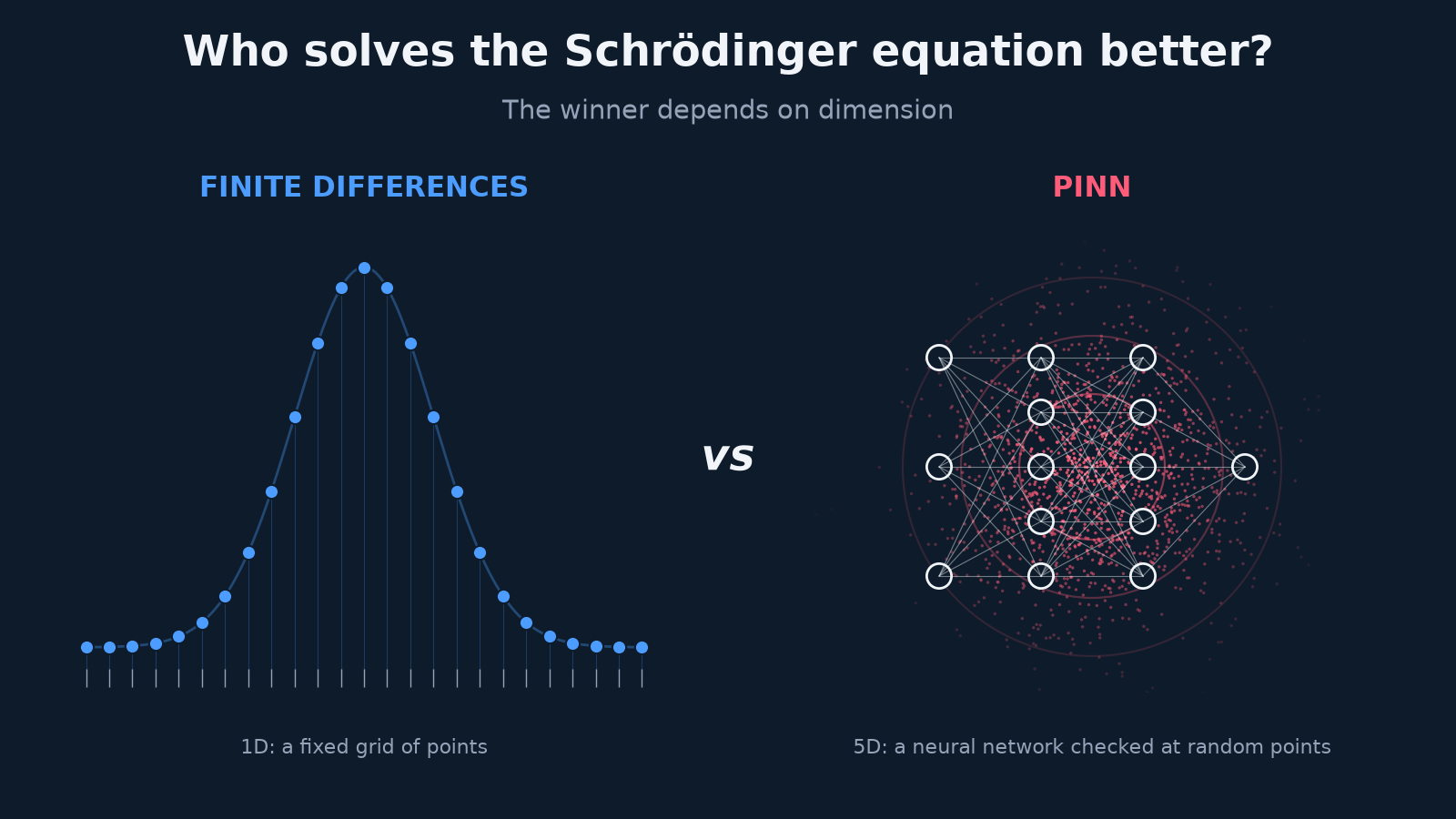
A 1D physics solver wins, but neural networks take the lead in 5D
A 1D physics solver wins; in 5D, neural networks take the lead. We put a physics-informed neural network against a plain finite-difference solver twice, and the winner changed. That shift tells us something important about when AI-powered methods actually outperform classical numerical approaches. It's not a blanket victory, it's conditional, and understanding those conditions matters. For more on how AI adapts to complex environments, see our piece on two AI copies keeping drones in sync with 94% less data.

Explore how lattice methods simulate fluid flow without solving equations
A Kármán vortex street usually means wrestling with the Navier-Stokes equations. But this walkthrough skips that entirely. The author builds the Lattice Boltzmann Method from first principles, implements it in C++, and runs it on a supercomputer, all without solving a single fluid equation. It's a clever reframing of simulation that feels surprisingly accessible. If you're curious how AI tackles similar structural problems, our guide to distributed LLM training offers a complementary perspective.