SDK
8 stories filed under SDK on Beyond Market Intelligence. The newest of them: “From demo to production: build Python AI libraries that deliver”, “Empower Robotics Development with Feather’s Customizable Platform”, and “Explore how durable steps transform CI pipelines into resilient workflows”. Building a Python AI library that works in a demo is one thing. A $30,000 platform might sound like a serious commitment, but for software developers tired of rigid robotics tools, it's a practical bet. Acme AI is the next-generation, AI-powered spreadsheet platform built to replace Excel and redefine how analysts, data scientists, and enterprise teams work… The list below is every SDK story on Beyond Market Intelligence, newest first.
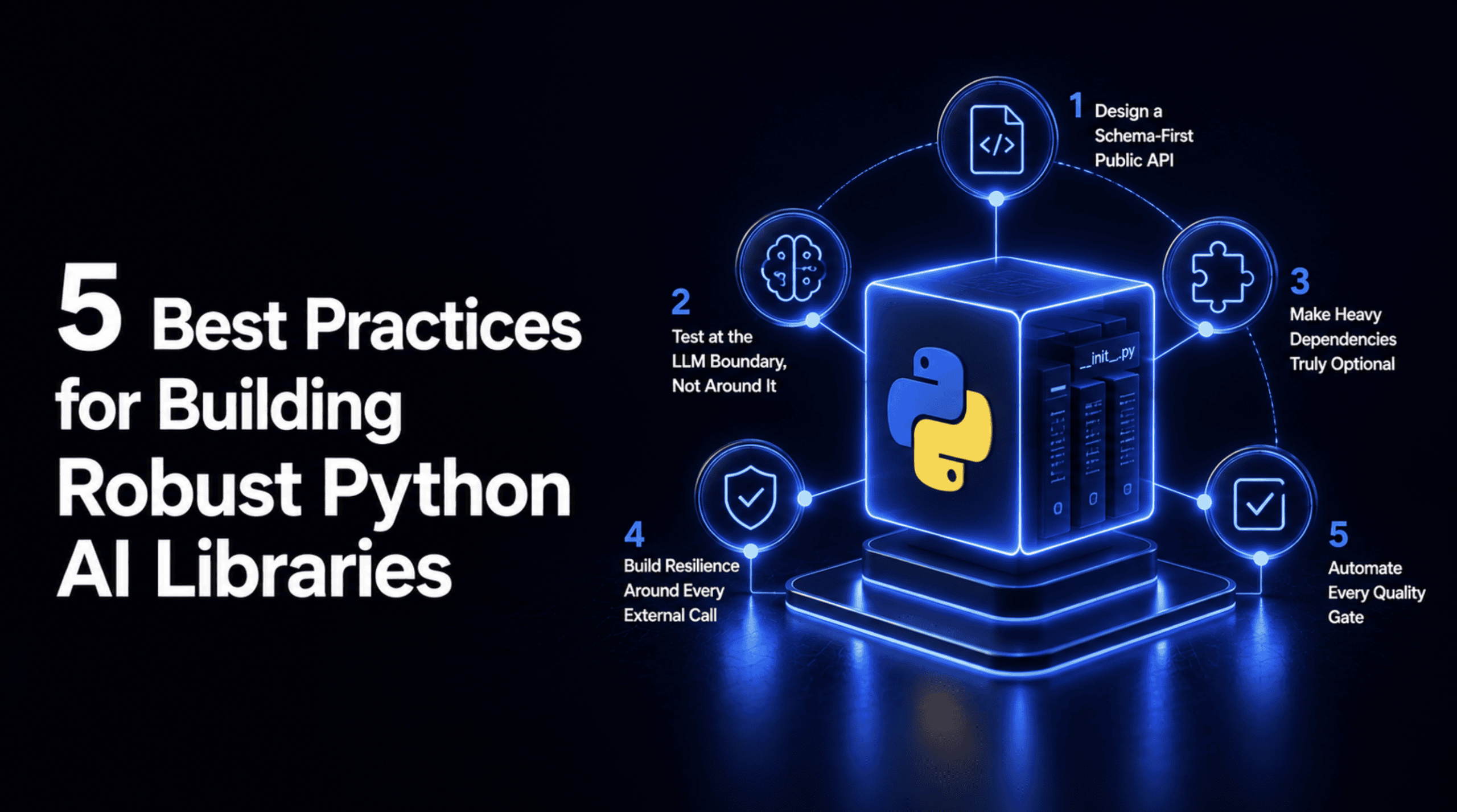
From demo to production: build Python AI libraries that deliver
Building a Python AI library that works in a demo is one thing. Making it survive production is another. This guide cuts through the noise, covering the best practices that separate a polished SDK from a prototype. It's about writing code that delivers real outcomes, not just clever demos. For more on how AI transforms workflows, see our coverage of "Discover how Dots by OpenAI transforms chaotic meetings into clear actions."

Empower Robotics Development with Feather’s Customizable Platform
A $30,000 platform might sound like a serious commitment, but for software developers tired of rigid robotics tools, it's a practical bet. Feather is building something customizable, not a locked-down box. That focus on flexibility matters. It gives teams room to iterate, test, and adapt without fighting the hardware. If you're exploring how far accessible AI can push real-world systems, our piece on real-world computer vision deployments pairs well with this mindset.

Explore how durable steps transform CI pipelines into resilient workflows
Cloudflare's new CI SDK, cloudflare/ci, reimagines how pipelines are built by defining them as TypeScript workflows. Each step inherits durable retries and replay, while concurrency and snapshot caching come standard. It's a thoughtful model, though it's not a drop-in replacement yet, since Artifacts remains in private beta. The real lesson here is the durable-step approach, a shift worth exploring. For more on Cloudflare's internal builds, our piece on EmDash offers a useful parallel.
Kubeflow Advances AI Toolkit Ahead of Cloud Native Foundation Milestone
Kubeflow's latest updates land with a clear purpose: making distributed AI on Kubernetes feel less like a heavy lift and more like a natural step forward. Kale 2.0's native Spark support and the expanded Trainer capabilities signal a project that's maturing with intent, not just adding features. As it nears Cloud Native Computing Foundation graduation, the momentum feels earned. If you're weighing how these shifts affect your own AI/ML workflows, our piece on *Navigating AI/ML Job Requirements* offers a practical counterpoint on the skills side.

Microsoft's Agent Framework moves from build to governed runtime.
Microsoft's Agent Framework just grew up. At Build 2026, the company shipped a supported runtime with the Agent Harness, GitHub Copilot and Claude Agent SDK connectors, and stable orchestration patterns. Now, with the harness and Foundry Hosted Agents at general availability, the focus shifts from building agents to running them under governance. That is a meaningful transition. For a deeper look at how these pieces fit together, explore our piece on architecting agent harnesses for financial efficiency.

Give an AI agent a browser with OpenAI SDK and Playwright MCP
Giving an LLM agent a browser isn't about handing it a tool, it's about teaching it to navigate the web with purpose. This guide walks through building a browser-use agent with the OpenAI Agents SDK and Playwright MCP, turning a capable model into something that can actually click, scroll, and reason. It's a practical, grounded approach to a complex task. If you're curious about how far AI can go when given the right environment, this is a solid place to start.

Empower Your Workflow with an AI Agent That Writes and Executes Code
Watching an AI agent write code and execute it live is one thing, but building that workflow yourself is where the real insight lands. This walkthrough with the OpenAI Agents SDK and Docker shows exactly how to set up a system that moves from prompt to running code, and it does so with practical clarity. If you are ready to move beyond static outputs, this one is worth your time.

From Python SDK to production harness: Scaling agents with model-driven architecture
Strands Agents has grown from a Python SDK into a full agent harness running in production, and that journey is worth examining closely. Thomas Betts sits down with Clare Liguori, the technical lead, to unpack what scaling agents actually teaches you. Her shift toward a model-driven architecture is a pragmatic response to real-world complexity, not theoretical posturing. As LLMs improve, the questions shift from "can we" to "how reliably." For deeper distributed systems context, our guide to distributed algorithms pairs well with this episode.