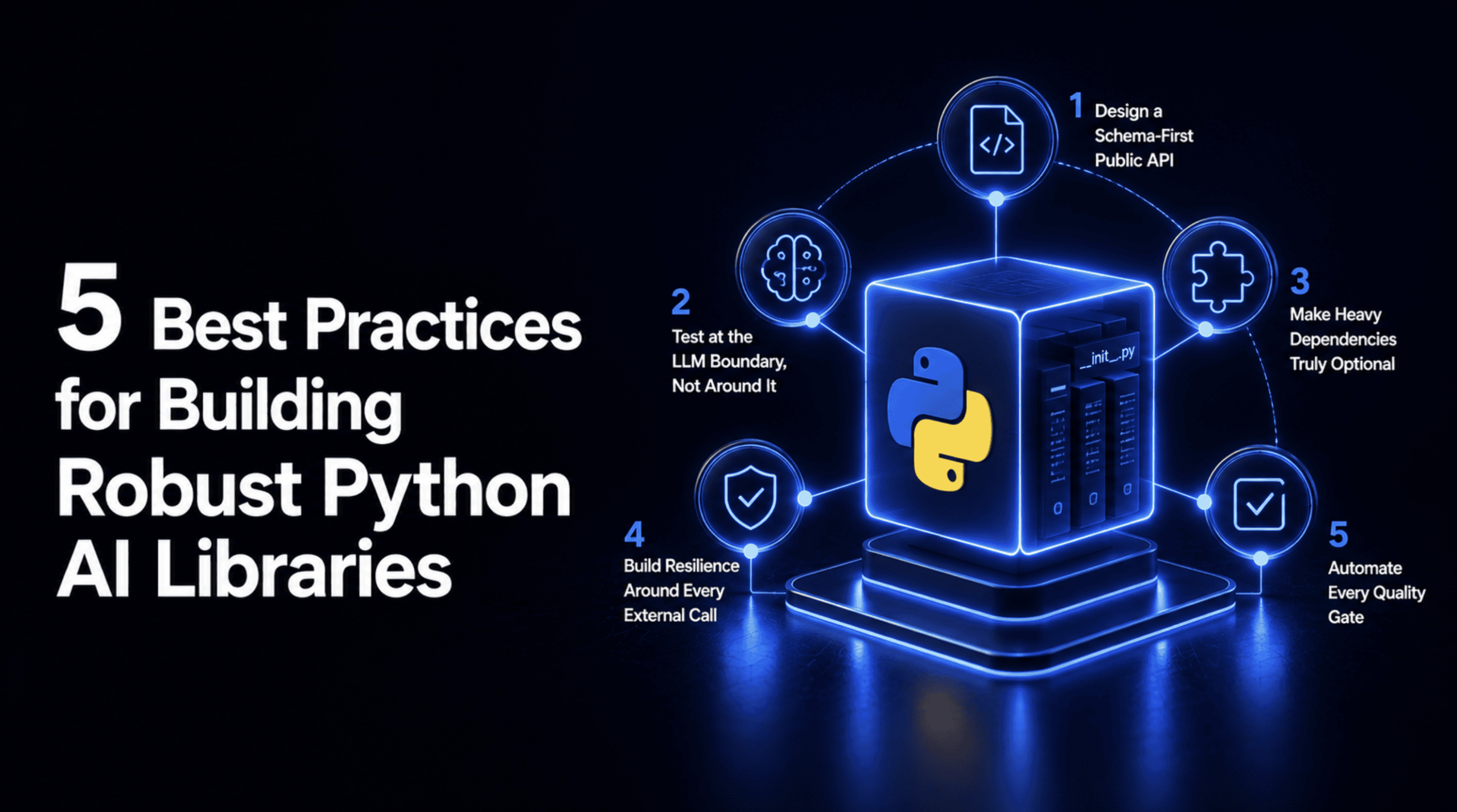
Building a Python AI library that works in a demo is easy. Building one that survives in production is a completely different discipline, and the gap between the two is where most projects fail. The recent guidance on Python AI SDK best practices makes this distinction painfully clear: a library that impresses during a guided walkthrough often collapses under real-world load, edge cases, and the messy data that actual users bring. We think this focus on production readiness is exactly what the AI ecosystem needs right now, and it carries lessons that extend far beyond the code itself.
Consider what separates a demo from a deployable tool. A demo assumes ideal conditions: clean inputs, predictable latency, and a single happy path. Production assumes the opposite. It demands error handling for malformed requests, graceful degradation when models are overloaded, and logging that tells you why something broke at 3 AM. This is the unglamorous work that makes AI useful, and it mirrors a deeper truth we see across the industry. Look at how Dots by OpenAI transforms chaotic meetings into clear actions: that product works because it was built to handle the noise of real conversations, not just scripted ones. The same principle applies to your AI libraries. If your SDK cannot handle a user who sends a dictionary instead of a string, it is not production-ready, no matter how clever the underlying model is.
The practical takeaway here is straightforward: treat your AI library like any other critical infrastructure. That means writing tests that cover failure modes, not just success paths. It means designing APIs that return clear, actionable errors instead of cryptic stack traces. And it means planning for observability from day one. This is not glamorous work, but it is the work that separates tools people trust from tools people tolerate. The parallel to hardware is instructive. Investors double down on AI chip startup Etched amid fresh funding offers, and that confidence comes from building chips designed for the specific demands of inference at scale, not just impressive benchmark numbers. Your library needs the same design philosophy: build for the constraints of production, not the freedom of a Jupyter notebook.
One specific detail to watch is how the community reacts to the call for better SDK documentation and error messaging. If library authors start treating their README files as contracts rather than marketing copy, that will be a real signal that the ecosystem is maturing. Conversely, if the majority of new AI packages launch with no examples of error handling or performance benchmarks, we will know the demo-to-production gap is still widening. The open question is whether developers will demand more from the tools they adopt, or continue accepting libraries that work beautifully in a demo and fail silently in the real world.