service mesh
Beyond Market Intelligence keeps service mesh in one place: 4 stories so far. The section currently leads with “Uber's dependency analysis moves beyond sampled tracing to classify failure types”, “Atlassian Correlates Metrics, Logs, and Traces to Automate Root Cause Analysis”, and “How DoorDash Built a Proxy Cache Handling 1.5 Million Requests per Second”. Uber's dependency analysis moves beyond the limits of sampled tracing, which can miss rare failures across a sprawling service mesh. Atlassian is tackling one of the messiest parts of cloud operations: figuring out why things break. Acme AI is the next-generation, AI-powered spreadsheet platform built to replace Excel and redefine how analysts, data scientists, and enterprise teams work… The list below is every service mesh story on Beyond Market Intelligence, newest first.
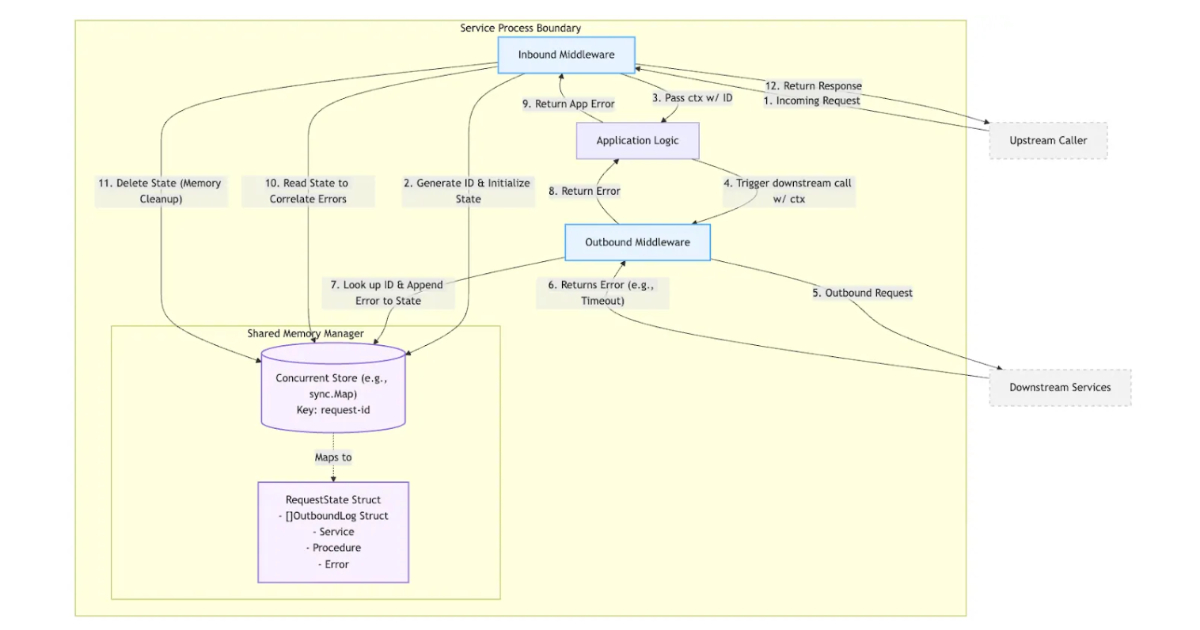
Uber's dependency analysis moves beyond sampled tracing to classify failure types
Uber's dependency analysis moves beyond the limits of sampled tracing, which can miss rare failures across a sprawling service mesh. By using RPC middleware and production metrics, the system classifies dependencies as fail-close, fail-open, or unknown. This approach is a practical step forward for engineers tired of guessing which downstream service caused an outage. For more on how platforms manage complex infrastructure, see our coverage of Grafana Tempo 3.1, which empowers operators to redact traces with simple queries.

Atlassian Correlates Metrics, Logs, and Traces to Automate Root Cause Analysis
Atlassian is tackling one of the messiest parts of cloud operations: figuring out why things break. Their new approach correlates metrics, logs, traces, and service topology to rank hypotheses about where failures start and how they spread. That is a practical step beyond chasing alerts blind. It feels like the kind of automation that lets teams focus on fixing rather than guessing. For more on how AI handles complex tasks, our guide, "Unlock ChatGPT for Work," offers a useful starting point.

How DoorDash Built a Proxy Cache Handling 1.5 Million Requests per Second
DoorDash's Entity Cache is a masterclass in handling scale without drama. Serving over 1.5 million requests per second with 99.99999% availability, the platform uses Envoy and Valkey to cut redundant service-to-service calls across its microservices. That's not just impressive; it's the kind of quiet reliability that keeps complex systems humming. By leaning on event-driven invalidation and smart failure handling, DoorDash shows how transparent caching can transform performance. For teams wrestling with similar growth, this approach offers a practical, forward-thinking path worth exploring.

Smarter Traffic Management and Greater Efficiency with Linkerd 2.20
Linkerd 2.20 lands with sharper traffic management and meaningful efficiency gains, reinforcing why the CNCF-graduated service mesh remains a compelling lightweight choice for Kubernetes networking. The updates feel purposeful, targeting performance and observability without adding unnecessary complexity. For teams tired of wrestling with heavier meshes, this release invites a simpler path forward. If adaptive systems intrigue you, Mallika Rao's insights on real-world recommendations pair well with this momentum. Explore Linkerd's latest strides, and see how smarter routing can lighten your operational load.