social media
social media at Beyond Market Intelligence is a file of 53 stories. The newest of them: “Social platform blocks documentary on Elon Musk from advertising”, “Muse Spark Open runs natively on Apple silicon, expanding AI access”, and “Anticipate social media storms before they break with AI-powered foresight”. A social platform has blocked a documentary about Elon Musk from advertising, marking another hurdle for the four-hour film. Meta and Apple have quietly done something smart: Muse Spark Open now runs natively on Apple silicon, bringing serious AI inference directly to your Mac. Acme AI is the next-generation, AI-powered spreadsheet platform built to replace Excel and redefine how analysts, data scientists, and enterprise teams work… The list below is every social media story on Beyond Market Intelligence, newest first.

Social platform blocks documentary on Elon Musk from advertising
A social platform has blocked a documentary about Elon Musk from advertising, marking another hurdle for the four-hour film. It's a curious move that raises questions about how tech giants handle content about their own. We explore alternative paths to monetization in a related piece, and the contrast feels timely. Control over visibility is a powerful thing, and this decision deserves scrutiny.

Muse Spark Open runs natively on Apple silicon, expanding AI access
Meta and Apple have quietly done something smart: Muse Spark Open now runs natively on Apple silicon, bringing serious AI inference directly to your Mac. No cloud dependency, no latency, just local processing that respects your privacy and your workflow. This is the kind of practical innovation that turns a capable model into a daily tool. For teams navigating similar transitions from experimentation to production, our piece on building reliable products from vibe-coded apps offers useful perspective.

Anticipate social media storms before they break with AI-powered foresight
Every day, a single post, AI-generated misinformation, hate speech, a damaging rumor, can snowball into a public crisis. Gudea calls itself the "storm tracker for the internet," and that framing is apt. Their AI-powered foresight lets you anticipate social media storms before they break, turning reactive panic into proactive strategy. It's a practical tool for a noisy world. For a deeper look at how AI classifies messy text, explore our piece on Scikit-LLM for few-shot classification.

Facebook Puts Algorithm Control Directly in Your Hands
Facebook is putting algorithm control directly in your hands with its new AI-powered "Your Algorithm" feature. That's good. For too long, users have been passive passengers in their own feeds, hoping the platform guessed right. This tool gives you the ability to influence what appears, a shift toward transparency that feels overdue. For more on how AI is reshaping professional tools, see our coverage of how AI coding rounds are rewriting the rules of the data science interview.

New AI tools trace hidden ad pathways to block harmful content
Meta's new AI tools trace the hidden pathways that make seemingly normal ads redirect users to harmful content elsewhere online. It's a quiet but meaningful step toward accountability, catching deception where it lives, between the click and the destination. The approach feels less like a patch and more like a foundation for safer discovery. For a deeper look at how AI probes defensive systems, explore how AI models stress-test Cloudflare's firewall to expose its weaknesses.

Jack Dorsey's Bitchat pulled from India app stores under government order
Jack Dorsey's Bitchat has been pulled from Indian app stores under government orders, leaving the messaging platform largely unavailable in the country. The restrictions mark a significant escalation in India's approach to digital oversight. We're tracking how governments reshape access to communication tools, from app removals to proposed limits on surveillance. For more on that trend, see our coverage of the Senate bill that would end federal use of automatic license plate readers.

Meta reverses course on ads for Musk documentary
Meta reversed course on ads for Alex Gibney's upcoming Elon Musk documentary, a decision that feels less like a policy shift and more like a strategic exhale. It's a reminder that even the biggest platforms waver when the spotlight gets hot. We appreciate the pivot, though it raises questions about consistency. For more on how AI agents are navigating similar tensions, check out our piece on Meta's Muse AI Agent. The takeaway? Adaptability matters, but so does conviction.

Focus on Essentials: A Smartphone Alternative for Intentional Living
"Shreyas Narlanka's Focus on Essentials phone isn't about rejecting technology. It's about rejecting the noise. The 25-year-old founder explains that he and his team simply don't want social media, browsing, or that kind of distraction. That's a refreshingly honest premise. In a market flooded with constant notifications, this device offers intentional living by design. For context, our piece on Meta's new subscription push shows how the largest platforms are doubling down on keeping you engaged. Focus on Essentials takes the opposite path.

California law now requires influencers to clearly label paid political posts.
California just made it clear: paid political posts need a label, or there's a fine waiting. The new law gives existing disclosure rules real teeth, targeting influencers who profit from politics without playing by the same rules as traditional advertisers. That's a sensible step toward transparency, especially when sponsored content can blur into genuine opinion. It doesn't kill influence; it just makes it honest.
Discover how AI turns market chatter into action with integrated trading.
Trading conversations on X are about to get more direct. The platform now lets US users trade through Cashtags, a move that pulls the market discussion right into the transaction. It's a practical step, one that shortens the distance between what people are saying about a stock and actually acting on it. For anyone who has watched a ticker trend in a post, then scrambled to a separate app, that gap is finally closing. It feels like a natural evolution, not a forced feature.

Meta One now bundles AI tools across your favorite apps
Meta is folding its AI tools directly into the everyday apps you already use. The new Meta One plan bundles expanded access to those features with premium perks across Facebook, Instagram, and WhatsApp. It's a practical move that recognizes where the real value lies: making familiar spaces work harder. For anyone who feels limited by the free tier, this is a straightforward invitation to explore more. Curious how this connects to the company's broader hardware bets? Our piece on Meta's Smart Glasses offers useful context.

The ClickFix scam exploits trust: learn how it tricks users into hacking themselves
A fake HBO Max ad on Reddit is now tricking Mac and Windows users into compromising their own systems. This "ClickFix" approach is clever in its simplicity, and that is what makes it dangerous. It preys on a user's willingness to act quickly, turning a moment of trust into a security nightmare. We see this as another sign that the tools we rely on need to be more intuitive and secure.

Snapchat expands beyond messaging with new event-planning tools.
Snapchat is stepping into event planning with new features aimed at everything from birthday parties to study sessions. It's a smart move, targeting the casual, spontaneous gatherings where Partiful has found traction. We like the focus on real-life connection over polished digital curation. For more on how younger users are redefining online spaces, check out our piece on Gen Z finding community in NPR comments. It's a fitting reminder that the best tools meet people where they already are.

Take control of your profile by moving tagged posts into your grid.
Instagram is making it easier to curate your profile by letting you pull tagged posts directly onto your main grid. It's a small shift, but it gives you more control over how you present yourself, moving beyond just what you've posted. We like this focus on flexibility; it feels like a natural step toward smarter, more personalized sharing. For more on how Meta is weaving connectivity into daily life, check out our piece on Meta's Smart Glasses.
Trademark ruling leaves X rival rebranding as Tweet.app
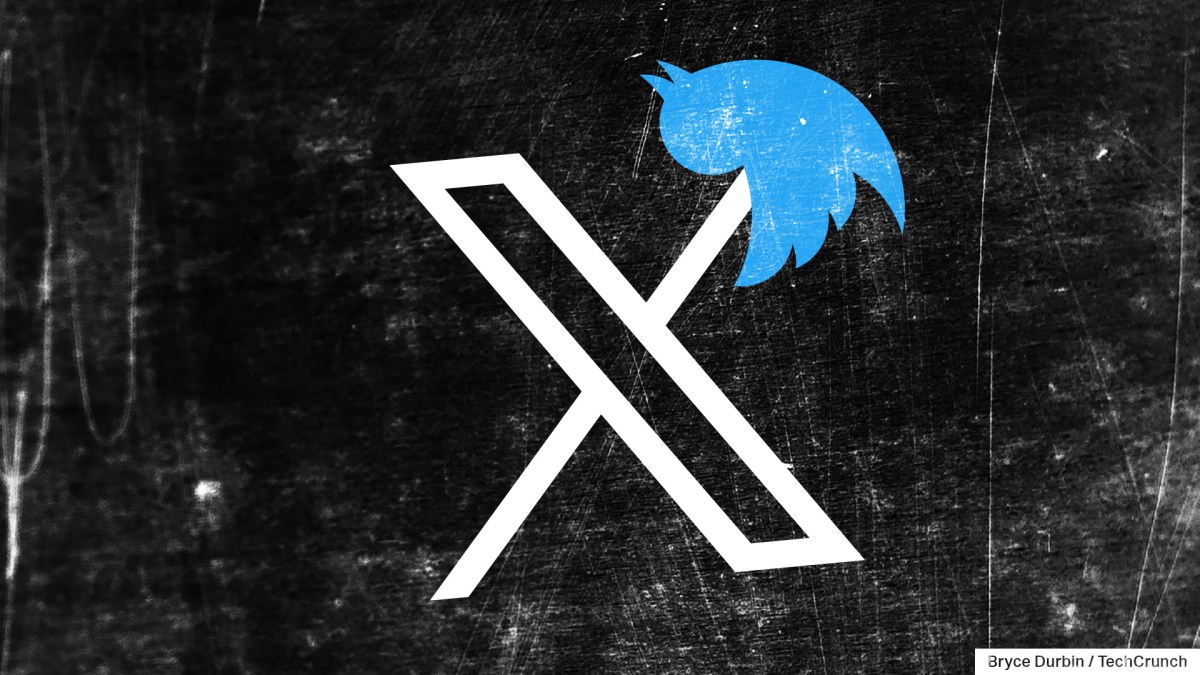
A federal judge just made a clear call: an X rival can't use the Twitter name, but the word "Tweet" and that bird logo are fair game. That's a sharp reminder that trademarks aren't forever if a company stops using them. It's a practical win for the startup, now rebranded as Tweet.app, and a lesson in how quickly digital identity shifts. For more on how tech companies are repositioning around infrastructure bets, check out our piece on Anthropic's cloud exploration.

TikTok borrows messaging tools to deepen how users connect
TikTok is turning comments into a conversation hub, weaving in voice notes, polls, and other interactive tools that feel plucked from your favorite messaging app. It's a smart move, borrowing proven engagement tricks to make the comment section less of an afterthought and more of a destination. We like the direction; it's about fostering connection, not just passive scrolling. For more on how platforms are rethinking user interaction, our piece on Muse's new features offers a fitting parallel.

Trust in the digital age requires more than spotting AI-generated content
AI detection is becoming a whole new kind of hard, and Max Spero from Pangram is digging into why it's so much trickier than a simple "Real or Fake" call. We're not just talking about social media noise; this is showing up in job applications and insurance claims. That's a real trust problem. The challenge is that these tools are getting more sophisticated, and our ability to spot them isn't keeping pace.

Instagram limits AI profiles that hide their artificial nature
Instagram is putting new limits on undisclosed AI profiles, and that's a move worth paying attention to. As frustration over AI influencers grows, the platform is quietly curbing their reach unless they're clearly labeled. It's a practical step toward honesty in a space where synthetic personas often blur the line between entertainment and deception. For users tired of guessing who's real, this adds a layer of clarity.

OpenAI gains Meta executive to lead its Asia-Pacific expansion
Meta executive Sandhya Devanathan is leaving for OpenAI, where she will oversee operations across Southeast Asia and Australia. The move lands as Meta faces growing scrutiny in India, a market that matters more than ever for its global ambitions. It is a notable shift when a company losing senior talent watches that talent land at a competitor building the next generation of AI tools. For more on how AI agents are handling sensitive data, explore "AI Agents Shared User Images, Highlighting Data Security Concerns."

Former Instagram builders raise $21M for friend-focused photo sharing
Retro, a photo-sharing app built by former Instagram employees, just closed over $21 million in Series A funding. That vote of confidence signals real momentum for a platform doubling down on close friends rather than broad broadcasting. We like that focus; it meets a genuine need for intimacy online. If you are curious how other tech players are refining their own tools, Cloudflare's Blog Finds Performance Gains with EmDash, Its New CMS offers a neat parallel. For now, Retro's growth is worth watching.

Bluesky gives users control over who sees their posts
Bluesky's new algorithmic opt-out feature gives users a quieter path forward, letting them post without chasing virality. It's a simple acknowledgment that not everyone wants the feed's spotlight; sometimes, reaching your own followers is the goal. That's a refreshing shift toward user agency in a space often dominated by engagement metrics. If you're exploring intentional tech choices, our piece on a smartphone alternative for intentional living pairs well with this mindset. This move feels less like a limitation and more like a return to control.

Flipboard expands its open social web with Graze's creator tools.
Flipboard is folding Graze into its platform, betting that the feed builder's privacy-friendly ad tech and creator tools can help monetize the open social web. It's a practical move, one that pairs Graze's Bluesky expertise with Flipboard's broader push for a less siloed internet. We're watching how this complements the resilience shown by publishers like Cloudflare, whose EmDash migration recently proved performance gains aren't locked to legacy systems. The open web needs workable economics, and this acquisition feels like a step in that direction.

Meta's $18 billion settlement acknowledges platform design harms to children.
An $18 billion settlement sends a clear message: Meta knew the risks its platforms posed to children and designed them to keep young users hooked anyway. That's not an accident; it's a choice, and now 29 states are holding the company accountable for it. This isn't just about fines. It's about acknowledging that addictive design has real human cost. For anyone watching how tech giants operate, this is a moment worth understanding.

Meta sets daily time limits for teens, empowering parents with control.
Meta's new settlement with states brings a practical shift: teens will face a daily two-hour app limit unless parents step in. That's a meaningful concession, and it signals a more accountable approach to younger users. The move feels overdue, but it's a solid step toward healthier boundaries. For more on how Meta is adjusting its policies, our piece on the reversal of ads for the Musk documentary offers useful context. This decision, though, is about direct impact on families, and that's worth watching closely.