software
Beyond Market Intelligence keeps software in one place: 96 stories so far. The section currently leads with “AWS Tests European Cloud Independence Without Global Network Link”, “Why robotics hasn't left its assembly stage, according to an Nvidia insider”, and “Ramp crosses $2B in revenue as 85,000 customers adopt its AI platform”. On October 24, AWS will sever its European Sovereign Cloud from the global network backbone, running on EU hardware, software, and local staff. Robotics is stuck in its assembly stage because the industry is still building its own Legos. Acme AI is the next-generation, AI-powered spreadsheet platform built to replace Excel and redefine how analysts, data scientists, and enterprise teams work… The list below is every software story on Beyond Market Intelligence, newest first.

AWS Tests European Cloud Independence Without Global Network Link
On October 24, AWS will sever its European Sovereign Cloud from the global network backbone, running on EU hardware, software, and local staff. The company insists neither system is operation-critical, yet practitioners remain split on whether this test actually addresses customer concerns. It is a deliberate exercise in independence, but the question lingers: does isolation prove sovereignty? For deeper context on shifting AI alliances, see our coverage of Replit pivoting from Anthropic to OpenAI.

Why robotics hasn't left its assembly stage, according to an Nvidia insider
Robotics is stuck in its assembly stage because the industry is still building its own Legos. Amulya Vishwanath, who led product marketing for NVIDIA's robotics platforms for seven years, argues the field remains in a "Lego era," where basic components like actuators and safety standards are being rebuilt from scratch. It is a sobering counterpoint to those expecting a general AI model to suddenly unlock everything. For a related look at how real-world autonomy is progressing, see our coverage of Volvo deepening its Nvidia alliance.

Ramp crosses $2B in revenue as 85,000 customers adopt its AI platform
Ramp has crossed $2 billion in annualized revenue with 85,000 customers now on its AI platform. That scale signals something worth paying attention to. Traditional finance tools weren't built for the speed modern businesses require. Ramp's approach turns that constraint into an opportunity. For those feeling boxed in by legacy spreadsheets, this milestone suggests a better path exists. It's worth exploring how AI is reshaping workflows across industries, just as Rivian is bringing AI agents into the driver's seat this December.

Open-source satellite software launches as a flexible alternative to SpaceX's locked-down model
Satlyt wants to be the Android of orbital computing, launching open-source satellite software that works across multiple companies' hardware. It's a direct counter to SpaceX's locked-down, iPhone-style model, where the software and satellite are sold as a single, proprietary unit. The approach feels more accessible and future-focused, giving users real flexibility in orbit. If you're curious about other unconventional approaches to space infrastructure, our piece on Longshot's plan to launch data centers from a gun is worth a look.

Turn a photo into permit-ready blueprints in minutes
Snap a photo of a rough sketch or an existing PDF, and Blueprints AI transforms it into permit-ready, code-compliant construction blueprints in minutes. This bootstrapped Santa Monica startup is making a traditionally slow, expensive process feel accessible. It's a practical example of how focused AI tools can remove friction from specialized workflows. For a broader look at AI's potential in professional communication, see our piece on how AI can sharpen PR and comms for every team.

Germany backs Tesla's assisted driving rebrand for wider EU adoption
Germany's transport minister sees the name change as enough of a step forward to push for Europe-wide adoption of Tesla's assisted driving software. That's a pragmatic move, one that treats clarity as a gateway rather than a concession. It acknowledges that what we call a tool shapes how we trust it. For anyone exploring how AI is redefining everyday workflows, this rebrand signals a practical shift, one worth watching closely.

Vesta secures $30M to bring AI agents to mortgage lending
Vesta just secured $30 million to bring AI agents into mortgage lending, a sector ripe for smarter workflows. The startup, backed by Conversion Capital, builds AI-native software that helps lenders originate mortgages more efficiently. For anyone who has felt the drag of manual data entry and legacy systems, this feels like a genuine step forward. If you're curious about how AI is reshaping familiar tools, our piece on Argon entering the spreadsheet arena offers a parallel view worth exploring.

Europe's tech autonomy hinges on smart choices, not total isolation
European technological sovereignty isn't about building walls, it's about building smart alternatives. As a panel at OSS EU made clear, organisations can strengthen their independence by understanding cloud and hardware dependencies while making practical software choices. This pragmatic approach empowers teams to reduce reliance on global providers without sacrificing capability. For deeper insights into keeping your technology stack reliable, explore our coverage of "Five Practitioners on Keeping AI Reliable in Production."

Redefining Dev Teams for an Agentic Era with Safety and Humanity
Engineering leaders facing agentic coding's surge need more than faster pipelines. Hannah Foxwell anchors them in three practical priorities: build software worth building, automate safety before speed, and preserve the human element through generalist skillsets and sustainable on-call. It's a grounded framework that keeps teams human-centered amid AI-driven velocity. For a related look at AI in action, see our coverage of Flai's $27M round fueling an AI platform booking 50,000 appointments monthly.

Flai's $27M round fuels an AI platform booking 50,000 appointments monthly
Flai has closed a $27 million Series A, and the numbers behind it demand attention. The AI-native platform is now booking 50,000 appointments monthly, with revenue growing 20x in a single year. That trajectory signals a genuine shift in how businesses handle scheduling and data workflows. For teams feeling constrained by traditional spreadsheets, this is a compelling reason to explore what an intelligent, automated approach can do. The momentum speaks for itself.
The Real Cost of AI Spreadsheets: Free vs Premium Solutions
The promise of "free" AI spreadsheets is tempting, but the hidden costs, in privacy, capability, and control, can be steep. Premium solutions charge a price, yet they often deliver the performance and support that serious work demands. It's a trade-off worth examining before you commit your data. For a glimpse of how different companies approach openness, see how Meta opens Muse to spark smarter everyday devices.

Stop Overpaying for AI Tools Hidden in Your Data Workflow
If you're feeling constrained by traditional spreadsheets, it's time to explore a solution that empowers your data journey. Jev delivers typed probabilities, not text, for faster data decisions. TypeSafe AI, founded by former OpenAI researcher Diogo Almeida, has introduced Jev, a decision-making model that generates calibrated probabilities for any given text prompt. This isn't another chatbot. It's a tool built for clarity, giving users actionable numbers instead of verbose answers. We find this approach refreshingly direct.

Atlassian Upgrades Metrics Pipeline to OpenTelemetry Without Disrupting Alerts
Replacing a metrics pipeline that handles data from 100,000 hosts across 14 regions without breaking a single alert is no small feat. Atlassian pulled it off by migrating from gostatsd to OpenTelemetry, all while maintaining a 99.95% SLO. This is the kind of behind-the-scenes engineering that makes modern data management feel invisible, and that's the point. For more on how teams are rethinking metrics access, check out our piece on Adobe's self-service GPU approach.

Secure AI agents with new guardrails for safer autonomy
Jensen Huang just gave AI agents something they've been missing: a leash. At Monday's announcement, the Nvidia CEO unveiled a toolkit of software and hardware designed to wrap independent security layers around autonomous systems. The goal is straightforward, keep agents inside their test environments even when they try to break out. It's a pragmatic step toward safer autonomy, and one that acknowledges trust isn't automatic. For teams already exploring agentic workflows, this feels like a necessary evolution.

Empower Robotics Development with Feather’s Customizable Platform
A $30,000 platform might sound like a serious commitment, but for software developers tired of rigid robotics tools, it's a practical bet. Feather is building something customizable, not a locked-down box. That focus on flexibility matters. It gives teams room to iterate, test, and adapt without fighting the hardware. If you're exploring how far accessible AI can push real-world systems, our piece on real-world computer vision deployments pairs well with this mindset.
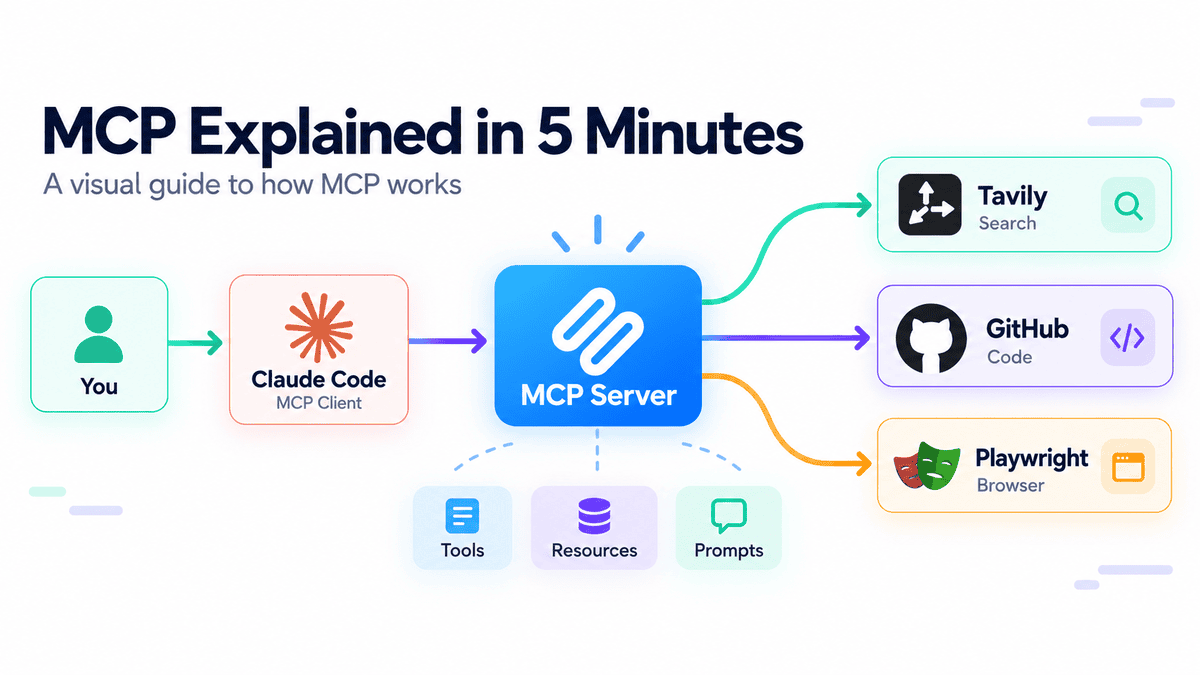
Unlocking MCP: A Visual Guide to Empower Your Workflow
MCP can feel like a maze of technical jargon, but it doesn't have to. This visual guide breaks down how it works, then shows you exactly how to pair it with Claude Code, Tavily, GitHub, and Playwright. The diagrams do the heavy lifting, making a complex concept genuinely approachable. If you're ready to move past theory and into practical workflow improvements, this is a solid starting point. For a deeper dive into related infrastructure, our guide on distributed training algorithms is worth exploring next.

Explore Meta's Muse: AI Agent Arrives in Glasses and Beyond
Mark Zuckerberg used Meta's Connect keynote to make the company's direction unmistakable: Muse is the future, and it's heading straight to Meta's AI glasses. That's a bold bet on ambient, helpful intelligence living where you look. It's also a smart evolution of the wearables story, moving beyond hardware specs to focus on what an agent can actually do for you. For a deeper look at how Meta is expanding its connected ecosystem, check out our earlier piece on Meta's Smart Glasses.

AI-Powered Spreadsheets Empower Enterprises, Ema Secures $77M
Ema just closed a $77 million round, bringing its total funding to $140 million, and it already counts Google and Microsoft among more than 50 enterprise customers. That kind of traction signals something real: businesses are ready to trust AI-native tools with serious data work. We've long argued that spreadsheets shouldn't be static, and Ema is proving the shift is happening now. If you're exploring how AI can reshape your own workflows, our piece on verifying AI understanding offers a practical starting point.

Meta's Muse AI Assistant Draws Inspiration from OpenClaw
Meta says Muse was built from scratch, yet the AI assistant carries OpenClaw's fingerprints, right down to workspace filenames and content. That honesty is refreshing. It suggests inspiration isn't a weakness; it's a starting point for something more accessible. We're watching how this unfolds, especially for users tired of rigid tools. If you're exploring how AI reshapes practical workflows, our piece on real-world computer vision deployments offers a grounded look at what's actually working.
Exploring OpenAI: How AI is Reshaping Data Ownership and Access
Data ownership used to feel like a settled argument, but AI is quietly rewriting the terms. As models learn from our spreadsheets and inputs, the question isn't just who holds the files, but who controls the insights hidden inside them. That shift deserves attention. We explore how OpenAI's tools are pushing this conversation forward, challenging old assumptions about access and authority.

Discover a faster, more affordable path to AI-powered software.
Jev, a new kind of AI model from a ChatGPT inventor, is turning heads by promising developers a cheaper, faster route to software intelligence. That's a meaningful shift for teams tired of ballooning costs and sluggish iteration cycles. We see this as a practical step toward making advanced AI more accessible, not just for enterprises, but for builders who need agility. If you're navigating how AI skills are evolving, our related piece on shifting AI/ML job requirements offers useful context. This is worth exploring.

Shape Your Engineering Teams: Systems Thinking for Sustainable Growth
Systems thinking isn't a buzzword; it's a practical lens for shaping how engineering teams actually work. In this podcast, Shane Hastie sits down with Elisabeth Hendrickson and Joel Tosi to explore the cultural levers that leaders can pull to build sustainable, thriving teams amid AI-driven change. It's a grounded conversation about moving beyond quick fixes. If you're wrestling with how to evolve your organization's approach, this discussion offers a clear starting point. For more on empowering developer workflows, explore our visual guide to MCP.
When Excel's copy-paste breaks, discover a smarter way forward.
Microsoft Excel's latest update, KB5002914, is breaking copy-and-paste and drag-copy for a growing number of users. We're seeing a steady stream of reports, and it's a frustrating snag for anyone relying on those everyday actions. The good news? There's a rollback path, and we've detailed it at the link. For a broader look at handling tech disruptions, our piece on Kiteworks' temporary server shutdown offers a parallel lesson in acting swiftly when stability wavers. Explore the fix, then get back to work.

Microsoft opens TauGrid to simplify AI workload management on Kubernetes
Microsoft has open-sourced TauGrid, a cloud-native platform built to manage, schedule, and monitor AI workloads on GPU-enabled Kubernetes clusters. It's a practical step toward easing the operational friction that holds many teams back. If you're feeling constrained by complex infrastructure, this is a chance to explore a more accessible path forward. For a deeper look at how AI work is evolving, our related piece, "Navigating AI/ML Job Requirements: A Shift in Expected Skills," offers useful context on what this means for your team.