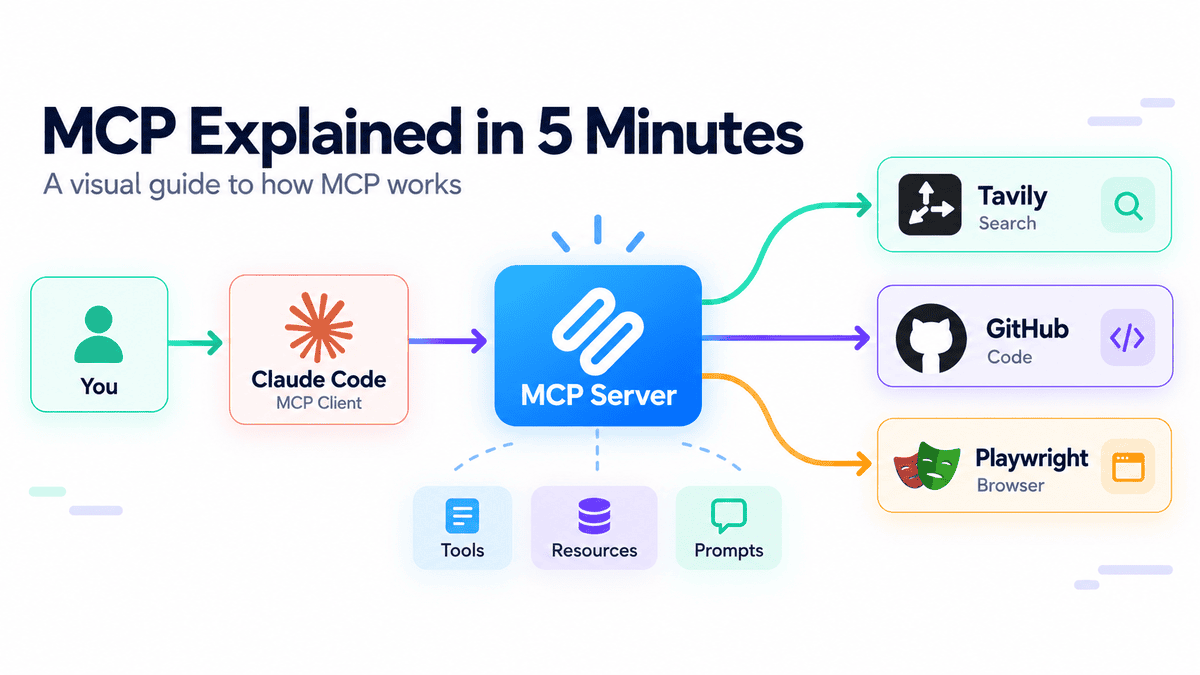
The emergence of Modular Chain Programming (MCP) as detailed in the recent visual guide represents a significant shift in how developers and data professionals will interact with AI agents and complex workflows. It’s a move away from rigid, linear processes towards a more dynamic and interconnected system. We’ve been closely following advancements in agentic AI, as highlighted in our exploration of Explore Meta's Muse: AI Agent Arrives in Glasses and Beyond, and MCP appears to be a crucial step in realizing the full potential of these agents. The visual nature of the guide is particularly noteworthy; demystifying complex concepts through diagrams dramatically lowers the barrier to entry, empowering a wider range of users to leverage this technology. It’s a welcome contrast to the often-opaque documentation surrounding AI tooling, and a signal of a broader trend toward more accessible and intuitive development environments. The integration with tools like Claude Code, Tavily, GitHub, and Playwright demonstrates a practical focus, highlighting how MCP can be immediately applied to real-world tasks.
The beauty of MCP lies in its modularity. Breaking down workflows into discrete, interconnected components allows for greater flexibility and reusability. This approach resonates with the principles we’ve seen in other areas of innovation, such as the Canvas UI’s Unlock Dynamic Web Effects: Canvas UI Brings HTML to the Canvas, which also leverages a modular approach to web development. MCP's ability to orchestrate various AI agents and integrate with existing development platforms unlocks powerful new possibilities. Imagine a scenario where an agent automatically generates code, tests it with Playwright, pushes the changes to GitHub, and then uses Tavily to research related documentation – all orchestrated through an MCP chain. This level of automation significantly reduces manual effort and accelerates the development lifecycle. The guide’s emphasis on visual representation ensures that even those less familiar with the intricacies of AI agent programming can grasp the core concepts and begin experimenting.
The broader significance of MCP extends beyond individual developer productivity. It points to a future where AI agents are not just standalone tools, but integral components of larger, interconnected systems. This shift has implications for how businesses approach automation, data analysis, and even creative workflows. Consider the implications for industries like fashion, where we observed both promise and challenges with AI integration in AI-Powered Fashion Show Draws Mixed Reactions at Vogue World. MCP could provide a more structured and controlled way to deploy AI in such creative domains, allowing for greater experimentation while maintaining a degree of human oversight and quality control. It’s a move towards a more symbiotic relationship between humans and AI, where agents augment our capabilities rather than replacing them entirely. The accessible nature of MCP suggests that this future is closer than many realize.
Ultimately, MCP’s visual guide isn’t just about explaining a new technology; it’s about democratizing access to the power of AI agent orchestration. The shift towards modular, visual programming paradigms has the potential to unlock a new wave of innovation across various industries. As these systems become increasingly sophisticated, a key question emerges: how will we ensure that these powerful tools are used responsibly and ethically, and how do we equip individuals with the skills necessary to navigate this rapidly evolving landscape? The widespread adoption of accessible tools like MCP may be the first step in answering these vital questions.