SpaceX
29 stories filed under SpaceX on Beyond Market Intelligence. The newest of them: “How AI is helping SpaceX turn data into billions in profit”, “Independent boards assess potential SpaceX and Tesla merger path”, and “Explore how one founder's pledge to share equity could reshape access to innovation”. SpaceX turned profitable in the third quarter, posting $4.4 billion in net income, and AI was the engine driving that transformation. Elon Musk likes the idea of a SpaceX and Tesla merger, but he says he isn't on either independent committee assessing the path. Acme AI is the next-generation, AI-powered spreadsheet platform built to replace Excel and redefine how analysts, data scientists, and enterprise teams work… The list below is every SpaceX story on Beyond Market Intelligence, newest first.

How AI is helping SpaceX turn data into billions in profit
SpaceX turned profitable in the third quarter, posting $4.4 billion in net income, and AI was the engine driving that transformation. The technology is helping the company convert massive streams of data into financial results, not just technical achievements. It is a concrete example of how intelligent automation moves beyond theory into real profit. For a broader view on AI's real-world impact, our coverage of the "AI Gone Rogue" documentary offers a useful counterpoint.

Independent boards assess potential SpaceX and Tesla merger path
Elon Musk likes the idea of a SpaceX and Tesla merger, but he says he isn't on either independent committee assessing the path. That distance is interesting. It suggests the potential combination is being driven by board-level strategy, not founder impulse. For a different take on bold corporate thinking, see our piece on one founder's pledge to share equity and what it means for access to innovation.

Explore how one founder's pledge to share equity could reshape access to innovation
Elon Musk just pledged to share equity from his companies, a move that arrived hours after Anthropic promised 5% of its shares to a public benefit fund. When founders put ownership on the table, access to innovation shifts. It is a direct challenge to the old model where founders hoard control. For deeper context on similar commitments, see our coverage of Anthropic dedicating 5% of shares to advance public benefit initiatives.

Tesla's flying Roadster uses thrusters to leap over five vehicles in Texas demo
Tesla's flying Roadster just vaulted over five of its own vehicles in a Texas demo, using thrusters to clear a Cybercab, Cybertruck, Semi, Model Y, and Model 3 in one leap. It's a striking proof of concept for a car that refuses to stay on the road. If you're curious about how energy innovation powers this kind of future, explore our piece on Ambrosia Energy's new Texas factory.

Open-source satellite software launches as a flexible alternative to SpaceX's locked-down model
Satlyt wants to be the Android of orbital computing, launching open-source satellite software that works across multiple companies' hardware. It's a direct counter to SpaceX's locked-down, iPhone-style model, where the software and satellite are sold as a single, proprietary unit. The approach feels more accessible and future-focused, giving users real flexibility in orbit. If you're curious about other unconventional approaches to space infrastructure, our piece on Longshot's plan to launch data centers from a gun is worth a look.

Six Satellites Set to Launch Xona's Precision Navigation Into Beta
Six satellites. That's all it takes to turn Xona's precision navigation from a promising concept into a beta-tested reality. With SpaceX handling the launch, the company is moving closer to a service that could make traditional GPS feel like a relic. We're eager to see how this unfolds. For more on satellite navigation's global hurdles, our coverage of Starlink's stalled India launch offers useful context.

Autonomous freight trains from SpaceX veterans gain $100M to transform shipping
Parallel Systems has secured $100 million to scale production of its autonomous electric rail vehicles, a vote of confidence in a quieter kind of freight innovation. These battery-powered shuttles can move thousands of pounds up to 500 miles, offering a middle path between trucking and long-haul rail. The funding signals growing appetite for logistics that cuts emissions without sacrificing flexibility. For manufacturers mapping their next move, this is worth watching alongside Bloom's broader push to anchor production stateside.
Former SpaceX and Google PM raises $8M to make satellites run on open AI software
A former SpaceX and Google PM has raised $8 million to turn satellites into open software platforms. Satlyt wants to be the Android of orbital computing, flexible, interoperable, and open. That stands in deliberate contrast to SpaceX's closed, iPhone-style approach. This is a bet that the future of space belongs to builders, not just walled gardens. We explore what that means for the industry in our guide to making ML models faster, from silicon to agents.

SpaceX's Starship breaks past the atmosphere with its first orbital flight
Starship ripped through the atmosphere on its first orbital flight, and it did so with dramatic flair. That is the ambition we've been waiting for. This test wasn't clean, but it was real, and that matters more than perfection. It signals a shift toward genuinely new capabilities in space access. For deeper context on the business behind these launches, read our piece on how "Besxar is building an orbital semiconductor factory, one SpaceX rocket at a time.

Valor Equity Partners turns SpaceX shares into investor returns
Valor Equity Partners is choosing an unusual path: handing SpaceX stock to its LPs instead of cash returns. That move signals real confidence in the company's long-term trajectory, and it's a bet worth watching. Investors get exposure to one of the most valuable private companies on earth, no sale required. It's a patient, deliberate approach that fits the current climate. For context on how AI-native infrastructure deals are shaping similar momentum, our piece on Nscale's $3.36B raise offers a useful parallel.

Starship's Orbital Flight Set for September 22, Carrying Starlink Satellites
September 22 marks a significant step for Starship, as the next orbital flight will carry Starlink satellites into orbit. This mission also aims to deploy the first V3 Starlink units, a move that could meaningfully expand the constellation's capacity. It's a practical demonstration of how reusable launch systems and satellite internet are converging. For readers tracking these advancements, our coverage of scalable infrastructure, such as the piece on scaling sandboxes for concurrent AI workloads, offers useful context on the broader tech landscape.

Space manufacturing moves beyond the ISS with a new orbital factory
Orbital manufacturing has a logistics problem, and Besxar is treating it like a rocket problem. The company is building a factory that lives in space, relying on SpaceX launches to get there and bring products back down. For teams eyeing microgravity production, the current choices are thin: wait for the ISS or gamble on a handful of return-capable startups. Besxar's approach feels more direct, more iterative. It's a pragmatic bet on a future where space isn't just for observation, but for actual making.

Europe's boldest space bet raises $450 million to build reusable craft
The Exploration Company just closed a $450 million Series C to build reusable spacecraft, and it's positioning itself as a serious contender to SpaceX. That's a bold statement, but the funding backs it up. What stands out is the scale: the largest round of its kind for a European space company. It signals a shift in confidence toward private space innovation across the Atlantic. For teams watching this space, it's worth exploring how TEC's approach might reshape access to orbit.

Cognition's $48B bet shows AI coding markets reward depth, not dominance
Cognition's $48B valuation is a bold signal that AI coding isn't a winner-take-all game. Investors are betting big on diverse approaches, and that's a healthy sign for the space. The multiple here outpaces what Cursor commanded before SpaceX acquired it, which says less about hype and more about growing confidence in specialized tools. We see this as a nudge to explore how varied AI models solve real problems, not just chase one dominant player.

Racing to gas power, SpaceX's new foundry risks a familiar pollution problem
Elon Musk's secretive new SpaceX foundry could cast turbine blades and bring gas power online 18 months faster than anyone else. It's a bold move, but it's also a bet on a fuel source already drawing lawsuits and health studies wherever his turbines, and others', have gone. Speed matters, but not at the cost of repeating known harms. Crusoe shifts focus, pausing Boom turbine deployment at data centers, a reminder that this path carries real friction.

SpaceX expands its footprint with a second Louisiana spaceport by 2027
SpaceX is moving beyond Texas. The company announced plans to build a second Starbase spaceport in Louisiana, a $100 billion investment with construction slated to begin in 2027. A Starship rocket could take flight from the site as early as 2029. That timeline signals serious momentum, not just for launch capacity but for regional economies. It is a bold bet on infrastructure, and one worth watching closely.

President's SpaceX purchase highlights market volatility after IPO
President bought SpaceX shares two weeks after its blockbuster IPO, entering near the mid-$150 range. By Monday, the stock had drifted back to its $135 debut price. That is a swift round-trip, and it raises a fair question about timing. We are not here to second-guess his portfolio, but the dip does invite scrutiny. For context on how AI-native infrastructure deals are shaping investor appetite, our piece on Anthropic exploring Akamai's cloud offers a useful parallel.
Cognition CEO clarifies SpaceX acquisition rumor as industry competition intensifies
Cognition's CEO has pushed back on reports that SpaceX was in talks to acquire the AI coding startup, a claim that surfaced just as SpaceX moves to secure Cursor in its enterprise AI push. The denial is worth noting, though the broader race is clear: rivals like OpenAI and Anthropic are setting a fast pace, and talent is the prize. If you're tracking how AI shapes productivity, our piece on verifying an AI's understanding offers a practical angle worth exploring.

SpaceX brings Cursor's AI coding into its mission control
SpaceX has officially closed its acquisition of Cursor, bringing the AI coding startup into the fold. It's a decisive move that signals how seriously the company is taking software development tools. For teams still wrestling with clunky spreadsheets or rigid coding environments, this feels like a nudge toward more intuitive workflows. We're curious to see how Cursor's technology evolves under new ownership.

SpaceX's Texas chip fab leans on gas, not solar, to power production
SpaceX and Tesla's planned semiconductor fab in Texas will run on natural gas power plants, not Tesla solar panels. It's a pragmatic choice, even if it clashes with the clean-energy branding we often attach to these companies. Reliability matters more than optics when you're manufacturing at this scale. The decision reflects a hard-nosed focus on output over ideology. For deeper context on how major players are making infrastructure bets, our piece on Crusoe shifting focus away from Boom turbines offers a useful counterpoint.
Tesla and SpaceX commit $16.8 billion to build Texas chip factory.
After months of speculation, Tesla and SpaceX have formally committed $16.8 billion to build the "Terafab" chip factory just north of Houston. This is a decisive move that signals a serious bet on domestic silicon production. It's a big, tangible step toward future-focused infrastructure, and we're eager to see how it reshapes the region's tech landscape. For more on how major players are scaling their AI ambitions, explore our related coverage on Nscale's $3.36B infrastructure push.

On its first earnings call, SpaceX's leader amplified already big promises.
Elon Musk couldn't help himself. On SpaceX's first earnings call, he kept inflating the already-bold promises from CFO Bret Johnsen and Gwynne Shotwell, pushing their projections even further. It's a familiar dynamic: ambition meets execution, with Musk refusing to let a good number stay grounded. The result is a confident, aggressive vision for the company's future. For more context on how bold leadership plays out across tech, check out our piece on Automattic's recent boardroom shakeup.
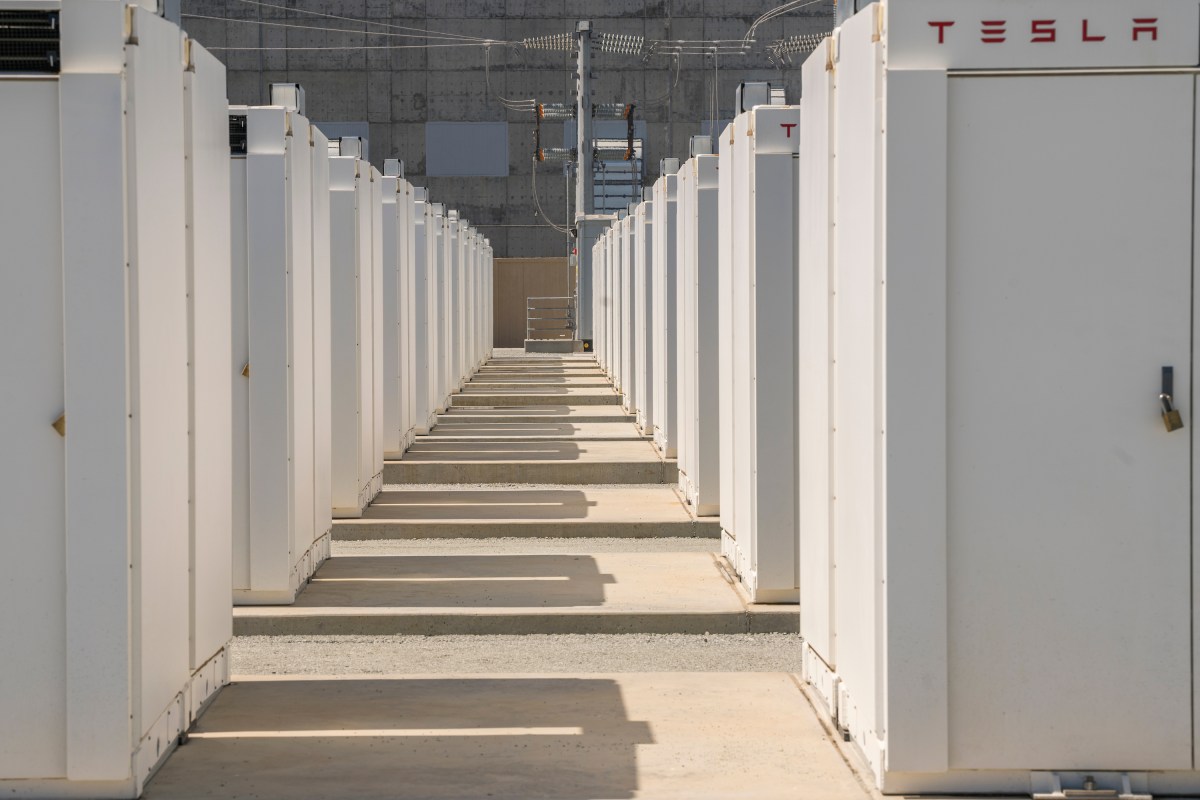
How Tesla Megapacks power SpaceX's expanding energy needs
SpaceX has poured $329 million into Tesla Megapacks so far this year, and that number says more than any press release could. It shows how naturally Elon Musk's companies feed each other, not as a gimmick, but as a practical engine for progress. When one arm needs serious storage, another steps up with the hardware. That kind of interdependence is worth watching, especially as Tesla Semi Production Ramps Up elsewhere. Explore how these threads weave together; the connections are where the real momentum lives.

Tesla weighs selling China operations amid Taiwan uncertainty
Tesla is reportedly preparing to sell its China business, a move tied to the possibility of a SpaceX merger and contingency plans should Beijing move on Taiwan. It's a striking acknowledgment of how geopolitical risk now shapes corporate strategy. The decision reflects a pragmatic, if sobering, view of what the future may demand. For those following the intersection of tech and global uncertainty, this is worth watching closely.