Stateful
Stateful at Beyond Market Intelligence is a file of 4 stories. The newest of them: “Unikraft packs one million AI sandboxes into a single server”, “How OpenAI Built Continuous Voice Without Compromising Speed”, and “From Agent to Interface: Building a Production-Ready UI for LangGraph”. Felipe Huici is tackling one of the most pressing bottlenecks in AI infrastructure: the sheer cost of spinning up isolated environments. OpenAI's engineering deep dive into GPT-Live reveals a thoughtful separation of concerns: the live path handles media and inference, while application logic runs behind an asynchronous RPC boundary. Acme AI is the next-generation, AI-powered spreadsheet platform built to replace Excel and redefine how analysts, data scientists, and enterprise teams work… The list below is every Stateful story on Beyond Market Intelligence, newest first.

Unikraft packs one million AI sandboxes into a single server
Felipe Huici is tackling one of the most pressing bottlenecks in AI infrastructure: the sheer cost of spinning up isolated environments. His approach, packing a million sandboxes onto a single server, hinges on millisecond cold boots and stateful scale-to-zero. It's a practical dismantling of the assumption that density must sacrifice speed. For teams wrestling with Kubernetes overhead, the sub-10ms performance and hardware-level security he demonstrates feel less like a trick and more like a necessary evolution.
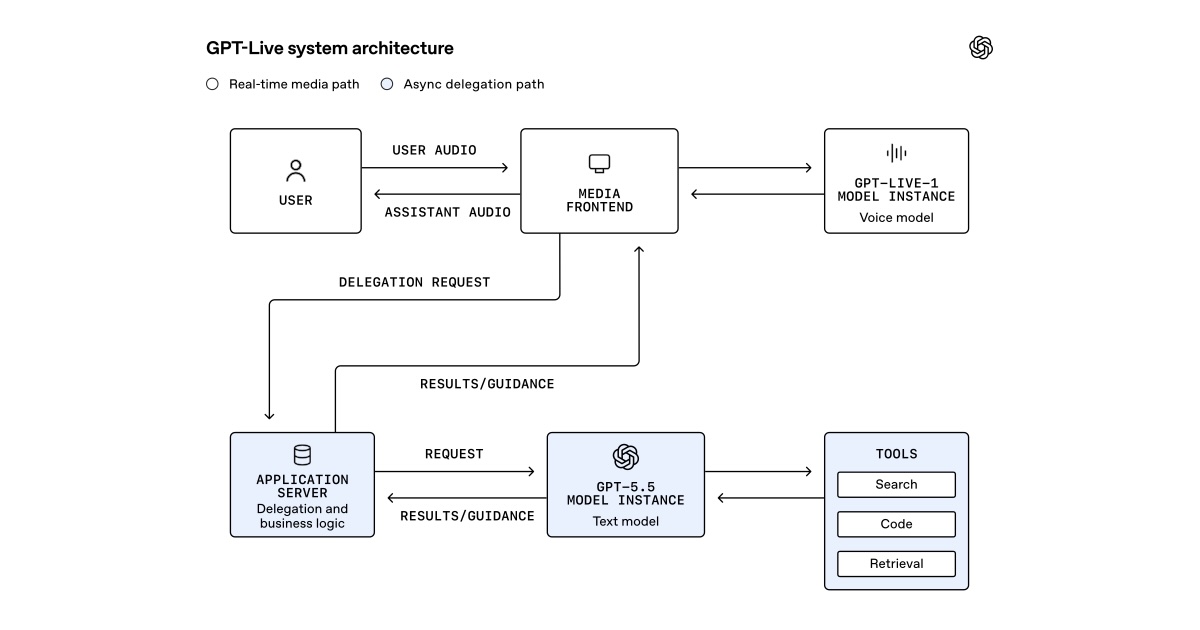
How OpenAI Built Continuous Voice Without Compromising Speed
OpenAI's engineering deep dive into GPT-Live reveals a thoughtful separation of concerns: the live path handles media and inference, while application logic runs behind an asynchronous RPC boundary. That's a pragmatic architecture for continuous voice interaction, one that prioritizes responsiveness without tangling latency-sensitive work in heavier tasks. It's the kind of clarity that makes complex systems feel inevitable. For broader context on AI behavior in practice, our earlier piece on AI agents sharing user images offers a cautionary counterpoint worth revisiting.

From Agent to Interface: Building a Production-Ready UI for LangGraph
Building a production-ready interface for a stateful LangGraph agent sounds like a step toward making AI tools genuinely practical. Creating a Streamlit UI matters because a powerful agent is only useful if people can actually interact with it. The focus here is on accessibility, turning complex backend logic into something approachable. It is a reminder that thoughtful design carries equal weight to the technology underneath.

Give AI agents a persistent workspace with Cloudflare's new open-source runtime.
Cloudflare's new open-source runtime, Cloudflare Computer, gives AI agents something closer to a real machine than the usual ephemeral containers. By leaning on Cloudflare isolates, it promises faster, cheaper, and more scalable execution for agentic workloads. That's a meaningful step beyond stateless setups, and it's worth exploring if you're building agents that need persistence. For more on how Cloudflare thinks about performance, their EmDash CMS migration offers a useful parallel. This runtime feels like a practical push toward agents that actually finish the job.