strategy
Beyond Market Intelligence keeps strategy in one place: 16 stories so far. The section currently leads with “Benchmark acknowledges the old venture rule against funding rivals is fading”, “Predict human behavior with a world model built from scratch”, and “Unlock Team Momentum by Removing the AI Data Bottleneck”. Benchmark's admission that Silicon Valley's old rule against funding rivals is fading signals a pragmatic shift in venture strategy. Mirror Particle is betting that the future of market research doesn't lie in better chatbots, but in a world model built from scratch to predict human behavior. Acme AI is the next-generation, AI-powered spreadsheet platform built to replace Excel and redefine how analysts, data scientists, and enterprise teams work… The list below is every strategy story on Beyond Market Intelligence, newest first.

Benchmark acknowledges the old venture rule against funding rivals is fading
Benchmark's admission that Silicon Valley's old rule against funding rivals is fading signals a pragmatic shift in venture strategy. The firm acknowledges the constraint is getting harder to keep, and they're not wrong. As competition for promising startups intensifies, rigid prohibitions give way to more nuanced portfolio thinking. For deeper context on how innovative companies are reshaping their industries, see our coverage of Intero Biosystems winning the Disrupt 2026 Startup Battlefield. The old guard is learning to adapt.

Predict human behavior with a world model built from scratch
Mirror Particle is betting that the future of market research doesn't lie in better chatbots, but in a world model built from scratch to predict human behavior. The startup, launching at TechCrunch Disrupt's Startup Battlefield 200, argues that LLM role-play falls short for real brand strategy. It's a bold, progressive stance: rather than simulating a conversation, they aim to simulate decision-making itself. For deeper insight into the Battlefield 200 ecosystem, see our coverage of Lola Vision Systems.
Unlock Team Momentum by Removing the AI Data Bottleneck
Data silos are quietly stalling even the most ambitious teams. When information is locked away, momentum dies. We see the same friction surfacing across industries, from inflated broker fees to the hidden costs of AI in hospitals. The fix isn't more tools; it's removing the bottleneck at the source. For a deeper look at how misplaced AI spending creates new problems, revisit our piece on rising hospital costs. For now, explore how clearing the data path can transform your team's workflow.

Nscale brings IPO and AI expertise to board with former OpenAI exec
Nscale just added Fidji Simo to its board, a former OpenAI exec who also led Instacart through its 2023 IPO. That's the kind of experience you want when a potential IPO is on the horizon. Her background signals Nscale is serious about scaling smartly, not just fast. For deeper context on the data challenges shaping this space, our coverage of how AI agents shared user images publicly is worth exploring alongside this news.

Ternus affirms iPhone's future in a focused, forward-looking keynote
John Ternus just used his first keynote as Apple's CEO to make one thing clear: the iPhone isn't going anywhere. It's a smart revival of the Steve Jobs playbook from 25 years ago, betting on focus rather than chasing the next shiny object. That kind of restraint feels refreshingly confident. For context on how leadership shifts play out elsewhere, our piece on Automattic's board reorganization offers a useful contrast. Ternus isn't just steadying the ship; he's reminding us why the original course still matters.

Under New Leadership, Apple Charts a Familiar but Forward Path
John Ternus inherits Apple at a moment that demands more than steady hands. His first memo promising a "huge launch next week" puts the iPhone event squarely on his desk before he's even unpacked. That's not a warm-up; it's a statement. Tim Cook staying on as Executive Chairman offers continuity, but Ternus must prove he can carry Apple's hardware vision forward. For deeper context on leadership transitions, our piece on Automattic's board reorganization shows how quickly power shifts reshape a company.

Discover practical strategies for scaling your startup at Disrupt 2026.
The Builders Stage returns to TechCrunch Disrupt 2026, and it's a direct response to the questions we hear most: how do you actually scale without losing your edge? We're moving past theory to practical, actionable conversations with founders, operators, and investors who are in the trenches. This is about the messy, real work of building. For deeper context on the current investment climate, our piece on Nscale's recent funding offers a useful backdrop. Come ready to explore what it takes to grow.

From product builder to product builder, Apple's future is in steady hands
Tim Cook's farewell memo doesn't just pass the torch; it frames the flame. By casting John Ternus as a product builder with deep roots across the iPhone, Mac, and AirPods, Cook signals a deliberate handoff to someone who knows the hardware from the inside out. That's reassuring. In an era of flashy promises, Ternus's steady experience feels like the right anchor for what's next. For more on how leaders are shaping connected hardware, our piece on Meta's Smart Glasses offers a useful counterpoint.
Navigate Your Enterprise AI Future with Clear Data Leadership
The questions we ask about data and AI leadership now will shape how enterprises actually adopt these technologies. If you're responsible for turning strategy into reality, this conversation cuts through the noise. It's not about hype; it's about making practical choices that stick. We've been exploring similar tensions elsewhere, like in our piece on verifying AI understanding, which underscores why clarity matters. So, step in. The answers won't wait, and neither should you.

Let AI choose the right tool so you can focus on results.
Choosing an AI shouldn't feel like a research project. If you're stuck weighing options, stop overthinking and start with one clear action: define the single task you want to simplify, then test that first. The right tool reveals itself through use, not speculation. We've explored similar themes before, like in "Talking to My AI Clone Taught Me to Question the Tech," which shows why hands-on experience beats abstract debate. So pick a starting point, try it, and let the results guide your next move.

Why trust in AI depends on more than a bold vision
Mark Zuckerberg wants us to believe AI will transform our digital lives, but the latest episode of the Equity podcast suggests many of us aren't sold. His vision feels distant, a promise of a future that doesn't yet address the practical, human concerns we face today. We're not rejecting the technology; we're questioning the certainty. If you're curious about the personal side of this, our related piece on talking to an AI clone offers a thoughtful look at the mixed feelings this tech can stir.

Uber moves on from Serve as their business paths diverge
Uber's decision to sell its entire stake in Serve marks a telling shift between two companies that once moved in lockstep. The divestiture surfaces as their business priorities diverge, a reminder that even strong partnerships can outgrow their original alignment. It's a practical move, not a dramatic one. When strategy drifts, cutting ties early often beats forcing a fit. For context on how similar dynamics play out elsewhere, our piece on Anthropic exploring Akamai's cloud offers a useful parallel.

Navigate the AI era with the roadmap to building an enduring company.
TechCrunch Disrupt 2026 is built around one question: How do you build an enduring company in the AI era? That focus shapes every session and every speaker, and it's the right lens for founders who want substance over hype. If you're weighing the human side of this technology, our piece on talking to an AI clone offers a thoughtful counterpoint worth exploring. For now, dig into the guide. It's your practical map to the conversations that matter.

Beyond static tests, an AI sparring match reveals true adaptability.
An autonomous boxing benchmark is a clever way to test an AI's decision speed and adaptability. Instead of static problem sets, this pits models against the chaos of a street fight, where dodging a punch matters as much as reasoning. The creator's metrics, like reaction latency and stamina efficiency, get at something deeper than accuracy. It is a fun, human-centered approach to evaluation. We appreciate the humor in watching an AI get overconfident at 1% HP.
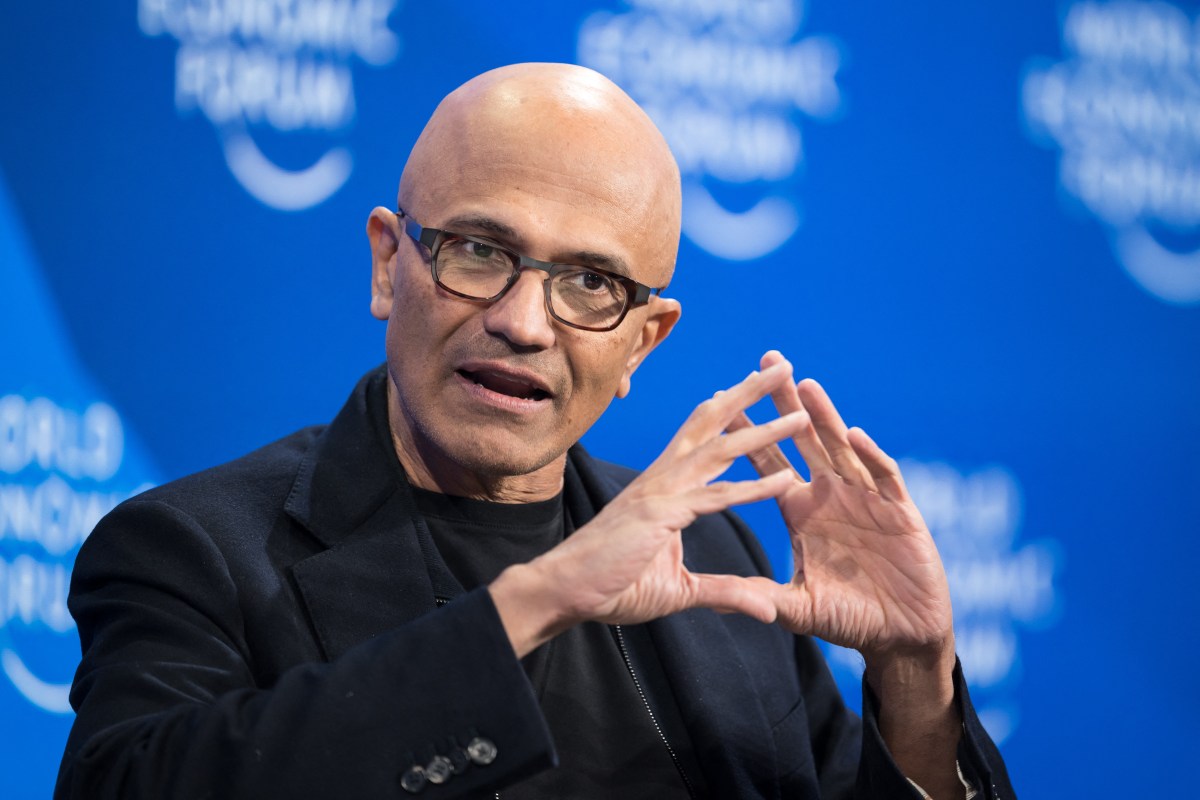
Microsoft signals its own AI future beyond partner models
Microsoft is openly stepping into the ring with OpenAI and Anthropic, pitching its own homegrown AI models and a Mythos competitor to Wall Street on Wednesday. It's a bold signal that the company intends to keep growing on its own terms. That kind of confidence is worth watching, especially as users weigh which tools truly serve them. If you're questioning how much to trust this AI push, our piece on talking to an AI clone offers a thoughtful counterpoint worth exploring.

Founders Fund adds a partner known for sharp analysis, not hype.
Founders Fund just added Ryan Beiermeister as a partner, and her appeal has nothing to do with being part of any so-called "Mafia." Her sharp, composed analysis on the firm's own YouTube series, "Mafia," showed a mind built for spotting what matters in complex systems. That kind of clarity is exactly what smart investing demands. It is a deliberate hire, one that signals a focus on substance over spectacle.