task
7 stories filed under task on Beyond Market Intelligence. The newest of them: “Bridging Retrieval and Action: A New Approach to AI Tasks”, “Evaluating AI Vision: A Spider Photo Benchmark Reveals Accuracy Gaps”, and “Measuring specification ambiguity to predict shared model failures”. RAG retrieves. A single benchmark won't settle the debate on AI vision, but it can ground it. Acme AI is the next-generation, AI-powered spreadsheet platform built to replace Excel and redefine how analysts, data scientists, and enterprise teams work… The list below is every task story on Beyond Market Intelligence, newest first.

Bridging Retrieval and Action: A New Approach to AI Tasks
RAG retrieves. Agents act. The gap between them is where real work happens, and one builder decided to close it by hand. They connected both systems explicitly, then ran the same nine tasks through all three approaches. The result is a clear look at what each setup can and cannot do. It is a practical experiment, not a theory. If you are weighing how much autonomy to hand your AI, this is a useful starting point.
Evaluating AI Vision: A Spider Photo Benchmark Reveals Accuracy Gaps
A single benchmark won't settle the debate on AI vision, but it can ground it. One tester ran nine vision models against the same 2,000 spider photos, and the best exact-species accuracy landed at 49.85%. That gap matters. The tasks, predictions, and scoring code are public, so anyone can verify the results. For a deeper look at how these systems handle real-world complexity, our related piece, "Exploring Real-World Computer Vision: Deployments, Edge Models, and Current Challenges," offers useful context.
Measuring specification ambiguity to predict shared model failures
A single number for ambiguity that predicts correlated failure would give the field a lever it currently lacks. The question is whether that relationship is a gentle slope or a cliff. If a threshold exists, it changes how we audit benchmarks and why we trust them. Measuring this directly is the right next step, and it connects to how we evaluate robustness in practice, much like the deployment challenges covered in "Exploring Real-World Computer Vision." The metric is the missing piece.

Fine-tuning shapes smarter AI agents, even from modest models
Nvidia's latest research flips the spotlight from the model to the harness, and that's a shift worth noticing. Their work shows that fine-tuning the surrounding framework can keep AI agents on track, even when the underlying model isn't particularly strong at the task. It's a refreshingly grounded take, suggesting that clever engineering around the model matters as much as raw capability. For anyone wrestling with AI's unpredictability, this points to a more practical path forward.
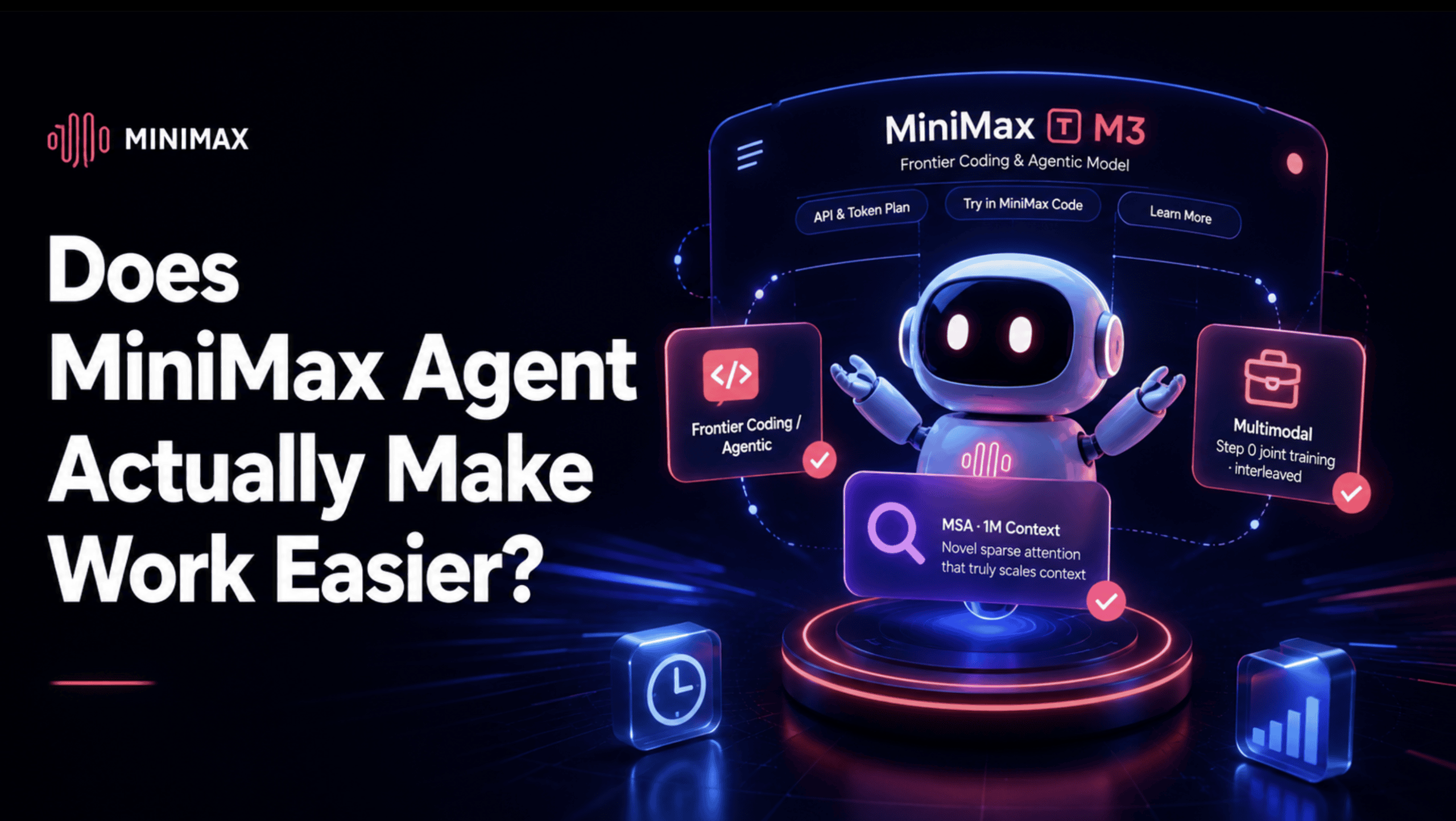
Explore how MiniMax Agent transforms complex tasks into simpler workflows
MiniMax's own architecture is the story here, not just the promises. We read how their agent handles a real task against the actual API, and the details matter. It's one thing to claim simplicity; it's another to trace the workflow and see where the friction actually disappears. This piece fills in the gaps the launch post skipped, giving you a clearer lens on whether the tool genuinely lightens the load.
Beyond language: How JEPA aims to close the gap between answering and doing
LeCun's point lands well: an LLM can describe the physical world without truly modeling it. That gap between explaining and doing is the real challenge. His push for JEPA as a path forward is compelling, but it raises a fair question. Are we chasing an architectural fix, or just hoping for a magic bullet that isn't in our toolbox yet? It's a worthwhile tension to explore. For more on how AI handles understanding, check out "Verify Your AI's Understanding: A Simple Check for Tax Season."
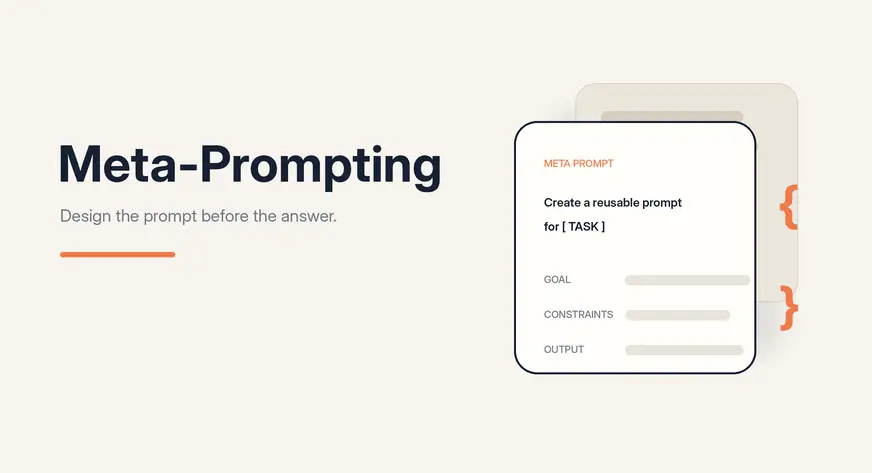
Design Smarter Prompts by Letting AI Build Its Own Workflow
Prompts are the quiet force behind every useful interaction with a large language model, yet they often fail when consistency matters most. Meta-prompting changes that by asking the model to build its own reusable prompt, template, or workflow before diving into the task. It's a smarter approach for teams that need the same output format again and again. If you're tired of vague results, this technique deserves your attention.