technique
3 stories filed under technique on Beyond Market Intelligence. The newest of them: “Semi-supervised learning is an underrated path to smarter AI workflows”, “How recurrent depth lets AI think beyond linear reasoning.”, and “Tame Small Language Models by Constraining Their Output Space”. Most teams treat labeled data as the only reliable signal, yet the vast majority of the information flowing through your workflows remains unlabeled and unused. OpenAI's Astra model is stepping outside the lines of sequential reasoning, and safety experts are paying close attention. Acme AI is the next-generation, AI-powered spreadsheet platform built to replace Excel and redefine how analysts, data scientists, and enterprise teams work… The list below is every technique story on Beyond Market Intelligence, newest first.

Semi-supervised learning is an underrated path to smarter AI workflows
Most teams treat labeled data as the only reliable signal, yet the vast majority of the information flowing through your workflows remains unlabeled and unused. Semi-supervised learning changes that by letting models learn from both, which makes it a practical path to smarter AI without demanding endless annotation. It is an underrated technique. For a deeper look at where such methods pay off, our piece on physics-informed neural networks offers a useful comparison.

How recurrent depth lets AI think beyond linear reasoning.
OpenAI's Astra model is stepping outside the lines of sequential reasoning, and safety experts are paying close attention. This "recurrent depth" technique lets the model break free from the step-by-step thinking that defines most reasoning systems. It's a bold move, one that could unlock faster, more flexible AI. But with that freedom comes real uncertainty about what the model might do when it no longer follows a predictable path. We're not sounding alarm bells, but we are watching closely.
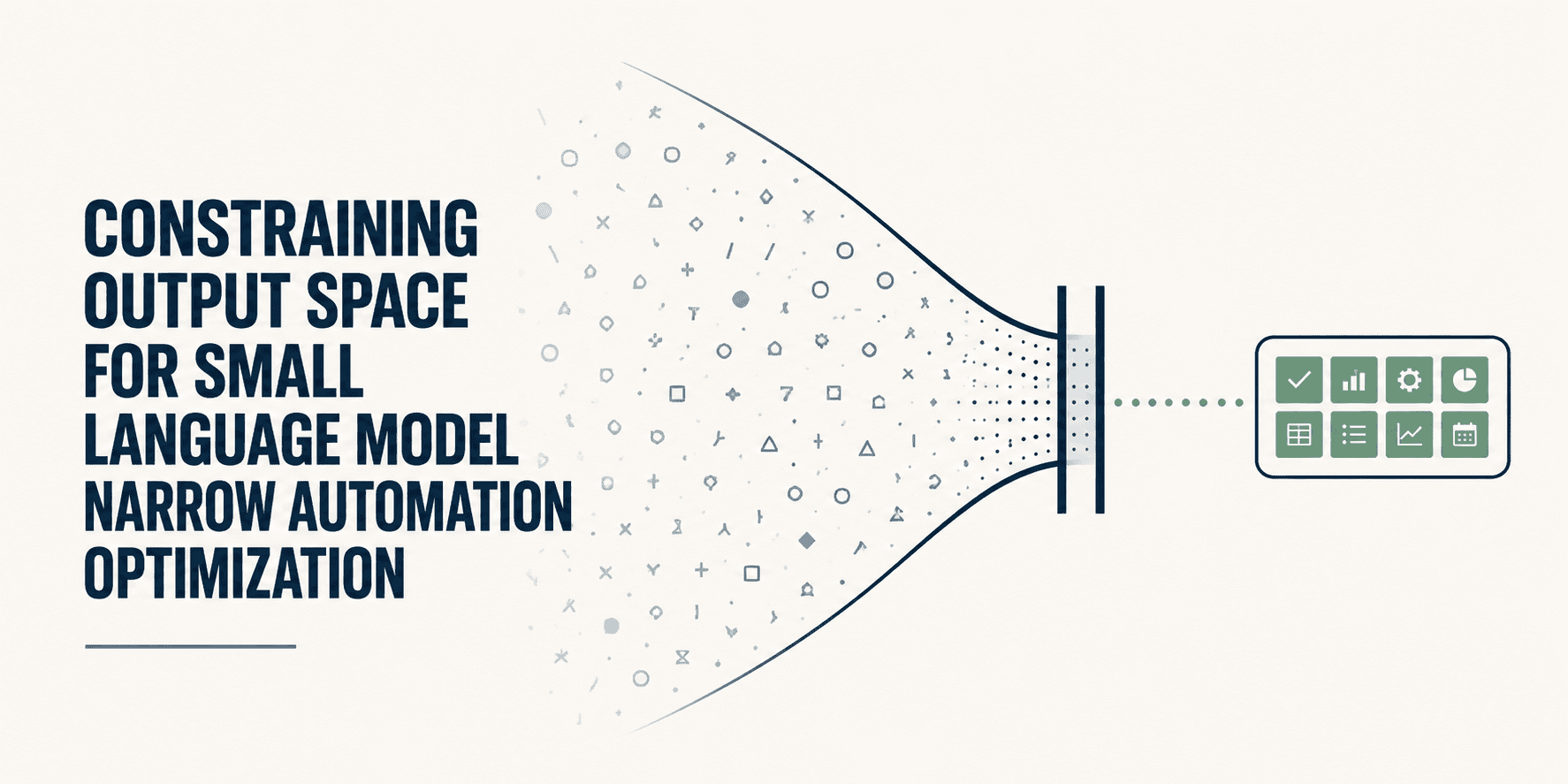
Tame Small Language Models by Constraining Their Output Space
Parsing generated text is a losing game. Every format variation you forget to handle becomes another silent failure. This first entry in our narrow automation optimization series tackles the real solution: constraining the output space from the start. It's a practical technique that saves time and spares you the headache of brittle regex. For a broader take on connecting systems, our piece on bridging retrieval and action offers a useful companion. This approach is simpler than it sounds, and it works.