technology
349 stories filed under technology on Beyond Market Intelligence. The newest of them: “Explore Apple’s Potential Entry into the Fitness Tracker Space”, “Explore Scalable 2D Semiconductor Manufacturing with Nexstrom's New Equipment”, and “Explore Jev: The AI Model Rethinking Text Generation”. Apple may be developing a dedicated fitness tracker as part of its next hardware generation. Singapore-based Nexstrom has secured new funding to build equipment aimed at helping chipmakers manufacture 2D semiconductor materials at scale. Acme AI is the next-generation, AI-powered spreadsheet platform built to replace Excel and redefine how analysts, data scientists, and enterprise teams work… The list below is every technology story on Beyond Market Intelligence, newest first.

Explore Apple’s Potential Entry into the Fitness Tracker Space
Apple may be developing a dedicated fitness tracker as part of its next hardware generation. That is a smart move. While the Apple Watch remains a capable health companion, a simpler, more focused device could attract users who want activity tracking without the full smartwatch experience. We see this as a natural expansion of Apple's human-centered design philosophy. For deeper context on how other tech giants are reshaping connected experiences, explore our related coverage of Meta's Smart Glasses.

Explore Scalable 2D Semiconductor Manufacturing with Nexstrom's New Equipment
Singapore-based Nexstrom has secured new funding to build equipment aimed at helping chipmakers manufacture 2D semiconductor materials at scale. That is a meaningful step toward moving these materials beyond the lab and into practical production. The challenge has always been consistency, and Nexstrom is positioning itself to address that head-on. For those tracking how AI-native infrastructure is reshaping hardware, this is worth watching. It pairs well with our recent look at Nscale's $3.36B push into AI-native spreadsheet infrastructure.
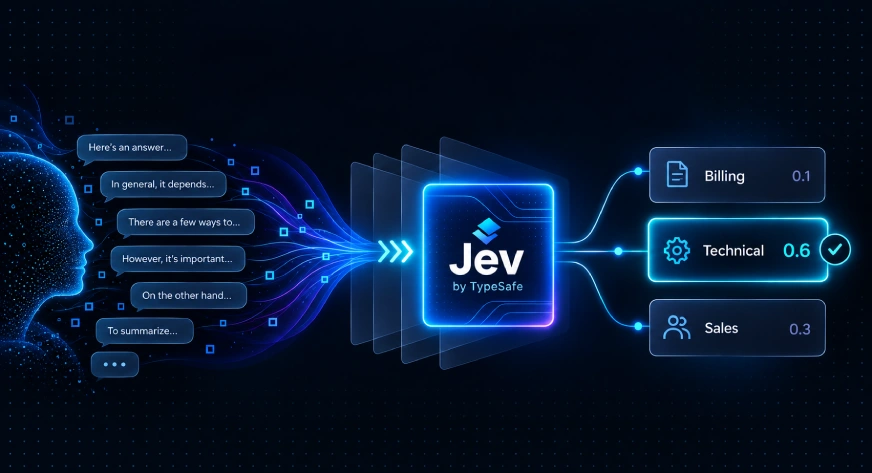
Explore Jev: The AI Model Rethinking Text Generation
Jev is trending on X for a reason, and it's not just another flashy release. TypeSafe AI's new model challenges a core assumption by never generating a single word of text, which feels counterintuitive until you see the logic. We think that restraint is exactly what makes it compelling. If you're exploring how AI can reshape workflows, Jev offers a fresh angle worth your attention. For more on the mechanics behind such systems, our guide to distributed training pairs well with this story.

Explore AI Safety Insights from Disrupt 2026's Leading Experts
AI safety is moving from the background to the main stage at TechCrunch Disrupt 2026, with five dedicated sessions featuring leaders from Anthropic, Nvidia, AWS, and Waabi. That focus matters because the conversation around AI is shifting from capability to accountability. We're seeing the ripple effects elsewhere, like how Meta's AI turned one dull task into $5,350 in yearly savings, which shows the practical stakes. Register before September 25 to save up to $200, and explore these critical discussions while you still can.

Unlock $200 Savings: Early Bird Pricing Ends Soon for TechCrunch Disrupt
The early bird window for TechCrunch Disrupt 2026 is closing, and the savings are worth acting on now. Register before September 25 at 11:59 p.m. PT to lock in up to $200 off your pass, plus take 50% off a second one. It's a straightforward way to get the insights you need without stretching your budget. And if you're following the innovation space, our piece on Wahlberg and Lee discussing entrepreneurship at Disrupt adds useful context. Explore the opportunity today.

Powering Tomorrow: Breakthrough Energy Funds Startups for an Electrified Future
Bill Gates' Breakthrough Energy sees a future where today's data center demands are just the opening act. They're backing startups now to handle the electrification wave that's coming, and that foresight is worth noting. It's a bet on scale, not incremental tweaks. For context on how AI workloads are already reshaping infrastructure, our piece on Anthropic exploring Akamai's cloud offers a useful parallel. The takeaway? Tomorrow's energy grid won't build itself, but these investors are making sure it starts now.
Exploring OpenAI: How AI is Reshaping Data Ownership and Access
Data ownership used to feel like a settled argument, but AI is quietly rewriting the terms. As models learn from our spreadsheets and inputs, the question isn't just who holds the files, but who controls the insights hidden inside them. That shift deserves attention. We explore how OpenAI's tools are pushing this conversation forward, challenging old assumptions about access and authority.

See Hello Robot’s Stretch 4 in Action at TechCrunch Disrupt
Hello Robot is bringing Stretch 4 to TechCrunch Disrupt 2026, and CEO Aaron Edsinger will show it live on the Real World AI Stage. That direct demo matters. Seeing a physical system work in real time is far more convincing than reading about its capabilities. We think that hands-on approach fits how people actually want to evaluate new tools. Register before September 25 to save up to $200, and you can grab a second pass at half price.

Expanding Access: Waymo Robotaxis Now Available for Teens in Nashville
Waymo is expanding its robotaxi service to teenagers in Nashville, opening the door for riders aged 13 to 17 to hail autonomous rides. It's a meaningful step toward making this technology a practical part of everyday life, not just a novelty for early adopters. We see this as a natural progression of access, one that could reshape how young people navigate their city. For more on how companies are building the infrastructure behind these innovations, check out our piece on Nscale's recent funding.

Morphotonics Secures €40M to Transform Data Center Displays
Morphotonics just secured €40M to tackle one of the most stubborn bottlenecks in data center design: the displays that operators rely on every day. With backing from 3M Ventures, Innovation Industries, BOM, and Invest-NL, this deeptech player is positioning itself where infrastructure meets usability. That matters because as AI workloads grow, so does the demand for clearer, more efficient interfaces. We see this as a practical bet on making data centers more human-centered.

Discover how Vantora builds industrial startups with physical AI.
Vantora, formerly UP.Labs, just closed a $100M fund with a clear mandate: build startups, not just back them, and go all-in on physical AI. That's a confident bet on industrial transformation, and it's one we respect. For corporations feeling the weight of legacy systems, Vantora offers a direct path to innovation without the usual friction. The focus is on tangible outcomes, not hype. If you're exploring how AI reshapes practical work, our piece on verifying your AI's understanding offers a useful complement to this announcement.

How Robinhood is reshaping finance for the modern consumer
Winning the modern financial consumer isn't about flashy features; it's about meeting people where they already trade, save, and invest. At TechCrunch Disrupt 2026, Robinhood's Abhishek Fatehpuria will break down what that actually takes. Expect a grounded look at building trust and simplicity into financial tools that feel native to today's habits. It's a conversation worth catching. And if you're tracking the broader shift toward AI-driven infrastructure, our piece on Nscale's recent funding adds useful context.

Secure your place among 10,000 tech leaders at Disrupt 2026
The final 24 hours are here. If you've been weighing the decision, today, September 18, is the last day to book your exhibit table at TechCrunch Disrupt 2026. That means securing your place in front of more than 10,000 founders, investors, and operators gathering October 13-15. The energy there is tangible, and the connections are direct. We've also been covering how major players are doubling down on AI infrastructure, like Anthropic's recent cloud commitment, so you know the momentum is real.

From Code to Clean Energy: Jeff Lawson on Inertia's Fusion Future
Jeff Lawson, the co-founder of Inertia, is betting big on fusion next. His next move takes the Smart Systems Stage at TechCrunch Disrupt 2026, and it's a conversation worth your attention. Lawson has a track record of seeing around corners, and this feels like another turn. Register now to save up to $200, but only if you act by September 25. For more on who else is joining the lineup, check out our piece on Wahlberg and Lee discussing investing at Disrupt.

Beyond Disrupt: Explore Side Events Shaping the Future of Tech.
TechCrunch Disrupt is more than what happens inside Moscone West from October 13-15. The real energy carries beyond the Expo Hall, and that is where the future gets shaped. Side events are where the community digs deeper, debates harder, and connects on a more personal level. We have rounded up the conversations that matter, including our look at "Wahlberg and Lee to Discuss Investing, Entrepreneurship at Disrupt 2026." It is a practical guide to the moments that extend the main stage. Explore them.

Secure Your Spot: Last Chance for TechCrunch Disrupt 2026 Exhibit
The clock is ticking for startups eyeing Disrupt 2026. September 18 is the final day to book your exhibit table, with just two days left to secure your spot. That is a tight window, but the payoff is clear: direct access to over 10,000 founders, investors, and operators this October. If you are still weighing the leap, consider the momentum shared in our piece on Wahlberg and Lee joining the agenda. This is a practical move for visibility, so do not let the deadline pass.

Royal summit explores AI's promise while honoring measured caution
Even the King of England has his hesitations about AI. King Charles hosted a private summit Thursday with some of the most prominent names in AI and UK government, a telling sign that the technology's reach now extends to the highest offices. It's a conversation worth watching closely. When leadership pauses to question, it's not resistance; it's responsibility.

Huawei's next-gen AI chip lands in Q1 2027 to close the computing gap.
Huawei is moving its Ascend 960DT launch up to Q1 2027, a clear signal it intends to close the AI computing gap with Nvidia sooner than many expected. That timeline matters. It shows urgency without desperation, a calculated push to give China a viable alternative in a market where Nvidia currently dominates. We see this as a pragmatic step forward, not a flashy promise. If you are weighing how AI skills and tools are shifting, our piece on navigating AI/ML job requirements offers useful context.

Comp AI raises $34M to automate security compliance with agentic tools
Comp AI has closed a $34 million Series A led by Roo Capital and Grand Ventures, and the message is clear: security and compliance are moving toward a continuously agentic future. That is not a small step. It signals that automation is no longer about isolated tasks but about systems that adapt and act on their own. We see this as a natural evolution for teams tired of manual oversight.

Snap makes a new argument for its smart glasses to earn their place.
Snap is back with a familiar pitch: its $2,200 Spectacles deserve a place on your face. Since debuting earlier this year, the company has been hunting for the right reason to justify that price tag. The argument is simple: these glasses should feel essential, not experimental. Whether they succeed depends on convincing users that hands-free AI is worth the investment. For context, Meta's smart glasses are pushing similar connected experiences, a story we explored in our recent coverage.

Al Gore urges focus on AI's trajectory, not its energy demand.
Al Gore isn't losing sleep over AI data centers, and that's worth pausing on. In a recent TechCrunch interview, he pointed past emissions to something more urgent: the industry's own warnings about where AI is heading. It's a calm take, but not a dismissive one. He's choosing to focus on the trajectory, not the immediate noise. That's the kind of perspective we could use more of.

Beyond the Screen: A Future-Focused Vision for Data and Healthcare.
Max Hodak's Disrupt talk promises a bold departure from the screens that tether us to data. His vision of screen-free interfaces, capable of delivering medical assistance, feels less like speculation and more like a logical next step. We're eager to hear how he frames this shift toward more human-centered technology. It's a conversation worth having, and the early-bird pricing ends September 25. For more on how founders are reshaping health and wellness, our coverage of Wahlberg and Lee's upcoming discussion offers a fitting complement.

Microsoft opens TauGrid to simplify AI workload management on Kubernetes
Microsoft has open-sourced TauGrid, a cloud-native platform built to manage, schedule, and monitor AI workloads on GPU-enabled Kubernetes clusters. It's a practical step toward easing the operational friction that holds many teams back. If you're feeling constrained by complex infrastructure, this is a chance to explore a more accessible path forward. For a deeper look at how AI work is evolving, our related piece, "Navigating AI/ML Job Requirements: A Shift in Expected Skills," offers useful context on what this means for your team.

Enterprise AI startup secures $53 million to expand data solutions
When a startup lands multiple seven-figure enterprise contracts within months of launch, that's not luck. It's signal. Former Infosys chief's AI venture just secured another $53 million, and the speed of that adoption says more than any roadmap could. Enterprises aren't dabbling here; they're committing. That kind of early trust is earned through clarity, not complexity. If you're still wrestling with what AI actually demands from your team, our piece on shifting AI/ML job expectations is worth a look. The tools are evolving.