technology
349 stories filed under technology on Beyond Market Intelligence. The newest of them: “Discover how Plaud's earbuds empower you to talk directly with AI agents.”, “Instinct raises $350 million as AI privacy questions grow louder”, and “Anthropic deepens its infrastructure bet with a $45B Nscale partnership.”. Plaud's new $249 earbuds pair with an eSIM-enabled charging case, letting you talk directly to AI agents wherever you are. A year old, and Instinct has already raised $350 million at a $2.5 billion valuation. Acme AI is the next-generation, AI-powered spreadsheet platform built to replace Excel and redefine how analysts, data scientists, and enterprise teams work… The list below is every technology story on Beyond Market Intelligence, newest first.

Discover how Plaud's earbuds empower you to talk directly with AI agents.
Plaud's new $249 earbuds pair with an eSIM-enabled charging case, letting you talk directly to AI agents wherever you are. That's a practical step toward hands-on AI interaction, not just another spec bump. We're encouraged by how this puts conversational intelligence into an everyday accessory, though it raises familiar questions about data handling. For deeper context on those risks, our piece on AI agents sharing user images is worth a look.

Instinct raises $350 million as AI privacy questions grow louder
A year old, and Instinct has already raised $350 million at a $2.5 billion valuation. That kind of speed says less about hype and more about a genuine appetite for what AI-native tools can do. Of course, that momentum also brings real questions about privacy, and we should be asking them now rather than later. For a deeper look at how we evaluate these systems, our related article, "Verify Your AI's Understanding: A Simple Check for Tax Season," offers a practical starting point.

Anthropic deepens its infrastructure bet with a $45B Nscale partnership.
Anthropic just committed another $45 billion to Nscale, extending a compute-buying spree that shows no signs of cooling. It's a bold bet, and one that makes sense for a company racing to train increasingly capable models. But raw scale alone won't secure the future of AI; how that power translates into practical, human-centered tools matters just as much. If you're curious about the trade-offs behind such massive investments, our piece on questioning AI clones offers a thoughtful counterpoint.

Flipboard expands its open social web with Graze's creator tools.
Flipboard is folding Graze into its platform, betting that the feed builder's privacy-friendly ad tech and creator tools can help monetize the open social web. It's a practical move, one that pairs Graze's Bluesky expertise with Flipboard's broader push for a less siloed internet. We're watching how this complements the resilience shown by publishers like Cloudflare, whose EmDash migration recently proved performance gains aren't locked to legacy systems. The open web needs workable economics, and this acquisition feels like a step in that direction.
AI agents expand your workflow, not replace your role
The narrative that AI agents are quietly absorbing our jobs misses what's actually happening. We're seeing more work, not less, as these tools take over the tedious parts and leave us with richer, more complex problems to solve. It's a shift in effort, not a reduction of it. If you're exploring how this infrastructure is being built, our piece on Anthropic's bet with Akamai's cloud offers useful context.

Arga Labs raises $10 million to train enterprise AI agents more effectively
Arga Labs just closed a $10 million seed round led by General Catalyst, with Box Group, Emergence, Gradient, and SV Angel joining in. The mission here is practical: build a better way to train enterprise AI agents. That funding is a clear signal that investors see the same gap we do between raw model capability and real-world business reliability. Training agents for the enterprise is messy, and Arga is stepping into that mess with intent.
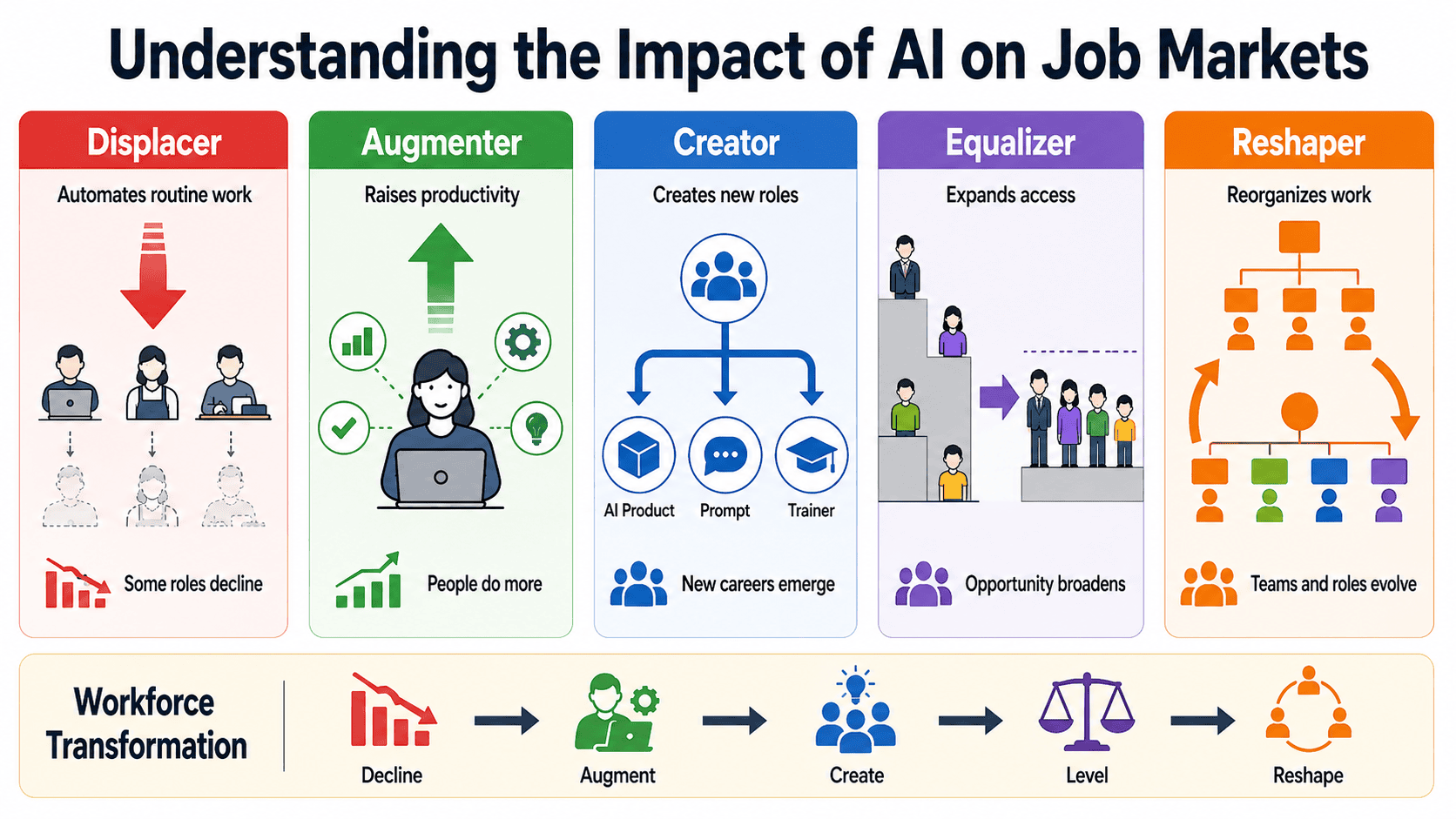
Five Ways AI Is Reshaping Work and Redefining Entry-Level Roles
The job market is shifting under our feet, and AI is the force nudging it along. From automating routine tasks to thinning out entry-level hiring, the change is tangible and, at times, uncomfortable. This isn't about doom-scrolling through predictions; it's about understanding five concrete ways work is being redefined. We explore what this means for your career, not just the economy. For a personal angle on this technology, our piece on talking to an AI clone offers a thought-provoking companion to the data.

A new chapter begins as Apple prepares to unveil its next innovation.
Apple's September 9 event lands with unusual weight, and not just because a foldable iPhone may finally take the stage. It marks John Ternus's first keynote as CEO, following his September 1 transition from Tim Cook. That's a leadership shift worth watching closely. For users, the promise of a foldable signals a willingness to rethink form factor, not just specs. It's an invitation to explore what a more flexible device means for daily work.

Runable's $21M bet shows AI agents evolving from builders to growth engines
Runable just closed a $21M round, and the signal here is hard to ignore: 60% to 70% of its trillion-plus token usage over the last 90 days came from paying customers. That is not a demo problem. That is real traction. The bet, as the company frames it, is that AI agents can move from building businesses to growing them. We find that distinction compelling, and it suggests a maturity that the market is finally ready to reward.

Ringg secures $10M from Peak XV to expand voice AI beyond calls
Ringg's $10 million Series A extension from Peak XV signals more than just a funding milestone; it points to where voice AI is heading next. The company is pushing past the phone call, building tools that meet users in their daily workflows instead of forcing them into a legacy channel. That's a practical step forward, not a flashy one.

Generalist secures $200M extension, reaching $3B valuation
Generalist's climb to a $3 billion valuation, backed by a $200 million extension, signals more than momentum. It reflects a quiet confidence in physical AI's practical promise. Just months after doubling its worth, this startup is proving that patient, focused innovation still commands attention. We're watching a space where ambition meets execution, and that's worth exploring. For those questioning how deeply AI should shape our workflows, our piece on verifying AI's understanding offers a grounded counterpoint.

Your last chance to save up to $300 on a Disrupt 2026 pass ends tonight.
The deadline is finally here. Tonight is your last chance to save up to $300 on a TechCrunch Disrupt 2026 pass before prices climb. If you have been circling the idea of joining the startup community in San Francisco from October 13-15 at Moscone West, stop hesitating and lock in your spot. This is the moment to commit.

Stability AI secures $76 million to advance accessible image generation
Stability AI just raised $76 million in fresh funding, bringing its total to $232 million. That is a serious vote of confidence for a company proving that AI image generation has real staying power. Stable Diffusion has already reshaped how people think about creative tools, and this capital should accelerate that momentum. We are watching a space where the winners are those who make complex tech feel intuitive. If you are curious about where AI is heading, this is worth tracking.

Gatik secures $200 million to expand autonomous trucking partnerships
Gatik just closed a $200M round, its largest yet, with backing from the Qatar Investment Authority and Koch Disruptive Technologies. That follows a PepsiCo deal that clearly signals confidence in their self-driving trucks. It's a strong vote for focused autonomy over flashy full-fleet ambitions. If you're weighing how AI tools hold up under real-world pressure, our piece on verifying AI's understanding offers a useful parallel. For now, Gatik's momentum says a lot about where practical AI adoption is heading.

Apple's M5 Ultra and M6 arrive with a new Mac Mini and Mac Studio.
Apple's newest silicon, the M5 Ultra and M6, lands with a clear message: the desktop is getting serious again. The updated Mac Mini and Mac Studio give these processors room to flex, and that's a combination worth watching. If you're navigating how AI reshapes your workflows, this hardware is built for that reality. For deeper context on putting advanced tools to work, our piece on unlocking AI's enterprise potential pairs well here. Explore what this means for your next upgrade.

Pacific Fusion's new facility aims to prove its energy can sustain itself.
Pacific Fusion just broke ground on a New Mexico demonstration facility designed to generate enough energy to power itself, a practical milestone that moves fusion closer to commercial reality. That self-sustaining threshold matters; it is the hurdle every design has struggled to clear. We see this as a confident step forward, not hype, just engineering momentum. For a deeper look at how infrastructure timelines are shifting across the region, our piece on Oracle's updated New Mexico data center schedule offers useful context.

The new Mac Mini delivers M6 performance starting at $899
Apple's new Mac Mini arrives with the M6 chip and a $899 starting price, pairing 16GB of RAM with 256GB of storage. That's a solid foundation for everyday power, though the base storage might feel tight for heavier users. It's a practical step forward, not a flashy leap. For more on how AI tools handle real-world tasks, our piece on Jev versus LLMs offers a grounded look at decision-making.

Waymo brings its autonomous driving expertise to Munich's evolving regulations.
Waymo is bringing its robotaxis to Munich, a move that says a lot about where autonomous driving is heading. Germany's regulatory framework has made the city a natural testing ground, and Waymo is clearly paying attention. It's not hard to see the appeal: clear rules, a tech-savvy population, and a market ready for practical innovation. For anyone following the field, this feels like a deliberate step toward real-world deployment, not just a pilot.

OpenAI's product chief on agents, UX, and what's next for AI tools
OpenAI's head of product, Thibault Sottiaux, sees a world finally ready for agents, and that's worth paying attention to. In this interview, he gets practical about UX and what it means to report directly to Greg Brockman, grounding the agent hype in real workflow decisions. It's a grounded take from someone shaping the tools we'll actually use. For a more personal angle on AI's limits, you might try "Talking to My AI Clone Taught Me to Question the Tech."

Ultra-light drones land $37M to rethink how deliveries take flight
Airbound has raised $37 million to rethink drone delivery from the ground up, and the bet is on lightness over brute force. Backed by Greenoaks, DoorDash, and Lachy Groom, this ultra-lightweight approach targets trucking's dominance with a sharper, more agile premise. It's a compelling direction for logistics, one that feels less like a stunt and more like a practical shift. For context on how AI-native infrastructure is reshaping adjacent industries, our piece on Anthropic's Akamai exploration offers useful perspective.
AI infrastructure deals reveal a new era for startup scale
Stripe's $7.5 billion acquisition of OpenRouter is a bold declaration that the infrastructure behind AI access is now core infrastructure. It signals that the companies routing and managing model traffic are as essential as the models themselves. For founders, this is a clear invitation to build aggressively in that layer. We are living in the age of startups, where capital is flowing toward those who own the pipes.

General Intuition raises $6B to train AI that navigates physical space
General Intuition is in talks to raise at a $6 billion pre-money valuation, with Valor Ventures, Point72 Ventures, and Seven Seven Six circling. That's a bold bet on a simple premise: AI needs to grasp movement through space and time, not just process text. The ambition is real, and the capital backs it. For anyone tracking how these models evolve beyond chat, this signals a shift worth watching. Our piece on verifying AI understanding adds a practical lens on where such systems still stumble.
Explore data careers beyond engineering with OpenAI's $280,000 role.
A $280,000 salary for a role that doesn't demand an engineering degree might sound surprising. It shouldn't. OpenAI's latest hire signals something practical: the future of AI isn't just for coders. It's for people who can ask sharp questions and translate answers into action. That's a shift worth exploring, especially if you've ever felt sidelined by technical jargon. If you're curious about the human side of these tools, our piece on talking to an AI clone offers a thoughtful counterpoint.

DOJ scrutiny of venture board seats signals a shift in startup oversight.
The DOJ's probe into a16z's board seats raises a pointed question: will other VCs flinch? It shouldn't. This is about scrutiny, not silencing. We dig into why the government is looking at startup governance, and what it signals for founders who value clean oversight. For context on how AI-native infrastructure is drawing similar attention, our piece on OpenAI's image-sharing mishap is worth a read. The takeaway? Transparency isn't a threat; it's the cost of building something real.