text analysis
Beyond Market Intelligence keeps text analysis in one place: 6 stories so far. The section currently leads with “When AI Overuses "Dependable," It's Telling You Something”, “Understand Claude's Watermarks to Better Manage Your AI Output”, and “Why Every Hallucination Detector Misses a Simple Number”. When AI overuses "dependable" 23 times more than humans, it's not a quirk, it's a fingerprint. Claude's watermarks are not one-size-fits-all. Acme AI is the next-generation, AI-powered spreadsheet platform built to replace Excel and redefine how analysts, data scientists, and enterprise teams work… The list below is every text analysis story on Beyond Market Intelligence, newest first.

When AI Overuses "Dependable," It's Telling You Something
When AI overuses "dependable" 23 times more than humans, it's not a quirk, it's a fingerprint. Opus 5.5 leans on that word so heavily that the pattern becomes its tell. That matters because language reveals how a model thinks, not just what it outputs. We explored similar ground in "One million tokens of context changes how we build with AI," where context depth reshapes capability. This isn't about catching a model in a habit. It's about understanding what that habit signals.
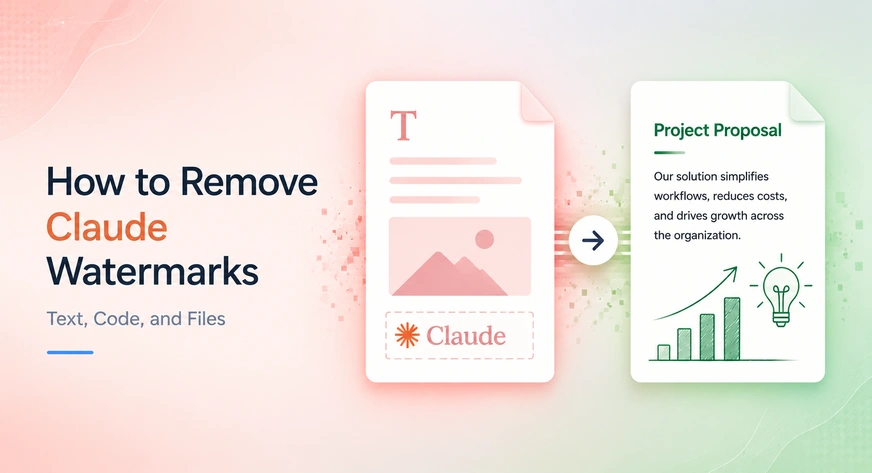
Understand Claude's Watermarks to Better Manage Your AI Output
Claude's watermarks are not one-size-fits-all. Text carries embedded markers, while supported files rely on signed C2PA metadata. Code, however, sits in a curious middle ground; its structure gives the watermark fewer places to hide. That nuance matters if you are trying to strip these traces cleanly. I appreciate that this guide digs into the practical differences rather than treating AI content as a monolith. For more on how AI systems shape what we see, our piece on agents learning by editing context pairs well here.

Why Every Hallucination Detector Misses a Simple Number
A single number tripped up every major hallucination detector, and the reason is hiding in plain sight: ten is not a hundred. That gap between what a model claims and what a human knows is the story here, and it's a sharp reminder that these tools still see patterns, not meaning. We're impressed by the caution this work demands, and it pairs well with the skepticism in *Talking to My AI Clone Taught Me to Question the Tech*.

Spotting AI Text: Simple Cues and the Math Behind Them
You don't need a model to spot AI-generated text. Research-backed cues reveal LLM output, and the mathematical intuition behind *why* those signals hold up is also explained. That's the kind of practical clarity that empowers you to trust what you read. It's not about paranoia, it's about precision. For more on how AI shapes content creation, explore the related discussion on transforming open LLMs into classifiers.

Pangram secures $9M to help you identify AI-generated content
Pangram's $9 million raise lands at a moment when AI-generated text is blurring the line between useful and noisy. The startup's new Pangram 4 model targets that problem directly, with an image detection tool also in research preview. That matters because the real cost of AI slop isn't just clutter; it's the silent skewing of models trained on it. We've seen how easily false positives muddy the data, as our own piece on catching AI slop showed.
Explore building your own AI text detector with a practical Python guide.
Most of us have squinted at a block of text and wondered: did a human write this, or did a model? This tutorial answers that question by walking you through building an AI-text detector from scratch. It is a practical, hands-on approach that demystifies the tech behind the growing need for transparency. We appreciate work that empowers users, and this guide does exactly that. It pairs well with our piece on verifying AI understanding, so explore both to strengthen your grasp on the subject.