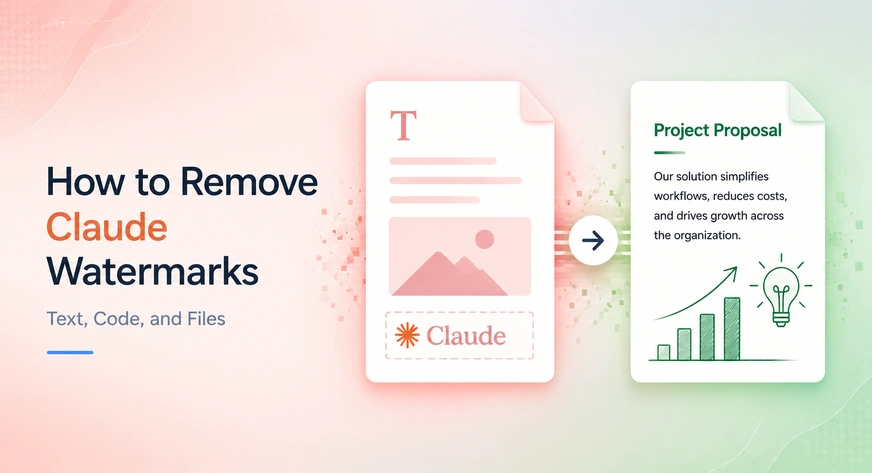
Watermarks on AI-generated content are a strange middle ground. On one hand, they are a necessary concession to transparency, a way to trace the provenance of synthetic text and media. On the other, the moment you implement a detection method, you invite a game of cat and mouse with anyone determined to strip it away. The recent breakdown of Claude's watermarking system, which embeds markers in text, uses signed C2PA metadata for files, and leaves code in a weird gray zone, is a fascinating look at how fragile these systems really are. It is also a reminder that the conversation about AI output is rarely about the technology itself and more about the trust we place in it.
The distinction between text, files, and code is where the real insight lives. Text gets embedded watermarks because language has enough statistical rhythm to hide a signal. Files get cryptographic signatures because they are discrete objects with metadata. Code, however, sits in between, its structure giving the watermark fewer places to work. That is a practical admission that not all AI output is created equal. For our readers, this matters because it means the tools we use to verify authenticity are not universal. A watermark that works on a paragraph may fail on a function. This is not a failure of effort; it is a reflection of how differently we consume and generate information. We have written before about how AI agents learn by editing context, not model weights, and this is another example of the same principle: the medium shapes the method.
Our honest take is that the chase to remove watermarks misses the point. If you are spending time stripping metadata from a file, you are already operating in a space where provenance is a problem. The more interesting question is why we still rely on brittle markers in the first place. We have also explored how clean data starts with catching AI slop before it skews your model, and the same logic applies here. Watermarks are a form of labeling, and labeling only works when the label is trusted. Once you have a community actively seeking to remove it, you are no longer solving a technical problem; you are managing a social one.
What we would tell a reader who asked us about this is straightforward: do not treat watermark removal as a skill to master. Treat it as a signal that the ecosystem is still maturing. The practical takeaway is that if you rely on AI-generated code, verify it through testing and review, not through provenance markers. If you rely on text, focus on the quality of the argument, not the method of generation. And if you are worried about detection, remember that the technology is evolving, but so is the ability to detect. The open question to watch is whether Anthropic and others will shift to more robust methods, such as model-based classifiers or behavioral analysis, which are harder to strip. Until then, the watermark is a best-effort gesture, not a guarantee. That is the detail to keep in mind: talking to my AI clone taught me to question the tech, and this story is no different.