text processing
Beyond Market Intelligence keeps text processing in one place: 6 stories so far. The section currently leads with “Astra and Fable 5.1: A practical look at AI spreadsheet tradeoffs”, “Why Embeddings Outperform Classical Spell-Check on Noisy Data”, and “Choose the right tool first, not just the AI default”. Two very capable models can still fail differently. Three sources of noisy text plague enterprise RAG: user typos, transcription slips, and OCR character errors. Acme AI is the next-generation, AI-powered spreadsheet platform built to replace Excel and redefine how analysts, data scientists, and enterprise teams work… The list below is every text processing story on Beyond Market Intelligence, newest first.
Astra and Fable 5.1: A practical look at AI spreadsheet tradeoffs
Two very capable models can still fail differently. In a side-by-side ML workflow, Astra and Fable 5.1 both improved by 0.02-0.04 F1 after human feedback, proving neither has mastered the process. Astra wins on agentic debugging and reproducibility, while Fable writes cleaner code and more insightful analysis. The real lesson? Pick your tool based on whether you need forensic rigor or readable, adaptable output. For deeper context on model tradeoffs, our related piece, "Explore the Forrester Function," explores similar evaluation themes.

Why Embeddings Outperform Classical Spell-Check on Noisy Data
Three sources of noisy text plague enterprise RAG: user typos, transcription slips, and OCR character errors. Classical spell-check catches only the first, leaving embeddings to absorb the rest. That gap matters more than most teams realize, because retrieval quality hinges on how well your system tolerates imperfection. This piece breaks down the problem clearly, and it pairs well with our guide on paragraph structure and token space. Both explore how LLMs actually process the messiness we feed them.

Choose the right tool first, not just the AI default
Retrieval answers one kind of question, but it is not the whole toolkit. Classifying a request, matching free text to a reference list, or cleaning OCR noise each has a cheaper, more direct method. The real engineering is knowing which tool to reach for. That practical focus makes this a useful read for anyone feeling stuck in RAG's limitations. For a deeper look at how LLMs handle structure, explore our related piece on paragraph and token space.
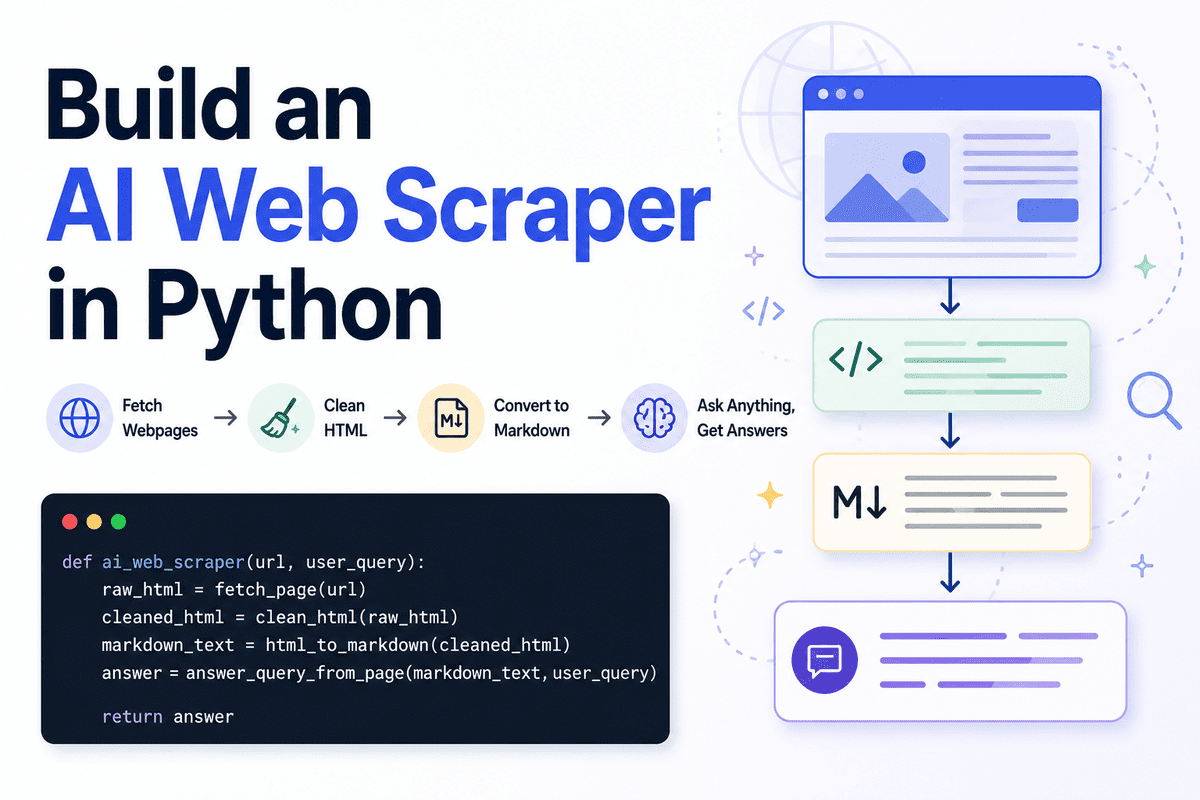
Turn Web Pages into Smart Q&A Engines with AI
Most tutorials make web scraping sound harder than it needs to be. This one strips away the noise: clean the HTML, convert it to Markdown, and let an LLM answer focused questions. The payoff is real, especially when you want answers without burning through tokens on messy page structures. It's a practical, no-nonsense approach that respects your time and your budget. If you're tired of wrestling with raw scraped data, this method feels like a quiet win.

When Every Passage Holds the Answer, RAG Needs a New Shape
Most RAG pipelines retrieve a single top passage and call it a day. But some questions don't work that way. Listing questions demand every relevant passage, not just the highest-scoring one. This pipeline walks through that silent failure point and the pipeline shape that actually handles it. It's a practical look at a real limitation, and the reasoning is clear. For readers who want to go deeper, "Exploring Paragraph Structure: How LLMs Navigate Token Space" offers a useful follow-up on how token coordinates shape retrieval.
When AI Remixes Research Papers, Originality Becomes a Question of Trust
A paper assembled from favored sources, with the gaps and commented-out lines stitched together by an LLM, is being submitted as novel work. It clears syntactic overlap checks because the text is technically new. This is not a clever hack; it is a direct assault on the integrity of academic review. A researcher is gaming a system built on trust. We are calling this out. It is time to confront how AI is enabling a collapse in research ethics.