How to Build a Simple AI Web Scraper with Python
Our take
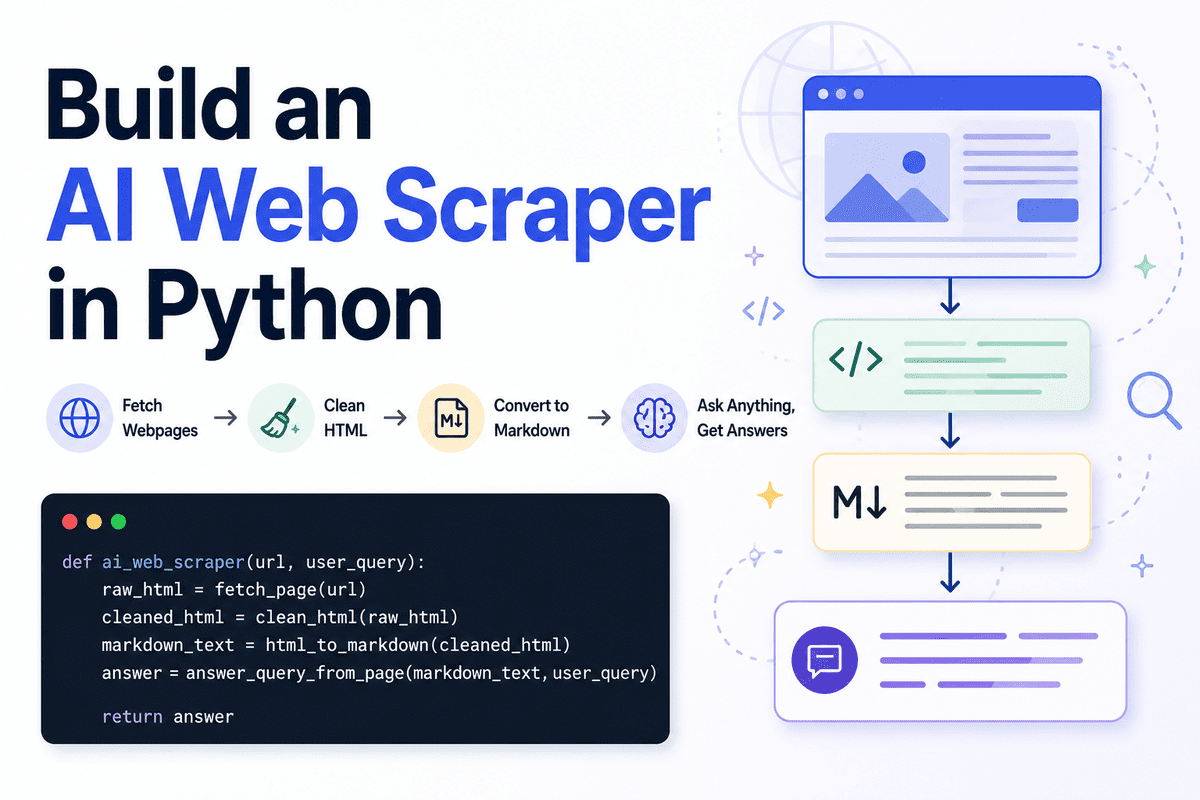
The recent surge in interest surrounding AI agents is undeniable, and the ability to transform readily available web content into interactive knowledge bases represents a significant step forward in making that technology more accessible. The concept of building a simple AI web scraper with Python, as detailed in the linked article, is particularly compelling because it sidesteps the need for complex, pre-packaged solutions. Instead, it empowers users to leverage Large Language Models (LLMs) to extract, process, and query information directly from the web, effectively creating lightweight QA engines tailored to specific websites. This aligns perfectly with the growing desire for personalized and actionable AI tools, a theme we’ve explored previously in articles like [Grok Bot Is The First AI Agent You Just Install. Is It Worth $200?] and [5 Fun Agentic AI Papers to Read], where we examine both the potential and the practical considerations of deploying AI agents. The beauty of this approach lies in its efficiency; cleaning HTML, converting to Markdown, and focusing on targeted answers demonstrably reduces token usage, a critical factor in managing costs and optimizing performance when working with LLMs.
The broader significance of this development isn’t just about building simple QA engines; it’s about democratizing access to AI-powered knowledge extraction. Historically, such capabilities have been confined to organizations with dedicated data science teams and substantial resources. This new approach lowers the barrier to entry considerably, enabling individuals and smaller businesses to harness the power of AI to analyze and leverage publicly available information. Consider the possibilities: a small research firm quickly extracting key data points from industry reports, a journalist efficiently summarizing a complex legal document, or a hobbyist building a custom knowledge base for their favorite niche topic. The ability to rapidly adapt LLMs to specific data sources, rather than relying on generic, pre-trained models, unlocks a new level of customization and relevance. It’s a shift from passively consuming information to actively shaping and querying it, a transformation we’ve seen mirrored in more experimental applications, such as the playful exploration of LLMs in dynamic environments as showcased in [I Made an LLM Lay Siege to My Minecraft House].
The technical simplicity of the described approach – utilizing Python, readily available libraries for web scraping and Markdown conversion, and existing LLM APIs – is a key factor in its potential for widespread adoption. While more sophisticated solutions involving vector databases and fine-tuning may offer even greater accuracy and performance, this method provides a pragmatic and accessible starting point. It represents a move towards “AI-native” workflows, where AI tools are seamlessly integrated into existing processes rather than requiring wholesale system overhauls. This is especially important as the field matures and users increasingly seek practical, actionable applications of AI beyond the hype. The focus on reducing token usage is also particularly astute, reflecting a growing awareness of the economic realities of LLM deployment. Optimizing for efficiency is no longer a secondary consideration; it's a fundamental requirement for sustainable and scalable AI solutions.
Looking ahead, the convergence of web scraping, LLMs, and agentic AI presents exciting possibilities. We can anticipate seeing increasingly sophisticated tools and frameworks emerge that automate the entire process, from data extraction to answer generation. The ability to create personalized knowledge assistants, tailored to specific domains and user needs, will become increasingly commonplace. A crucial question to watch will be how these systems handle the inherent challenges of web data, including accuracy, bias, and evolving website structures. As these tools become more powerful, ensuring their reliability and trustworthiness will be paramount. Ultimately, the ability to transform the vast expanse of the web into personalized knowledge engines represents a profound shift in how we access and interact with information, and the simple AI web scraper detailed in this article is a significant step in that direction.
Read on the original site
Open the publisher's page for the full experience