token costs
Beyond Market Intelligence keeps token costs in one place: 9 stories so far. The section currently leads with “Instagram slims UI code by 50% with an AI-ready architecture”, “Taming AI's Real-World Demands: Agents, Evals, and Rising Token Costs”, and “As AI costs drop, employee adoption signals a smarter shift”. Instagram Direct slimmed its Android UI code by 50% after migrating from the legacy View system to Jetpack Compose. When AI hits production, code arrives faster than teams can review it, tokens start costing real money, and agents need permissions that actually hold. Acme AI is the next-generation, AI-powered spreadsheet platform built to replace Excel and redefine how analysts, data scientists, and enterprise teams work… The list below is every token costs story on Beyond Market Intelligence, newest first.

Instagram slims UI code by 50% with an AI-ready architecture
Instagram Direct slimmed its Android UI code by 50% after migrating from the legacy View system to Jetpack Compose. That's not just a cleaner codebase, it's one built for AI. The new architecture is easier for AI coding agents to understand and modify, which cut token costs per session by 33%. This is how modern tools earn their keep. For more on managing rising token costs, see our piece on *Taming AI's Real-World Demands*.
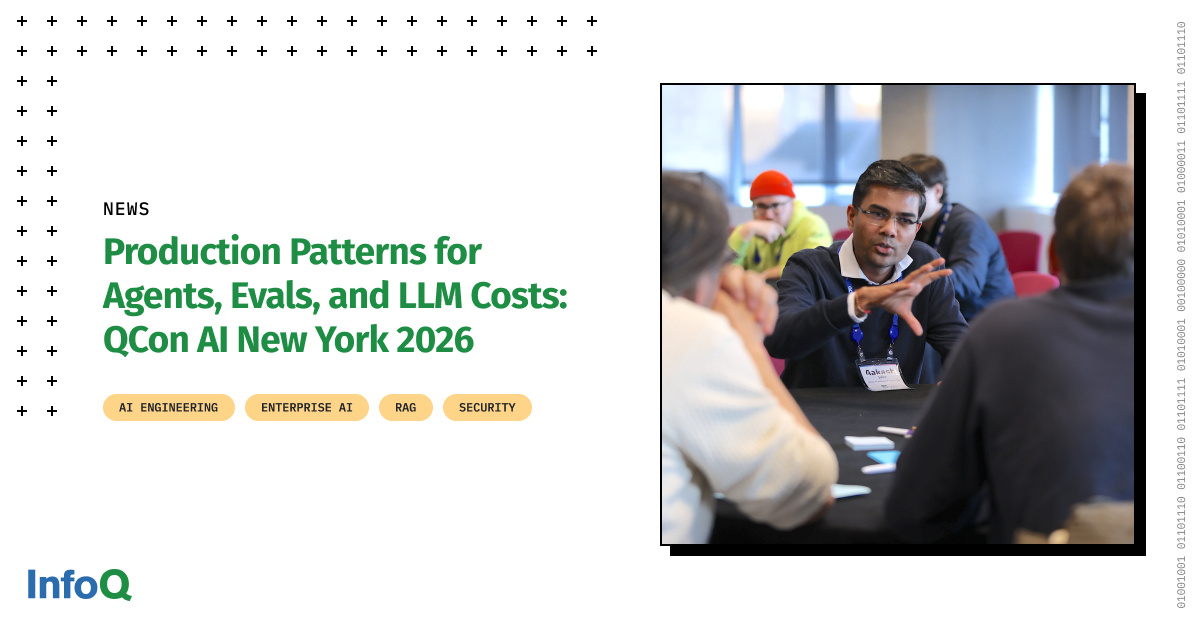
Taming AI's Real-World Demands: Agents, Evals, and Rising Token Costs
When AI hits production, code arrives faster than teams can review it, tokens start costing real money, and agents need permissions that actually hold. Engineers at QCon AI New York 2026 (December 15-16) are sharing how they manage these constraints, no theory, just what works. For a deeper look at how teams are building practical guardrails, see our piece on Anthropic restricting internal AI tests from live internet.

As AI costs drop, employee adoption signals a smarter shift
August's data shows AI spend per employee dipping at top firms, even as token costs fall and cheaper models flood the market. That's not the adoption curve hyperscalers banked on. It's tempting to call it summer doldrums, but the signal is worth reading straight: enterprises are pausing, not retreating. They're weighing efficiency against experimentation. For teams navigating this, the real work isn't chasing volume, it's building guardrails that make AI sustainable.

Stop overpaying for AI queries with smarter model routing
Enterprises are discovering that one model for every task is a costly mismatch, simple queries often trigger the most expensive model, driving up both spend and latency. Snowflake's Cortex AI Gateway now sidesteps that with dynamic model routing, automatically matching each task to the cheapest capable model. The company reports token costs dropping by up to 3x in internal tests. That's a practical win, though the real differentiator is governance: routing that stays inside your security boundary.

Writer's new AI model delivers enterprise power without the price tag
Writer is taking a pragmatic step toward cheaper AI deployment with a new model built as a post-training variation on Z.ai's open source GLM-5.2. The upgraded harness to contain token costs matters because it directly addresses what holds many teams back: unpredictable expenses. This feels less like a flashy leap and more like a sensible unlock. For a deeper look at why cost discipline is becoming central to AI work, our piece on catching AI slop before it skews your model offers useful context.

Four strategies to scale multi-agent AI without rising token costs
Scaling a multi-agent architecture doesn't have to mean watching your token bill climb. This guide lays out four practical strategies to keep costs in check while you grow, and it's a refreshingly grounded take on a problem many teams quietly wrestle with. The focus here is on smart implementation, not hype. For more on the broader infrastructure behind such systems, our piece on distributed training algorithms offers a useful foundation. If you're ready to streamline without the sting, this is a worthwhile read.

Nimble launches specialized AI agents to make enterprise web searches smarter.
Nimble is rolling out Web Search Agents, a new retrieval system designed to cut token costs by 51% while boosting retrieval accuracy by 21% for domain-specific enterprise workloads. The New York City startup's approach pairs self-learning retrieval algorithms with proprietary indexes and live web access, moving beyond generic search APIs to learn each customer's domain. This launch targets developers building autonomous agents, positioning retrieval infrastructure, not model quality, as the next competitive battleground.

Smarter AI agents at lower cost with Google's most token-efficient models yet
Google's new Flash models aren't just cheaper, they're smarter about how they spend. Gemini 3.6 Flash cuts token usage by up to 65% on long-horizon engineering tasks, which means agents do more thinking per dollar. That's the kind of efficiency that quietly reshapes what's practical to automate. The pricing is aggressive, sure. But the real signal is architectural: fewer reasoning steps, fewer tool calls, same result. That's not a tweak. It's a direction.

Give your AI agents a single source of truth for business data
Pinecone's Nexus Engine is now generally available, and it's a practical answer to a messy problem: enterprise data that sits scattered and unstructured. Nexus compiles that business context into a queryable layer, so AI agents stop guessing and start working from curated knowledge. Teams ingest once, then reuse that context across agents, cutting token costs while boosting accuracy. That's a meaningful step toward tools that actually understand the work. For more on where this tech leads, our guide to distributed training offers useful context.