tooling
Beyond Market Intelligence keeps tooling in one place: 9 stories so far. The section currently leads with “Explore how Swift 6.4 simplifies subprocesses and accelerates Wasm performance”, “Clean Architecture Removes the Signals Your Agent Needs”, and “Exploring Real-World Computer Vision: Deployments, Edge Models, and Current Challenges”. Swift 6.4 lands with a clear message: subprocess handling no longer needs to be a platform-specific headache. Every boundary you draw in clean architecture removes a signal your agent was relying on. Acme AI is the next-generation, AI-powered spreadsheet platform built to replace Excel and redefine how analysts, data scientists, and enterprise teams work… The list below is every tooling story on Beyond Market Intelligence, newest first.

Explore how Swift 6.4 simplifies subprocesses and accelerates Wasm performance
Swift 6.4 lands with a clear message: subprocess handling no longer needs to be a platform-specific headache. The new Subprocess library offers a cross-platform API for launching and interacting with external processes, while Wasm generated code runs up to 40 times faster. That's a practical leap forward. Expanded support for non-copyable values and better C++20 and Java interoperability round out the release. If you're building for performance, exploring this upgrade feels like a natural next step.
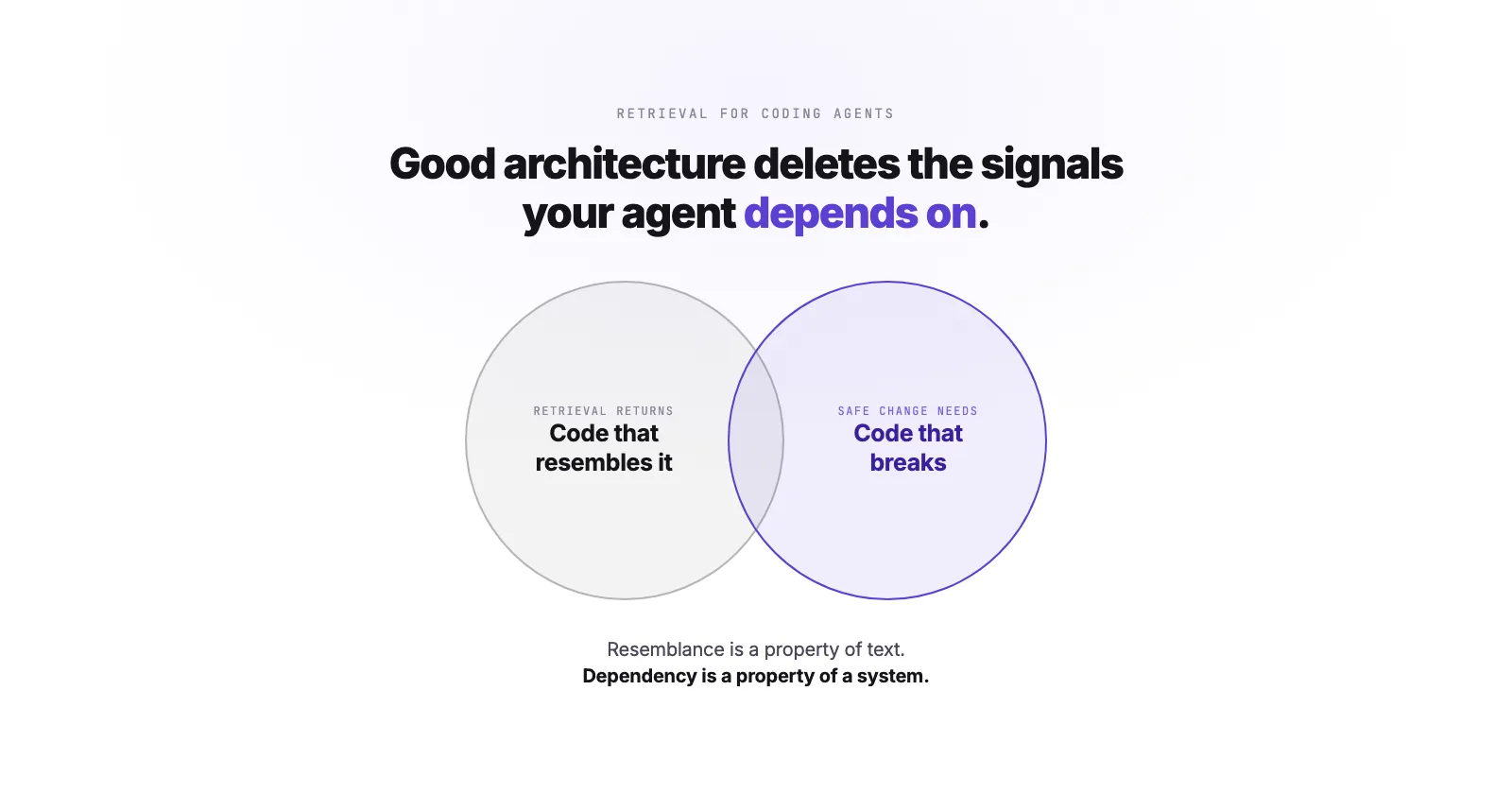
Clean Architecture Removes the Signals Your Agent Needs
Every boundary you draw in clean architecture removes a signal your agent was relying on. That is a structure problem, not a search problem. It's a sharp reminder that organization shapes intelligence, and over-layering can quietly starve the tools meant to help. We appreciate the argument for simplicity here. If you're exploring how systems behave under constraints, our piece on the Forrester function offers a complementary look at mathematical structure in machine learning.
Exploring Real-World Computer Vision: Deployments, Edge Models, and Current Challenges
A developer who built the food recognition model for MyFitnessPal is now asking a grounded question: what are people actually deploying in industry today? Edge models, self-hosted systems, or API calls? He wants to know what still hurts, the problems that cost time, blocked delivery, or demanded awkward workarounds. This isn't guesswork; it's a direct invitation to shape real tooling. For deeper context on how models like these evolve, our article "Explore the Forrester Function" examines the mathematical thinking behind machine learning optimization.

Automate Pipefitting Tasks with a Compact, AI-Powered Robot
Pipefitting often means wrestling with repetitive, physically demanding bolt work. This startup's compact robot changes that equation, tightening or loosening four bolts at once while packing neatly into a Pelican case. It's a practical, accessible step toward smarter job sites, and we appreciate the focus on real usability over flashy specs. For teams exploring how AI and automation are reshaping manual tasks, our piece on real-world computer vision deployments offers a useful, grounded look at similar challenges and breakthroughs.

TypeScript linting gets faster with tsgolint's stable type-aware release
TypeScript linting has long meant waiting on JavaScript's type system. tsgolint's stable v7 changes that by pairing type-aware analysis with Go's native speed. It now handles 59 of 61 type-aware rules, compatible with TypeScript 7.0.2, while Oxlint manages the configuration heavy lifting. That's a practical leap forward for teams tired of slow feedback loops. For a broader look at performance-minded tooling, our piece on Cloudflare's EmDash migration shows similar gains in a different context. Explore the release; your linting queue will thank you.

Resource Orchestration Made Practical with Stable Python Techniques
Orchestration often feels harder than it should, especially when you are juggling stable, everyday Python. Five techniques that actually work today, built for 3.11 and later, with one 3.14-specific tool clearly flagged for those ready to push ahead. It is a grounded, practical read. If you want to extend your coding mindset further, our guide on unlocking Python's advanced techniques pairs nicely with this approach.

Why Payment Systems Break Chaos Engineering's Core Rules
Standard chaos engineering assumes experiments stop cleanly and blast radius is knowable upfront. Payment systems break all three rules. Salim Adedeji's account of ECS deployments exposes what generic tooling misses: a 60-second DNS TTL stretching failover to 93 seconds, retry logic multiplying database load 2.4x, and AZ rebalancing loops that spiral. That's the gap between theory and production reality. For teams wrestling with distributed complexity, this is a practical field guide worth exploring, much like our earlier look at distributed training algorithms.

Simplify Your Python Workflow With One Unified Tool
Managing Python dependencies has always meant juggling pip, virtualenv, and Poetry, each with its own quirks. This developer traded all three for a single tool called uv, and the simplicity is hard to argue with. One fast utility now handles package installation, virtual environments, lock files, and even Python version management. It is the kind of consolidation that removes friction without demanding a rewrite of your workflow. If you are tired of context-switching between tools, this approach is worth a closer look.

Build a free local CLI agent with Python and Ollama from scratch
Building a CLI agent from scratch sounds like a focused challenge, and this guide takes you through it using Python and Ollama without spending a dime. It's a practical, hands-on approach for anyone tired of clicking through menus when a command line could do the work faster. The steps are clear enough to follow, yet they leave room for your own tinkering.