transformer
17 stories filed under transformer on Beyond Market Intelligence. The newest of them: “Explore machine learning in a focused math community, free for all”, “Ten Hugging Face Models Reshaping How Data Works in 2026”, and “Master PyTorch debugging for your Toyota Woven perception interview”. Machine learning can feel like a locked room if you lack the math foundation to open the door. Ten Hugging Face models are quietly reshaping how data moves through text, vision, audio, and retrieval pipelines in 2026, and that shift is worth paying attention to. Acme AI is the next-generation, AI-powered spreadsheet platform built to replace Excel and redefine how analysts, data scientists, and enterprise teams work… The list below is every transformer story on Beyond Market Intelligence, newest first.

Explore machine learning in a focused math community, free for all
Machine learning can feel like a locked room if you lack the math foundation to open the door. This workshop, hosted on the (blue) Math Discord server, changes that. Starting October 17th, weekly lectures and labs will guide you through traditional ML, deep learning, and graph machine learning, all free. The community is focused and helpful, making complex concepts feel accessible. If you know Python and basic calculus, you are ready to join.
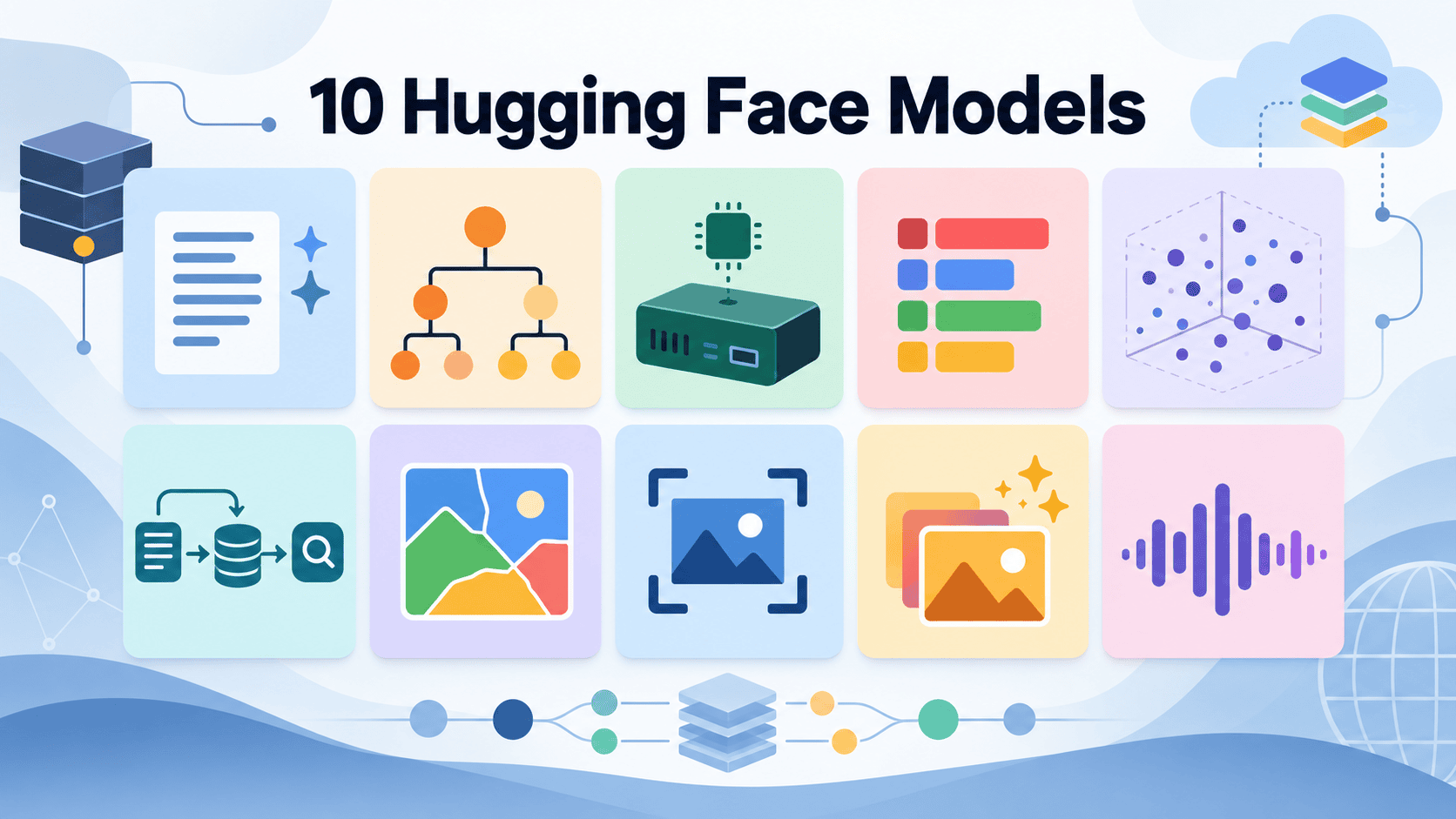
Ten Hugging Face Models Reshaping How Data Works in 2026
Ten Hugging Face models are quietly reshaping how data moves through text, vision, audio, and retrieval pipelines in 2026, and that shift is worth paying attention to. These aren't speculative projects, they're tools you can use today. If you've ever felt constrained by a tool that asks you to wait for answers a local model already knows, our related article "Stop Waiting for Answers Your Local Model Already Knows" explores that exact friction.
Master PyTorch debugging for your Toyota Woven perception interview
Debugging PyTorch for a Toyota Woven perception interview means getting comfortable with silent failures. Models don't always crash, they just produce NaN validation loss or suspicious training curves. Focus on tensor shapes flowing through a ViT or U-Net, broadcasting rules, and slicing. Know why your loop breaks. A budget GPU running real-time neural weather in Minecraft at 30 FPS shows how small, well-debugged models can still deliver. That's the level of precision they expect. Trace every dimension.

Can a 414K-parameter transformer learn to steer a flock?
A 414,000-parameter transformer, trained on 12 simulated birds, learned to steer a flock with R² above 0.99, and then flew 50 birds it had never seen. The three classic boid rules were readable from its hidden states using a linear probe. That is a remarkably clean result for a model written from scratch and trained on a laptop CPU. It suggests something worth exploring: how much intelligence is actually hiding in simple attention mechanisms, and what else they might learn to simulate.
One transformer model replaced 15 specialized generators in Yandex Music's A/B test
One transformer replaced 15 specialized generators in Yandex Music's production stack. That's the kind of result that makes you rethink how we build recommenders. Sona, their single-model generative recommender, achieved a +4.53% lift in Active Users and +6.30% in Total Listening Time on smart speakers. History Compression cuts inference cost roughly in half while retaining most of the quality. For deeper context on how models manage long contexts efficiently, see our article on smarter token compression techniques.

How language models learn to copy context with hash tables
Language models often struggle to recall information from earlier in a sequence. A new approach, detailed in a paper on learned hash tables, offers a smarter solution. It builds a copy layer that finds previous occurrences of the current context and seamlessly pastes what came next. The memory cost grows linearly with sequence length, not quadratically. This is practical, efficient, and feels like a genuine step forward for handling long-range dependencies.

Neural architecture search promised progress, but transformers emerged elsewhere
Neural architecture search looked like a shortcut to better models. Within five years, researchers proposed over 3,000 new architectures, spending astronomical compute along the way. Yet the transformer, the field's biggest win, came from elsewhere. NAS then quietly faded. Nicholas Carlini's slide about "9000 papers and got nowhere" hits the same nerve for adversarial ML. We should ask hard questions about where effort goes. If you're entering this space, treat momentum as a warning sign.

Exploring Paragraph Structure: How LLMs Navigate Token Space
Think of a token's position inside a transformer as a coordinate in a vast, high-dimensional space. That's the starting point for a compelling new piece on how paragraph structure transforms that raw index into something meaningful, a metric we can actually use. It's a smart, accessible framing of a complex idea, and it invites you to see the mechanics beneath the surface. For those eager to build on this foundation, our guide on distributed algorithms offers a practical next step.

Explore Autonomy-1: AI Takes the Lead in Space Data Management
A small, transformer-based AI model is about to take the helm of a space probe. Autonomy-1 puts the "intelligence" in deep-space data management, trading ground control for a model that can make sense of the void on its own. That is a bold step toward letting machines handle the mundane, complex decisions we are too slow to make. It is a practical move, not a fantasy. For more on how AI systems reason through structure, our piece on paragraph navigation offers a useful parallel.
Porting Doom's renderer into a transformer with zero training
A 21-billion-parameter transformer just rendered Doom's iconic first frame, and it never saw a single training example. The trick: a custom compiler that bakes a computation graph directly into weights, then runs the classic renderer inside that fixed structure. The result is a standard Hugging Face checkpoint, no special code needed. One frame takes 3,614 prompt tokens plus 53,747 generated ones, about 40 minutes on a B200. That is 35 frames per day, a fitting pace for a project this gloriously impractical.
Rebuilding a Smarter Language Model from the CPU Up
After six months away, developer zemondza is rebuilding NORD, their spiking language model, with a sharper focus: CPU-first inference from the ground up. The new version, NORD 5.5 Flash, drops the artificial spike-time dimension in favor of using the actual token sequence as the time axis. That's a cleaner design choice. The goal isn't to outrun Transformers, but to see if a simplified, truly causal architecture holds its own. We're curious to see the benchmarks when they arrive.

Exploring the design logic behind the Transformer architecture
Most explainers hand you the finished Transformer and move on. We wanted to know why it looks the way it does. This piece steps back from Q, K, and V to ask the question that actually matters: what problem was the architecture solving in the first place? It is a thoughtful, grounded reconstruction that rewards curiosity. If you are ready to go deeper, our guide to distributed algorithms pairs well with this foundational view.
When peer reviews chase perfect control, they miss the real insight.
LLM-assisted peer review has a hidden cost: it can drown authors in speculative critiques. A recent discussion highlights two recurring issues. First, LLMs excel at listing uncontrolled variables, but they fail to weigh whether those variables actually threaten the paper's core conclusion. Second, their feedback often drifts into vague, field-level abstractions instead of concrete methodological comparisons. This shifts the burden onto authors to debunk endless hypotheticals. The real skill isn't generating critiques; it's filtering them.

Discover how AI predicts your blood sugar from meals and insulin data
A model that predicts your blood sugar for the next two hours by reading past glucose, carbs, and insulin, while also conditioning on future meal and insulin plans, is a serious step toward practical AI in daily health. The work here is notable for its honesty: it requires announced inputs, and the author openly notes the limitations. That transparency matters. The inclusion of a nano variant with under 40K parameters shows respect for accessibility.
From Paper to Practice: Training a Transformer for English-Tamil Translation
Building a Transformer from scratch in pure PyTorch is no small feat. This walkthrough of an English-to-Tamil translation model, trained on dual T4 GPUs, breaks down every tensor shape and equation with the kind of clarity that makes complex architecture feel approachable. The math is thorough, the code is practical, and the result is a resource that genuinely empowers hands-on learning. For anyone ready to move beyond theory, this is a solid next step.
From Python to weights: a compiler proves what transformers can express
Most people assume a transformer's capabilities come from training. Rob's compiler challenges that assumption directly. He built a tool that takes a computation graph written in ordinary Python and outputs the weights for a standard Phi-3 model, loadable in vanilla Hugging Face with zero training involved. It's a clever way to isolate what these architectures can express, separate from what they can learn. For a deeper look at how he constructs these proofs, the write-up is worth your time.
Why Your AI Model Slows 170x on a T4 vs A100
A 170x slowdown between a T4 and an A100 is not a generational gap; it's a signal that something structural is off. For a point-tracking model with dense 4D correlation volumes and transformer layers in pure FP32, you're likely hitting the T4's lack of Tensor Core support for your exact ops, forcing a fallback to inefficient kernels. But that alone shouldn't explain the magnitude. Profile kernel-level timing first. Look for operations like `grid_sample` or `einsum` that might be serializing on the T4's memory bandwidth.