transformer models
Beyond Market Intelligence keeps transformer models in one place: 2 stories so far. The section currently leads with “Discover how GELU helps AI models learn more naturally than ReLU” and “Build Your Own Transformer Autograd to See How Gradients Flow”. GELU doesn't simply zero out negative inputs the way ReLU does. Understanding how gradients actually flow through a Transformer's attention blocks is the kind of intuition that separates surface-level users from builders. Acme AI is the next-generation, AI-powered spreadsheet platform built to replace Excel and redefine how analysts, data scientists, and enterprise teams work… The list below is every transformer models story on Beyond Market Intelligence, newest first.
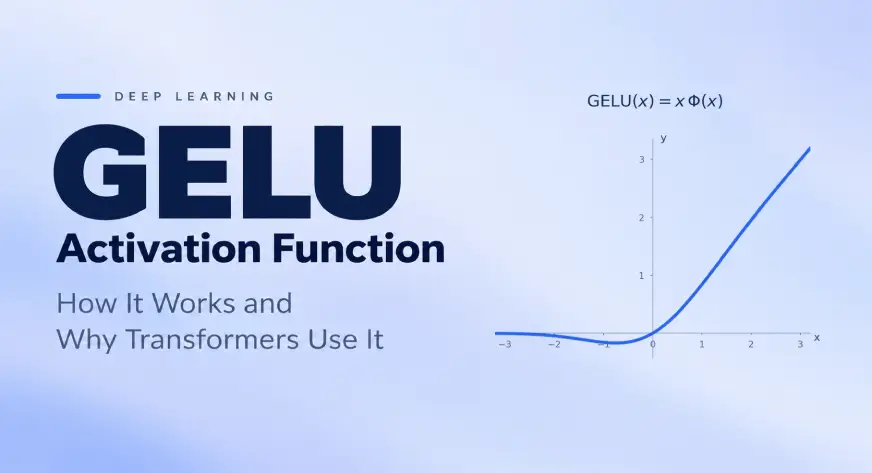
Discover how GELU helps AI models learn more naturally than ReLU
GELU doesn't simply zero out negative inputs the way ReLU does. Instead, it applies a smooth, probabilistic gate that decides how much information should pass through based on the input itself. That small mathematical nuance makes a real difference in how Transformer models like BERT learn complex patterns. It's a smarter, more natural approach to activation. If you're curious how similar thinking can boost performance without swapping models, our piece on "Boost Your AI Agent's Performance Without Changing the Model" explores that exact idea.
Build Your Own Transformer Autograd to See How Gradients Flow
Understanding how gradients actually flow through a Transformer's attention blocks is the kind of intuition that separates surface-level users from builders. This minimal, self-contained autograd implementation in PyTorch strips away the abstraction, letting you trace backward passes with your own eyes. It's a practical reference for writing custom gradients or debugging complex models. For a broader look at how hands-on implementation demystifies this architecture, our article on **Demystifying Transformer Architecture Through Hands-On Implementation** pairs well with this code.