transition
transition at Beyond Market Intelligence is a file of 7 stories. The newest of them: “1,000 Pull Requests Later Linear Ships Faster With Meta's StyleX”, “CERN Chooses Debian for Accelerator Controls Over Red Hat's Restrictive Mandates”, and “Under New Leadership, Apple Charts a Familiar but Forward Path”. Over 1,000 pull requests to swap out a styling library sounds like a monumental chore. CERN's engineers aren't clinging to legacy for nostalgia; they're making a calculated stand. Acme AI is the next-generation, AI-powered spreadsheet platform built to replace Excel and redefine how analysts, data scientists, and enterprise teams work… The list below is every transition story on Beyond Market Intelligence, newest first.

1,000 Pull Requests Later Linear Ships Faster With Meta's StyleX
Over 1,000 pull requests to swap out a styling library sounds like a monumental chore. For Linear, it was a strategic win. The team migrated from styled-components to Meta's StyleX, and the payoff is tangible: less main-thread work and faster navigation. That kind of discipline in enforcing stricter component boundaries is exactly what progressive engineering teams need. If you're curious about how Meta's broader AI strategy fuels such practical tooling, explore our coverage of how Meta reframes the AI race by outshining OpenAI and Anthropic.
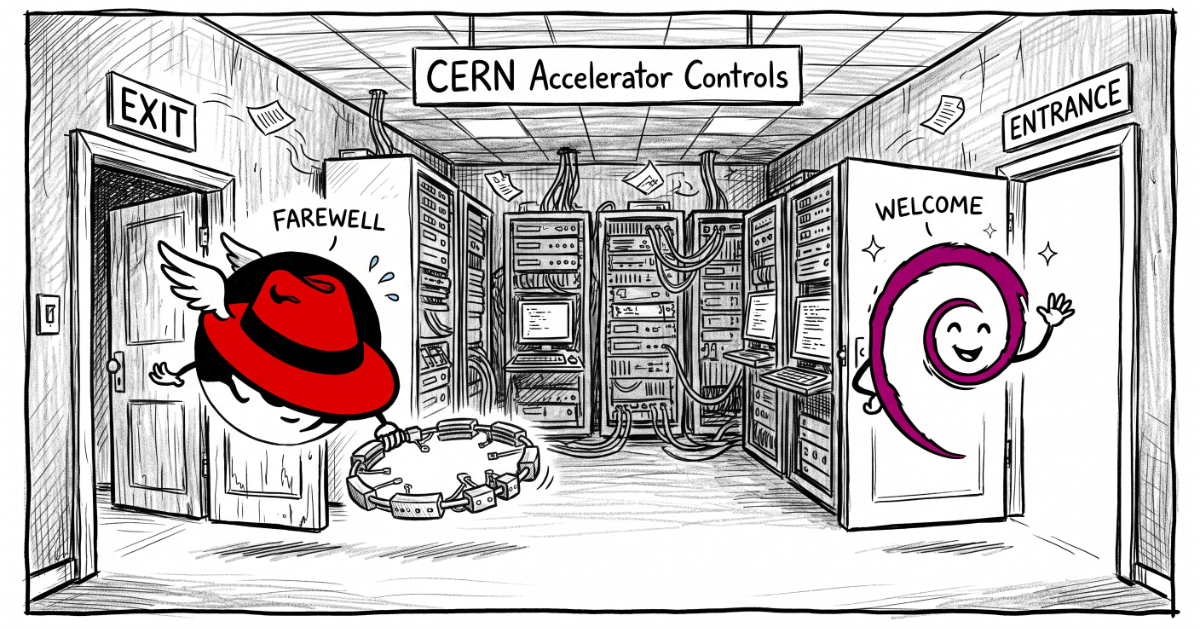
CERN Chooses Debian for Accelerator Controls Over Red Hat's Restrictive Mandates
CERN's engineers aren't clinging to legacy for nostalgia; they're making a calculated stand. By moving 2,200 specialized control machines from Red Hat to Debian, they're prioritizing hardware longevity over vendor mandates. Red Hat's tightening compiler rules forced the issue, and CERN responded with a pragmatic pivot. It's a quiet but telling vote for flexibility, and the late 2026 deadline shows careful planning. For more on how infrastructure decisions ripple outward, our piece on bridging retrieval and action in AI tasks offers a fitting parallel.

Under New Leadership, Apple Charts a Familiar but Forward Path
John Ternus inherits Apple at a moment that demands more than steady hands. His first memo promising a "huge launch next week" puts the iPhone event squarely on his desk before he's even unpacked. That's not a warm-up; it's a statement. Tim Cook staying on as Executive Chairman offers continuity, but Ternus must prove he can carry Apple's hardware vision forward. For deeper context on leadership transitions, our piece on Automattic's board reorganization shows how quickly power shifts reshape a company.

Serial entrepreneur Nikita Bier steps back from product lead role at X
Nikita Bier is stepping down as X's head of product, a little over a year after taking what he called the "24/7 job" of overseeing the platform. His exit is a reminder that product leadership in this space demands more than a title; it asks for relentless, round-the-clock focus. For those tracking shifts in tech leadership, our piece on Automattic's recent board reorganization offers a useful parallel. Change is rarely sudden, but it is always telling.
From Academia to Impact: Translating Public Health Expertise into Industry
Four years in academia, with publications in JAMA Open and experience in doubly robust methods, gives you a real analytical foundation. That is not the problem. The gap is likely in how you are framing your transition. You are studying SQL and probability, which is good, but you need to show how your causal inference work solves business problems. Frame your research as applied decision-making. Also, revisit that tech internship network; it is your strongest asset.

From Physics to Prompts: Understanding Temperature in AI Models
The temperature parameter in large language models often reads as a dial for creativity, but its roots run deeper into statistical physics. It's the bridge between deterministic predictions and the generative spark that makes AI feel alive. We find this framing refreshingly clear, cutting through the usual jargon to show how a simple adjustment reshapes output. For more hands-on applications of AI's practical edge, our piece on Meta's AI turning a dull task into $5,350 in yearly savings is worth exploring alongside.

Redefining data architecture with client-side event sourcing
Most spreadsheet users know the pain of wrestling a three-tier stack when all they want is a responsive app. Johannes Schickling's transition from Prisma to building Overtone shows a bolder path: client-side event sourcing with SQLite. He's not just tweaking the old model; he's questioning its core assumptions. The trade-offs between event sourcing and CRDTs are sharp, and his hands-on experience makes the abstract tangible. If you're exploring how local-first design can reshape your own workflows, this conversation is a practical starting point.