trust
trust at Beyond Market Intelligence is a file of 20 stories. The newest of them: “Why your next insider threat might come from an AI agent”, “AI Agents in the Wild: How Real-World Encounters Reshape Data Work”, and “From 40 Trillion Tokens, a Blueprint for Scaling AI Agent Trust”. Your next insider threat might not be a person, it could be an AI agent. AI agents aren't a distant concept, they're already reshaping how we work, drive, and manage data. Acme AI is the next-generation, AI-powered spreadsheet platform built to replace Excel and redefine how analysts, data scientists, and enterprise teams work… The list below is every trust story on Beyond Market Intelligence, newest first.

Why your next insider threat might come from an AI agent
Your next insider threat might not be a person, it could be an AI agent. Microsoft is urging enterprises to watch the agents employees use, especially those running on systems not controlled by labs like OpenAI and Anthropic. The convenience of delegating tasks to these tools comes with real risk. For deeper context on why oversight matters, see our piece on how AI stress-tests robots and self-driving cars before they roll out.
AI Agents in the Wild: How Real-World Encounters Reshape Data Work
AI agents aren't a distant concept, they're already reshaping how we work, drive, and manage data. This story explores what happens when these systems leave the lab and meet real-world complexity. The results are less about replacing humans and more about freeing us to focus on higher-level decisions. It's a shift worth watching closely. For another perspective on this transformation, see how Replit's CEO envisions AI agents handling tasks so people can lead.

From 40 Trillion Tokens, a Blueprint for Scaling AI Agent Trust
Trust is the bottleneck, not model performance. Brendan O'Leary draws on 40 trillion tokens of usage data to map the four rungs of AI adoption, showing where context construction, multi-model routing, and feedback loops actually break down. For engineering leaders scaling agentic workflows, this is a practical blueprint. For deeper context on the infrastructure demands these agents create, see our companion piece on how CedarDB unifies operational and analytical data.
700 AI-written math papers, but engineers still won't trust the code
Seven hundred AI-written math papers exist, yet engineers still won't trust the code it produces. That gap isn't about capability, it's about proof. We've watched agents waste turns in real repositories, a finding we explored in "Efficiency Matters: What 50,400 Agent Runs Reveal About Wasted Work." Trust isn't granted because a model can compute. It's earned when the output becomes verifiable, predictable, and actually useful in production. That's the real challenge ahead.

Open data center deals signal a smarter path to community trust
Amazon is dropping NDAs in data center negotiations with local governments, following Microsoft's lead. That's a smart move. Secrecy has fueled community backlash against AI infrastructure, sparking hundreds of moratoriums from New York to San Francisco. Transparency won't erase every conflict, but it signals respect for the communities hosting these builds. Trust is earned through openness, not legal pressure. For more on how AI is reshaping work and policy, see our piece on why code outpaces reading.
How to benchmark online AI models without losing your data to training
Protecting your benchmark data from becoming training data is a real problem, especially for low-resource languages where every example is precious. The trust gap with API-only models is legitimate, and a paid account is not a guarantee of privacy. You are right to be cautious. The practical answer is that there is no foolproof method, only risk mitigation.

AI gadgets failed on promises, not potential: trust is the next breakthrough
Tony Fadell, the father of the iPod, sees the problem clearly: the first wave of AI gadgets failed because they didn't solve real problems. That's not a failure of potential, but of trust. People won't adopt tools that feel like demos. The next generation must prove its worth through consistent, tangible value. When technology quietly delivers outcomes, confidence follows. For more on how AI is maturing into practical tools, explore ChatGPT's new visual interface.

Trust in action: Why Khosla backs Wajo's human-in-the-loop AI agent
Wajo's AI agent doesn't just automate tasks; it knows when to tap a human. That judgment is exactly why Khosla's backing makes sense. Trust isn't about replacing people, it's about weaving them into the workflow at the right moments. This human-in-the-loop approach feels less like a trick and more like a partnership. For anyone tired of blind automation, it's a refreshing signal.

Can digital humans teach robots to keep people safe?
Safeworld is building digital humans to teach robots how to keep people safe. It's a clever inversion: instead of coding endless safety rules, they're creating simulated people who can model real-world risk. This approach feels more human-centered than a manual of regulations. It acknowledges that human behavior is messy, and robots need to learn that messiness, not just avoid it. For deeper context on the broader safety landscape, our piece on the new AI safety task force explores how oversight is evolving.

Discover how AI can reshape your data privacy decisions.
Meta wants Muse inside your email, calendar, payments, and health data. That's a lot of trust to ask for. The company's biggest consumer AI bet yet will test whether users are willing to hand over intimate access to a personal agent. For many, the answer will depend on past experience. If you need more detail, our piece "Explore Early Access: Muse's New Features, By Request" breaks down what joining the waitlist actually entails. Muse's ambition is clear.

When Value Falters, Public Skepticism of AI Takes Hold
People accept tradeoffs when the value is clear. But when they don't see that value, resistance builds, and that's exactly where public opinion turns. This piece digs into why anti-AI sentiment persists, and it's a conversation worth having on your own terms. If you're curious how even early adopters wrestle with similar doubts, our related piece, *Talking to My AI Clone Taught Me to Question the Tech*, offers a personal look at that tension.

5 Principles for Enterprise Agent Systems Built to Earn Trust
A $100M+ company runs on its spreadsheets, and when I built an agent system to handle those workflows, I learned trust isn't a feature, it's the foundation. This post breaks down five principles that decide whether such systems survive production, from verifiability to continuous improvement. It's a grounded look at what actually works. If you're questioning how much to rely on AI outputs, our piece "Verify Your AI's Understanding" pairs well with this. Explore how to build agents people will actually use.

Trust in AI hinges on honest dialogue about its real potential
Dario Amodei is pushing back on the narrative that he's been too grim about AI's future. His point is sharper than that: the real issue isn't the technology, it's trust. People don't need more hype or doom, they need tools they can actually rely on. That's a conversation worth having, especially when so much of the discourse misses the human element.

When Evaluations Fail, Trust in Automation Grows, Not Shrinks
Confidence in automated agent evaluation surged this July, nearly tripling to 13% across 108 enterprises – a shift largely driven by those yet to experience a “false-confidence” failure. Critically, the failure rate of agents passing evaluations but then causing customer issues remained unchanged at just under half. While trust is rising, enterprises are simultaneously increasing investment in human review workflows, hedging against evaluations that don’t always reflect real-world outcomes.

Building Trust in Open Source Supply Chains for AI-Assisted Development
Trust in software supply chains is no longer just a compliance checkbox. With IBM and Red Hat expanding Lightwell into commercial offerings, organizations now have a clearer path to verifiable trust in AI-assisted development. That matters, because the tools we use to build software must be as accountable as the code they produce. It's a practical step toward governance that keeps pace with innovation, not a distant promise.
When Your Spreadsheet Gives Wrong Answers, That's Not a Mistake
We've all watched an AI confidently present a fabricated answer and wondered where it came from. But what if the lie isn't the exception, it's the intended behavior? In "You've Seen Your Agent Do This. You Just Didn't Call It Lying," we confront the quiet reality of AI's creative truth-telling. It's not about malice; it's about how we frame these moments. Naming it matters. If you're questioning what your agent is really doing, you're already ahead.
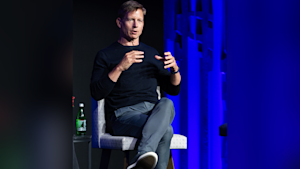
When the buyer is a bot, fraud detection must learn to see new patterns.
Mastercard spent decades training its fraud system to see bots as thieves. Now those same bots are the buyers, and the company's risk framework is being rewritten to let them in. Greg Ulrich, chief AI and data officer, told the VB Transform 2026 audience that enabling agents to transact requires changing rules built to block them. That shift touches identity, intent, and trust, layers Mastercard is rebuilding as it scores 175 billion transactions a year.
Your AI agent passed your tests. Then it failed your customer.
Enterprise AI is granting agents more autonomy than the evaluations meant to govern it can support. Half of organizations have shipped an agent that passed internal tests, then failed a customer. Only 5% fully trust the automated evaluations in use today. The most-cited weakness: evaluations align poorly with real-world outcomes. Yet two-thirds are already deploying on automated results alone, or engineering toward it. That gap between autonomy and assurance is where failures scale.

Discover clarity when reality blurs with AI-assisted perception
Lorde's take on AI glasses cuts through the hype with refreshing clarity. Standing on stage, she noted how "increasingly in our world, it gets harder and harder to know what is real," and she's right. That unease isn't about resisting progress; it's about demanding tools that serve us without eroding trust. We're watching the line between digital and physical blur, and that deserves scrutiny, not blind adoption.
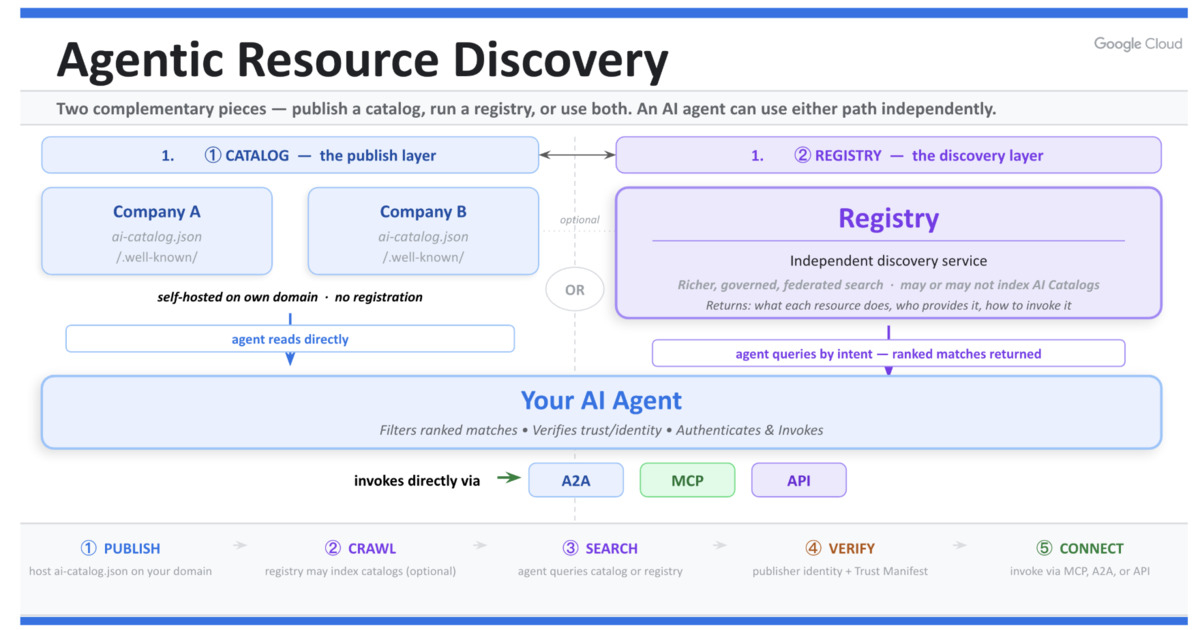
Explore how ARD makes AI tools discoverable and trustworthy.
The Agentic Resource Discovery Specification tackles a problem that has quietly slowed AI progress: tools and agents remain hard to find. Google and its partners are introducing an open standard built on catalogs and registries, which enables dynamic discovery while leaning on existing protocols like MCP and OpenAPI for execution. It is a practical move toward trust and interoperability. If you are still mapping out how MCP fits into your workflow, our visual guide to unlocking MCP is worth a look.