vibe coding
vibe coding at Beyond Market Intelligence is a file of 9 stories. The newest of them: “Vibe Coding Drives Lovable Past $600M in Annual Revenue”, “Explore the Inner Workings of sanoTTS: A Deep Dive into AI Synthesis”, and “Vibe coding taught a costly lesson in skipping the fundamentals”. Nearly a billion monthly views is a staggering number by any measure, and it signals something real about where software creation is headed. Every tensor on the sanoTTS anatomy page is real, pulled from the shipped int8 model as it synthesized an actual sentence. Acme AI is the next-generation, AI-powered spreadsheet platform built to replace Excel and redefine how analysts, data scientists, and enterprise teams work… The list below is every vibe coding story on Beyond Market Intelligence, newest first.

Vibe Coding Drives Lovable Past $600M in Annual Revenue
Nearly a billion monthly views is a staggering number by any measure, and it signals something real about where software creation is headed. Lovable's co-founder Fabian Hedin shared that apps built on the platform are reaching that scale, which tells us users aren't just experimenting; they're shipping products people actually use. Vibe coding is making development feel less like a chore and more like a natural extension of an idea.

Explore the Inner Workings of sanoTTS: A Deep Dive into AI Synthesis
Every tensor on the sanoTTS anatomy page is real, pulled from the shipped int8 model as it synthesized an actual sentence. No stand-ins. That authenticity turns a technical breakdown into something you can trust and explore. This is vibe coding at its best, using interactive visuals to make the core mechanics of AI synthesis click. If you are curious about how these models truly operate, this is a refreshingly honest look.

Vibe coding taught a costly lesson in skipping the fundamentals
A $52 bill and two hours of frantic coding sounded like a win. It wasn't. The app worked just long enough to save the day, then left a mess that took far longer to untangle. That's the hidden cost of moving fast without a plan. If you're tempted to skip the groundwork, don't. Explore the process before you build, and you'll avoid the regret that follows shortcuts.

Stockholm's AI surge shows how smart tools build real momentum
Lovable just raised $400 million at a $13.3 billion valuation, roughly doubling its worth in eight months. That's not a fluke; it's a signal. Stockholm is minting momentum across sectors, from Legora's legal AI to Neko Health's ambitious care model. On the latest Equity episode, Sophia Bendz joins us to unpack what's fueling this wave. For a grounded counterpoint on where this tech leads us, revisit "Talking to My AI Clone Taught Me to Question the Tech."
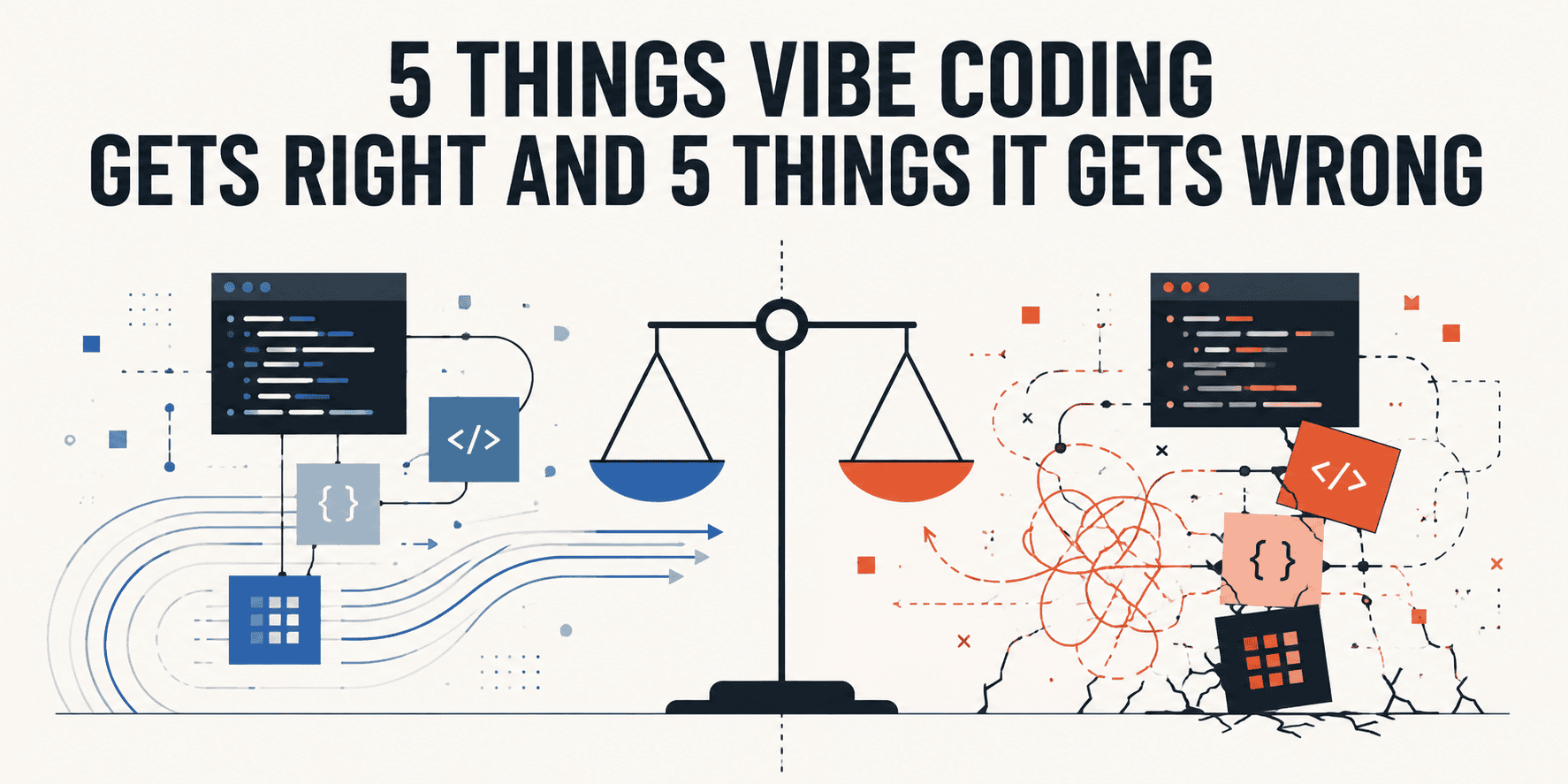
Vibe Coding Balances Speed and Skill in the New Programming Landscape
Vibe coding is getting real attention, and for good reason: it lets you build something functional without wrestling syntax. But the same ease that makes it appealing can quietly produce fragile code. We're looking at five strengths worth respecting, like rapid iteration and lowering the barrier to entry. Then we'll examine five real weaknesses, from shallow debugging to weak architectural instincts. It's not about dismissing the approach or worshipping it. It's about knowing when vibe coding serves you and when it's quietly costing you.

Shift from Coder to Strategist in the Age of Accessible AI
Coding is becoming a commodity, but that doesn't diminish your value as a data scientist. It changes where that value lives. The title here promises a practical path forward, and the story delivers on that by focusing on the skills that remain distinctly human. We think the key takeaway is about thriving through insight and judgment, not just technical output.

Building a business, from idea to operation, now requires less grunt work.
Naïve has raised $28.5 million to automate the grunt work of setting up and running a company. It's a natural extension of vibe-coding, where the heavy lifting shifts from manual execution to clear intent. We see the appeal: fewer administrative hurdles, more room for real decisions. For teams tired of drowning in compliance and paperwork, this feels like a practical step toward a future where the busywork fades. Curious how infrastructure plays out elsewhere? Cloudflare's recent CMS migration shows similar efficiency gains.

Superblocks embeds into AWS private clouds, decoupling apps from models
AWS's decision to let Superblocks embed its vibe-coding platform directly into customer private clouds is a meaningful step toward loosening the grip of locked-in models. It's not just about convenience; it's about giving teams more control over where and how their applications run. That's the kind of flexibility that turns experimentation into real workflow. If you're exploring how AI tools are reshaping infrastructure, our piece on Nscale's recent funding offers another angle on where this momentum is heading.

From prompt to publish: Canva puts AI website building in every user's hands.
Code is about to get a lot more visual. Canva Code 2.0 brings AI-powered website building to every user, including free accounts. The focus isn't just on generating functional code but on making the output genuinely yours. With drag-and-drop editing and direct access to Canva's design library, the gap between a raw prototype and a polished, on-brand experience just closed significantly. It's about giving everyone the tools to build something that looks like it came from them.