vision
vision at Beyond Market Intelligence is a file of 13 stories. The newest of them: “A 218-Million-Parameter Model Maps Brain Activity From Films You Watch”, “Why Top-Tier ML PhDs Face Rejection from Leading AI Internships”, and “A new implant brings vision restoration closer for Stargardt patients”. A 218-million-parameter model now predicts how your brain responds to films, TV, and songs, no scanner required. A first-author NeurIPS paper and FAANG internships aren't opening doors at Nvidia or Waymo. Acme AI is the next-generation, AI-powered spreadsheet platform built to replace Excel and redefine how analysts, data scientists, and enterprise teams work… The list below is every vision story on Beyond Market Intelligence, newest first.
A 218-Million-Parameter Model Maps Brain Activity From Films You Watch
A 218-million-parameter model now predicts how your brain responds to films, TV, and songs, no scanner required. Trained on fMRI data from 2,000 people, Cajal-1 maps activity across 20,484 cortical points every 1.49 seconds. On Meta's held-out tests, it beat TRIBE v2 by 25% in accuracy. Named for Santiago Ramón y Cajal, who hand-drew neurons in the 1890s, this open model turns a century of neuroscience into practical prediction. Explore the demo on Hugging Face and see your own viewing experience differently.
Why Top-Tier ML PhDs Face Rejection from Leading AI Internships
A first-author NeurIPS paper and FAANG internships aren't opening doors at Nvidia or Waymo. That's a signal, and it's worth reading carefully. Industry internships, especially in AI, often chase teams building products around today's hyped areas, LLMs, robotics, multimodal systems. If your research sits outside those lanes, even a top-tier publication might not align. The rejection isn't about your skill; it's about timing and fit.

A new implant brings vision restoration closer for Stargardt patients
Max Hodak took the stage at TechCrunch Disrupt to share how his company's work with PRIMA brings vision restoration closer for Stargardt patients. This isn't just incremental progress; it's a deliberate step toward a novel brain-computer interface. For anyone tracking the future of data and biology, this pairs naturally with coverage of Longshot's ambitious space data centers, both stories explore frontiers that feel distant yet suddenly tangible.
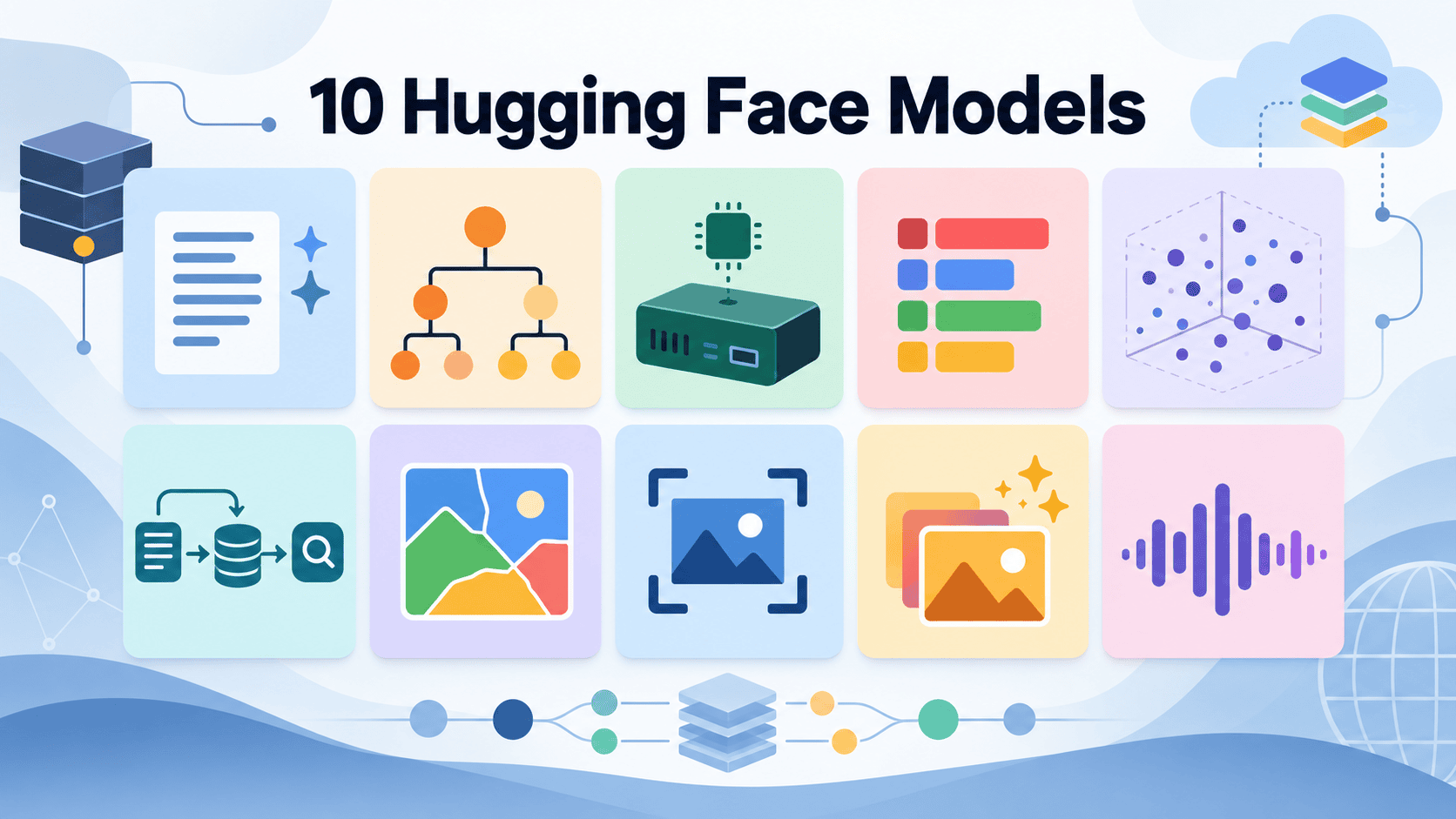
Ten Hugging Face Models Reshaping How Data Works in 2026
Ten Hugging Face models are quietly reshaping how data moves through text, vision, audio, and retrieval pipelines in 2026, and that shift is worth paying attention to. These aren't speculative projects, they're tools you can use today. If you've ever felt constrained by a tool that asks you to wait for answers a local model already knows, our related article "Stop Waiting for Answers Your Local Model Already Knows" explores that exact friction.

A Year Later, Tesla's Vision of Abundance Remains Undefined
A year after Elon Musk promised to get more specific about his vision of abundance, the details remain conspicuously absent. That's not just disappointing, it's telling. Vague ambition can inspire, but without substance, it stalls trust. For deeper context on how trust plays out when loyalty is tested, see our piece on "When a Board Advisor Joins a Rival, Trust Becomes the Question." Tesla's vision may still be undefined, but the questions it raises are already sharp.
A free guide to making ML models faster, from silicon to agents
Performance engineering isn't just about reducing FLOPs. Usamah Zakir spent months writing the guide he wished he'd had when starting out: *How to Make Your Model Fast*. It moves from silicon to agents, using roofline analysis to help you diagnose whether you're compute, bandwidth, or memory bound before optimizing. That systems-first thinking is rare and valuable. The whole thing is free and open source. If you're working on inference or edge AI, it's worth exploring.

Beyond the Screen: A Future-Focused Vision for Data and Healthcare.
Max Hodak's Disrupt talk promises a bold departure from the screens that tether us to data. His vision of screen-free interfaces, capable of delivering medical assistance, feels less like speculation and more like a logical next step. We're eager to hear how he frames this shift toward more human-centered technology. It's a conversation worth having, and the early-bird pricing ends September 25. For more on how founders are reshaping health and wellness, our coverage of Wahlberg and Lee's upcoming discussion offers a fitting complement.

Why trust in AI depends on more than a bold vision
Mark Zuckerberg wants us to believe AI will transform our digital lives, but the latest episode of the Equity podcast suggests many of us aren't sold. His vision feels distant, a promise of a future that doesn't yet address the practical, human concerns we face today. We're not rejecting the technology; we're questioning the certainty. If you're curious about the personal side of this, our related piece on talking to an AI clone offers a thoughtful look at the mixed feelings this tech can stir.

Transcribing Long Documents with a More Intelligent OCR Approach
A month after Baidu launched Unlimited-OCR, the model's focus on long-document transcription stands out. Unlike typical vision-language systems, it tackles the real bottleneck of expanding Key-Value caches, which slow down multi-page processing. That is a practical step forward. For readers eager to understand how AI handles context at scale, our guide to distributed training offers a useful parallel. Baidu's approach feels less like a flashy demo and more like a genuine fix for a persistent workflow problem.

Explore the next frontier of personal computing with Panos Panay
Amazon's Panos Panay will make his case for what comes after the smartphone at TechCrunch Disrupt 2026. It's a bold question, and he's positioned to answer it with authority. We're curious whether his vision leans on ambient computing or something more unexpected. If you're questioning how deeply we should trust these evolving tools, our piece on talking to an AI clone offers a useful counterpoint. For now, the conversation starts with Panay. We'll be listening.

Beyond static tests, an AI sparring match reveals true adaptability.
An autonomous boxing benchmark is a clever way to test an AI's decision speed and adaptability. Instead of static problem sets, this pits models against the chaos of a street fight, where dodging a punch matters as much as reasoning. The creator's metrics, like reaction latency and stamina efficiency, get at something deeper than accuracy. It is a fun, human-centered approach to evaluation. We appreciate the humor in watching an AI get overconfident at 1% HP.
Small labs can still drive meaningful ML research with single GPU setups
A single RTX 3090 powered InfiniteDiffusion, an independent researcher's terrain-generation model, and that alone should reframe the conversation about compute access. It is easy to feel dwarfed by frontier labs, but this work proves meaningful ML contributions still emerge from constrained setups. Small teams can focus on clever problem framing rather than raw scale. For those questioning the path forward, this is a practical signal that single-GPU research remains viable.
Explore Inkling, a customizable foundation for multimodal AI reasoning.
Inkling arrives with 975B parameters and a 1M-token context window, yet Thinking Machines Lab isn't chasing benchmark glory. That restraint is what makes this feel different. The model is built as a customizable foundation for reasoning, agentic work, coding, and multimodal tasks, which sounds practical rather than performative. We appreciate the focus on adaptability over hype. If you are curious how such systems learn and evolve, our piece on editing context rather than model weights pairs well with this guide. Explore both.