workflow automation
workflow automation on Beyond Market Intelligence: a running collection of 260 stories we have gathered and hand-picked because they are worth your time. Every post here touches on workflow automation in some way — the news, the analysis, the deep dives, and the occasional surprise find. Acme AI is the next-generation, AI-powered spreadsheet platform built to replace Excel and redefine how analysts, data scientists, and enterprise teams work with data. New stories are added to this page as we find them, so check back if you want to keep up with what is happening around workflow automation, or subscribe to the RSS feed to get them as soon as they are published. Browse the collection below, or head back to the homepage to see everything Beyond Market Intelligence is covering right now.

We tested Anthropic’s redesigned Claude Code desktop app and 'Routines' — here's what enterprises should know
On April 14, 2026, Anthropic unveiled a redesigned Claude Code desktop app and the innovative "Routines" feature, marking a pivotal shift in how enterprises approach AI-driven development. This transition from AI as a simple chatbot to a robust workforce reflects a new design philosophy aimed at enhancing productivity. The updated app, complete with a central "Mission Control" sidebar, empowers developers to manage multiple tasks seamlessly.

Meta researchers introduce 'hyperagents' to unlock self-improving AI for non-coding tasks
Meta researchers have unveiled a groundbreaking framework called "hyperagents," designed to advance self-improving AI systems for non-coding tasks. Unlike traditional models that depend on fixed improvement mechanisms, hyperagents autonomously rewrite and optimize their problem-solving logic. This innovative approach enables them to excel in dynamic environments, such as robotics and document review, by developing capabilities like persistent memory and automated performance tracking. By integrating self-referential learning, hyperagents promise to enhance adaptability, compounding improvements over time and reducing reliance on manual customization.

Traza raises $2.1 million led by Base10 to automate procurement workflows with AI
Traza, a New York-based startup, has secured $2.1 million in pre-seed funding led by Base10 Partners, aiming to transform procurement workflows through AI. For years, procurement has operated largely on outdated methods like emails and spreadsheets, leading to significant inefficiencies. Traza's innovative solution deploys AI agents that autonomously manage tasks such as vendor outreach and invoice processing, reducing manual effort by up to 70%.

Adobe’s new Firefly AI Assistant wants to run Photoshop, Premiere, Illustrator and more from one prompt
Adobe has unveiled the Firefly AI Assistant, a groundbreaking tool designed to streamline creative workflows across its entire Creative Cloud suite. By allowing users to manage complex tasks in Photoshop, Premiere, Illustrator, and more through a single conversational interface, Firefly represents a significant shift in how creatives interact with technology. This launch also includes new features such as a Color Mode for Premiere Pro and enhanced collaboration tools.

AI's next bottleneck isn't the models — it's whether agents can think together
In a recent discussion, Cisco’s SVP and GM Vijoy Pandey highlighted a pivotal challenge in AI: while agents can connect, they struggle to think together. This disconnect creates a bottleneck for next-generation systems, as agents lack shared context and semantic alignment. Pandey advocates for a transformative “internet of cognition,” where AI entities collaboratively tackle new challenges without human intervention.

43% of AI-generated code changes need debugging in production, survey finds
A recent survey from Lightrun reveals a pressing challenge in the software industry: 43% of AI-generated code changes require manual debugging in production, highlighting the struggle to ensure reliability after deployment. Conducted among 200 senior site-reliability and DevOps leaders, the findings indicate that even after passing quality assurance, AI-generated code often leads to increased engineering bottlenecks.

Designing the agentic AI enterprise for measurable performance
In the rapidly evolving landscape of AI-driven enterprises, achieving measurable performance through agentic AI requires more than just innovative ideas. This presentation by Edgeverve delves into the critical transition from pilot programs to impactful, production-grade solutions. By establishing clear goals and data-driven workflows, organizations can harness the potential of semi-autonomous AI agents. This approach emphasizes the importance of integrating autonomy, governance, and observability while maintaining flexibility. Discover how to transform operational grey zones into streamlined processes that drive tangible results and enhance productivity.
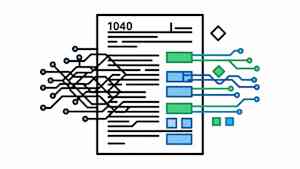
Intuit compressed months of tax code implementation into hours — and built a workflow any regulated-industry team can adapt
Intuit's TurboTax team tackled the challenge of the One Big Beautiful Bill, a complex 900-page tax document, by leveraging AI to streamline implementation from months to mere days. By employing large language models for document analysis and developing bespoke tools for coding and testing, they transformed a convoluted process into an efficient workflow adaptable to any regulated industry.
Goodbye, Llama? Meta launches new proprietary AI model Muse Spark — first since Superintelligence Labs' formation
Meta has unveiled Muse Spark, its first proprietary AI model since the formation of Meta Superintelligence Labs, signaling a significant shift from the open-source Llama family. Under the leadership of Chief AI Officer Alexandr Wang, Muse Spark is designed to support tool use, visual reasoning, and multi-agent orchestration, marking a leap in AI capabilities. Unlike its predecessors, Muse Spark aims to deliver "personal superintelligence," integrating visual data to enhance user interactions.

New framework lets AI agents rewrite their own skills without retraining the underlying model
Introducing Memento-Skills, a groundbreaking framework that empowers AI agents to autonomously rewrite their own skills without the need for retraining underlying models. Developed by researchers from multiple universities, this innovative approach addresses a significant challenge in deploying autonomous agents: adapting to dynamic environments efficiently. By establishing an evolving external memory, Memento-Skills enables agents to enhance their capabilities through continual learning, reducing operational overhead and simplifying skill updates. This remarkable advancement paves the way for more effective and adaptable AI solutions in enterprise settings.

AI joins the 8-hour work day as GLM ships 5.1 open source LLM, beating Opus 4.6 and GPT-5.4 on SWE-Bench Pro
Today marks a significant milestone in artificial intelligence as Z.ai unveils GLM-5.1, an open-source large language model designed for eight-hour autonomous tasks. This model outperforms competitors like Opus 4.6 and GPT-5.4 on SWE-Bench Pro, showcasing its advanced capabilities in coding and engineering tasks. Released under a permissive MIT License, GLM-5.1 empowers enterprises to customize and utilize its features for commercial applications. As China re-emerges in the open-source AI landscape, GLM-5.1 positions Z.ai as a leader in

As models converge, the enterprise edge in AI shifts to governed data and the platforms that control it
As enterprise AI evolves, the focus is shifting from model capabilities to the governed data that fuels them. Unstructured data, encompassing everything from contracts to internal knowledge, is where genuine advantage lies. Leaders must prioritize platforms that effectively govern this content, ensuring accessibility and compliance. Box's Yash Bhavnani and Ben Kus emphasize that the organizations poised to lead are those that establish robust governance infrastructures, enabling trustworthy AI applications that integrate seamlessly with their systems of record.

LLM-referred traffic converts at 30-40% — and most enterprises aren't optimizing for it
As AI agents redefine digital discovery, enterprises must adapt to a new reality: traditional SEO strategies are becoming obsolete. With LLM-referred traffic converting at an impressive 30-40%, understanding how AI interprets content is crucial. The shift from search-and-click to answer engine optimization (AEO) means that success hinges on whether your content is selected and cited by these agents. Organizations need to structure their materials to align with user intent and prioritize clarity to ensure visibility in this emerging landscape of AI-driven inquiry.
[R] Agentic AI and Occupational Displacement: A Multi-Regional Task Exposure Analysis (236 occupations, 5 US metros)
In our latest analysis, we extend the Acemoglu-Restrepo task displacement framework to assess the impact of agentic AI—systems that can execute entire workflows—on 236 occupations across five major U.S. tech metros. Unlike previous models that treat tasks as independent, our approach reveals that high-credential roles, such as software engineers, face significant automation exposure. Key findings highlight a measurable adoption lag between regions, emerging job categories requiring no coding, and a prediction of widespread moderate exposure rather than catastrophic displacement.

Closing the data security maturity gap: Embedding protection into enterprise workflows
Data security is a critical yet often overlooked aspect of enterprise cybersecurity, with a staggering 35% of breaches in 2025 linked to unmanaged data sources. To close the maturity gap in data security, organizations must embed protection throughout the data lifecycle, prioritizing visibility and understanding. By treating data security as a foundational element of operational discipline, businesses can implement scalable, automated protections that align with clear policies.

AI agents that automatically prevent, detect and fix software issues are here as NeuBird AI launches Falcon, FalconClaw
NeuBird AI is transforming incident management with the launch of Falcon and FalconClaw, innovative AI agents designed to prevent, detect, and resolve software issues autonomously. As enterprises navigate increasingly complex infrastructures, the need for proactive solutions has never been more critical. Moving beyond traditional incident response, NeuBird AI emphasizes incident avoidance to minimize operational chaos. With a recent funding round of $19.3 million, the company aims to empower engineers by reducing alert fatigue and streamlining workflows, ultimately enhancing productivity and reliability across tech environments.

Nvidia launches enterprise AI agent platform with Adobe, Salesforce, SAP among 17 adopters at GTC 2026
At GTC 2026, Nvidia CEO Jensen Huang unveiled the Agent Toolkit, an open-source platform designed to build autonomous AI agents, backed by 17 major enterprise software companies including Adobe, Salesforce, and SAP. This toolkit streamlines the complexities of deploying AI agents by providing essential components like optimized models, runtime environments, and security frameworks. As these industry leaders commit to Nvidia's shared foundation, the landscape of enterprise AI is set to transform, positioning Nvidia as a pivotal player in this next phase of technological evolution.
![[P] I trained a Mamba-3 log anomaly detector that hit 0.9975 F1 on HDFS — and I’m curious how far this can go](https://preview.redd.it/3hrr4prgbzsg1.png?width=140&height=120&auto=webp&s=ad74d593f251847f8d8acb4e0fc71c0f5679f4bf)
[P] I trained a Mamba-3 log anomaly detector that hit 0.9975 F1 on HDFS — and I’m curious how far this can go
I recently trained a Mamba-3 log anomaly detector that achieved an impressive F1 score of 0.9975 on the HDFS benchmark, significantly improving from an initial 60% effectiveness. This project, which utilized a novel template-based tokenization approach, not only enhanced performance but also streamlined training time to about 36 minutes. With remarkable precision and recall rates, the model demonstrates the potential of AI in log analysis. I’m excited to explore its applications further and invite insights on the direction of this work and future benchmarks.
Automating data import from multiple files
Automating the import of multiple CSV files into Excel can streamline your workflow significantly, especially when dealing with numerous files organized by a consistent naming convention. By creating a structured approach, you can efficiently import data from 35 different CSV files for each BASE variable, consolidating all relevant dates and variable names into individual sheets. This method not only saves time but also enhances data management and accessibility, allowing you to focus on analysis rather than manual data entry.
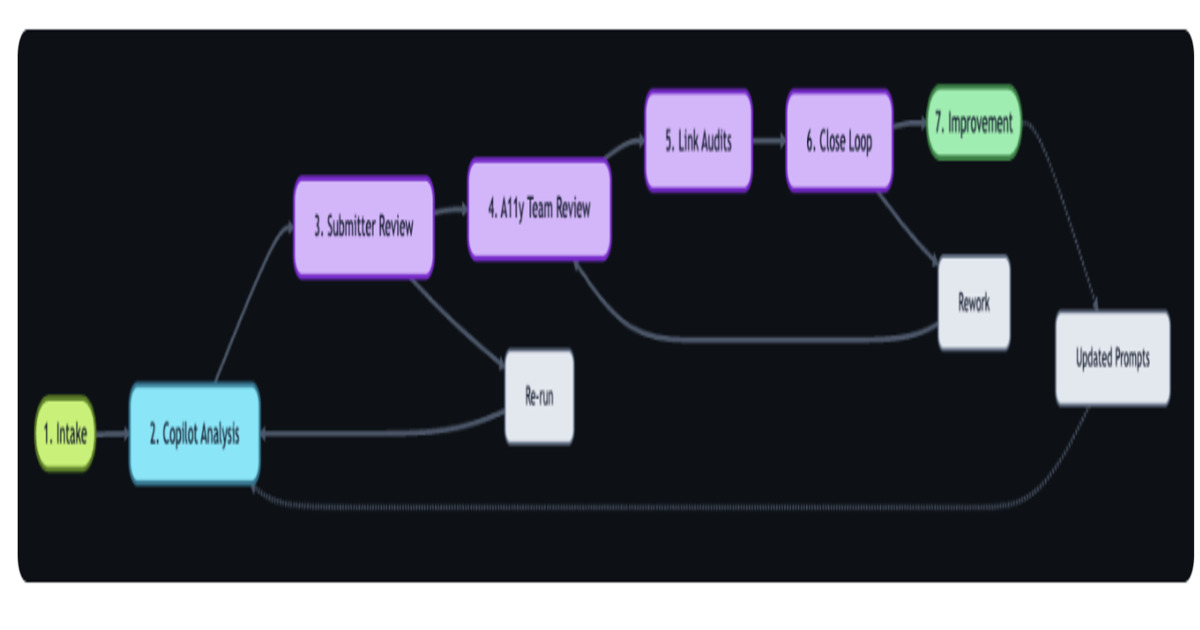
Github Integrates AI to Improve Accessibility Issue Management and Automate Feedback Triage
GitHub has unveiled a groundbreaking AI-powered workflow designed to enhance accessibility issue management and automate feedback triage. Leveraging GitHub Actions, Copilot, and Models APIs, this innovative system centralizes accessibility reports, analyzes compliance with WCAG standards, and streamlines the triage process while ensuring human validation remains integral. As a result, teams can resolve feedback more efficiently, fostering greater inclusion and cross-functional collaboration. This development not only empowers developers but also signifies a commitment to making digital spaces more accessible for everyone.

The end of 'shadow AI' at enterprises? Kilo launches KiloClaw for Organizations to enable secure AI agents at scale
As generative AI becomes integral to the workplace, Kilo is addressing the "shadow AI" crisis with the launch of KiloClaw for Organizations. This suite of tools empowers enterprises to manage autonomous agents securely, eliminating the risks associated with unsanctioned AI usage. Co-founder Scott Breitenother emphasizes Kilo's commitment to making these technologies accessible, while new governance features provide necessary oversight. With over 25,000 users already adopting KiloClaw, this move aims to transform how organizations leverage AI agents while ensuring compliance and security.
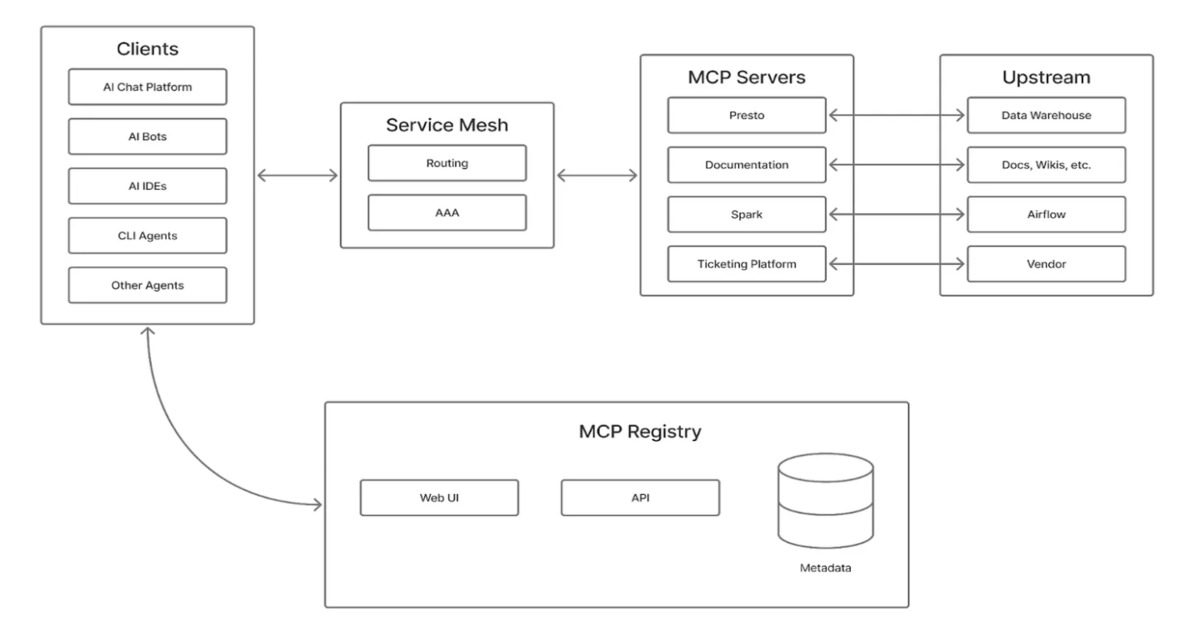
Pinterest Deploys Production-Scale Model Context Protocol Ecosystem for AI Agent Workflows
Pinterest has launched a production-ready Model Context Protocol (MCP) ecosystem designed to enhance AI agent workflows. This innovative framework enables the automation of complex engineering tasks while seamlessly integrating various internal tools. With domain-specific MCP servers and a central registry, the initiative prioritizes security and governance. Additionally, the incorporation of human-in-the-loop approval processes ensures that developer productivity is significantly boosted, ultimately saving thousands of hours each month. This advancement reflects Pinterest's commitment to empowering its engineering teams with transformative solutions.
Build Better AI Agents with Google Antigravity Skills and Workflows
Unlock the potential of your coding projects with Google Antigravity Skills and Workflows. This guide will show you how to configure Antigravity AI agent workflows to automate critical code generation tasks seamlessly, enhancing your productivity without relying on third-party tools. By harnessing the power of AI, you can streamline your development processes, reduce manual effort, and focus on innovation. Explore how these resilient workflows can transform your approach to coding, enabling you to achieve more with less complexity. Discover the future of automation today.

Hackers slipped a trojan into the code library behind most of the internet. Your team is probably affected
A recent security breach has exposed a significant vulnerability within the npm ecosystem, impacting the widely used Axios library. Hackers exploited a stolen long-lived access token from a lead maintainer to publish two compromised versions that install a remote access trojan (RAT) across macOS, Windows, and Linux. Despite robust security measures like OIDC and SLSA attestations, the attack underscores a critical gap in npm's credential management. Organizations using Axios must immediately assess their exposure and implement stronger security protocols to safeguard against future threats.