7 Steps to Building and Deploying Your First Autonomous Agent
Our take
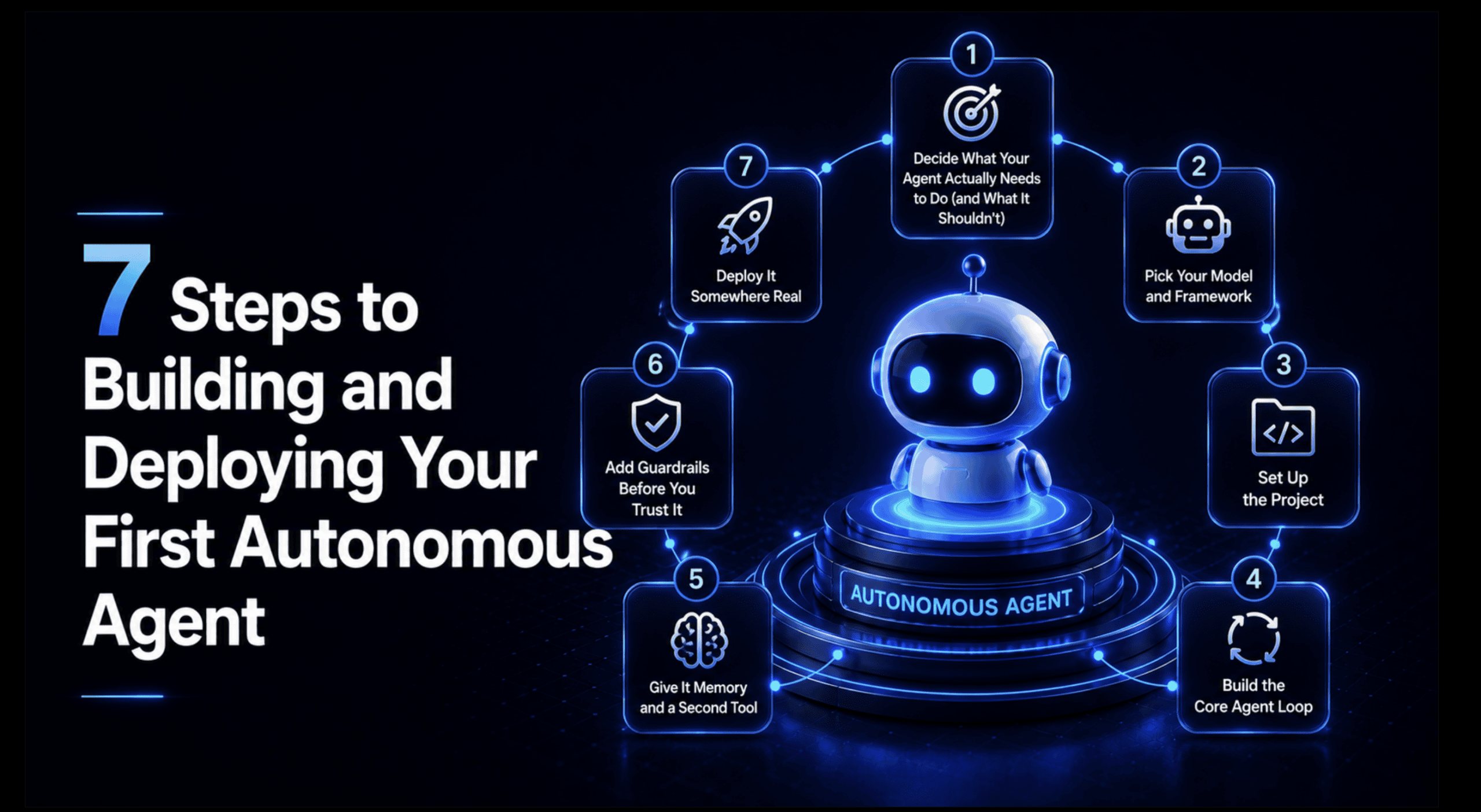
The rise of autonomous agents is no longer a distant prospect; the recent article, "7 Steps to Building and Deploying Your First Autonomous Agent," confirms that the tools and understanding are rapidly maturing to the point of accessibility. This isn’t just about automating simple tasks – it's a fundamental shift in how we interact with data and technology. We’ve been discussing the underlying infrastructure needed for this change, as highlighted in Making sense of the panic over Chinese AI, which underscores the broader implications of this technological acceleration. The ability to build and deploy agents, even in a basic form, signifies a move away from reactive systems towards proactive, data-driven workflows. This development reinforces the need for flexible architectures, a concept explored in Article: An Evolutionary Architecture Pattern for Managing AI’s Pace of Change, which demonstrates why traditional systems struggle to accommodate the unpredictable nature of agentic AI.
The seven-step guide itself is significant because it demystifies the process. While the technical details can be complex, the article's focus on practical steps—from defining the agent's purpose to deployment and monitoring—is crucial. It moves beyond the theoretical discussions that often dominate AI conversations and provides a tangible roadmap for users to begin experimenting. This is particularly relevant given the increasing sophistication of Large Language Models (LLMs) and the infrastructure required to support them, as Netflix's experience demonstrates in Netflix Details Its In-House LLM Serving Platform with Triton and vLLM. Successfully deploying agents requires a robust and scalable serving platform, and the article implicitly acknowledges this need by framing deployment as a key step. The accessibility of these tools lowers the barrier to entry, empowering a wider range of users – from data analysts to business users – to leverage the power of AI.
The broader implication of this trend is a re-evaluation of how we think about spreadsheets and data management. Traditionally, spreadsheets have been static repositories of information, requiring manual updates and analysis. Autonomous agents represent a paradigm shift, transforming spreadsheets into dynamic, self-optimizing engines. Imagine agents automatically gathering data from various sources, cleaning and transforming it, performing complex analyses, and generating actionable insights—all without human intervention. This level of automation has the potential to unlock significant productivity gains and accelerate decision-making across a wide range of industries. It’s a move from reactive data handling to a proactive, intelligent system that anticipates needs and delivers insights in real-time. Furthermore, the ability to rapidly deploy these agents enables organizations to experiment with new use cases and iterate quickly on their data strategies.
Ultimately, the democratization of autonomous agent development is a powerful force. It’s not just about building sophisticated AI; it's about empowering individuals and organizations to harness the power of AI in a practical and accessible way. As these agents become more sophisticated and ubiquitous, the question worth watching is not *if* they will transform how we work, but *how* we will adapt our workflows and organizational structures to effectively leverage their capabilities. Will we see a new class of "agent trainers" emerge, specializing in crafting and optimizing these autonomous systems? Or will the tools become so intuitive that anyone can build and deploy agents with ease? The answers to these questions will shape the future of work and the evolution of intelligent data management.
Read on the original site
Open the publisher's page for the full experience