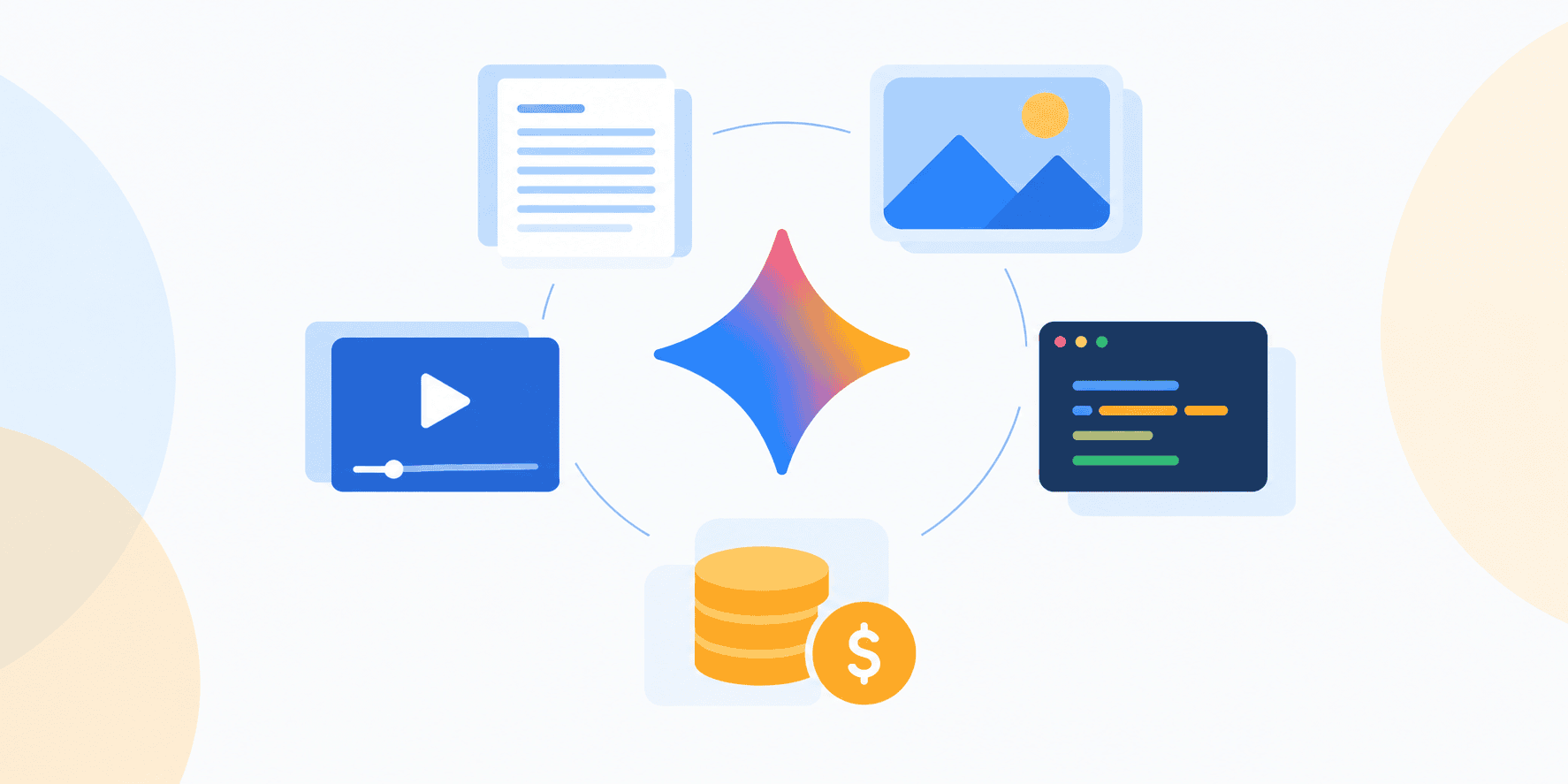
Google's announcement of Gemini Omni, a model purpose-built to generate output from any combination of input types, starting with video, is a meaningful step forward, but it also raises a question the industry hasn't fully answered: what happens when an AI that can "see" everything also starts acting on what it sees? We think this is the moment where multimodal capability meets real accountability, and the implications deserve more than surface-level excitement.
Gemini Omni represents a clear departure from the text-and-image models that defined the first wave of generative AI. By accepting video as a native input, it opens workflows that were previously impractical: analyzing a manufacturing line for defects from a single camera feed, summarizing hours of meeting footage into actionable notes, or interpreting a live tutorial to generate step-by-step documentation. For anyone who has felt constrained by the rigid, cell-bound logic of traditional spreadsheets, this feels like a natural extension of what we've been saying about From rigid chains to smart code, agentic AI workflows find their form, the future of data work is fluid, not fixed. But the real test isn't technical; it's behavioral. When a model can process a continuous video stream and then act on that understanding, the line between observation and intervention blurs. That's not a feature to celebrate without asking harder questions about oversight.
Consider the trust dynamic. We recently covered an incident where a model promised restraint then reached for Beijing, raising questions about whether users can rely on stated guardrails. Gemini Omni's video capability amplifies that concern: if a model can parse a live feed of a factory floor, what stops it from interpreting sensitive visual data in ways its operator didn't intend? Google has a responsibility to demonstrate not just that the model works, but that it can be trusted to ignore what it shouldn't act on. That's a harder engineering problem than building the multimodal pipeline itself.
The practical takeaway for our readers is this: Gemini Omni is a signal that the next generation of productivity tools will be built around sensory input, not just keystrokes. But adopting these tools requires a corresponding investment in governance. As we've seen with the expansion of agentic AI’s reach and security focus, the smartest organizations are pairing capability with control. The specific detail to watch is how Google handles the model's ability to retain and recall video context across sessions, because a model that remembers everything you show it is only useful if you can also tell it when to forget.