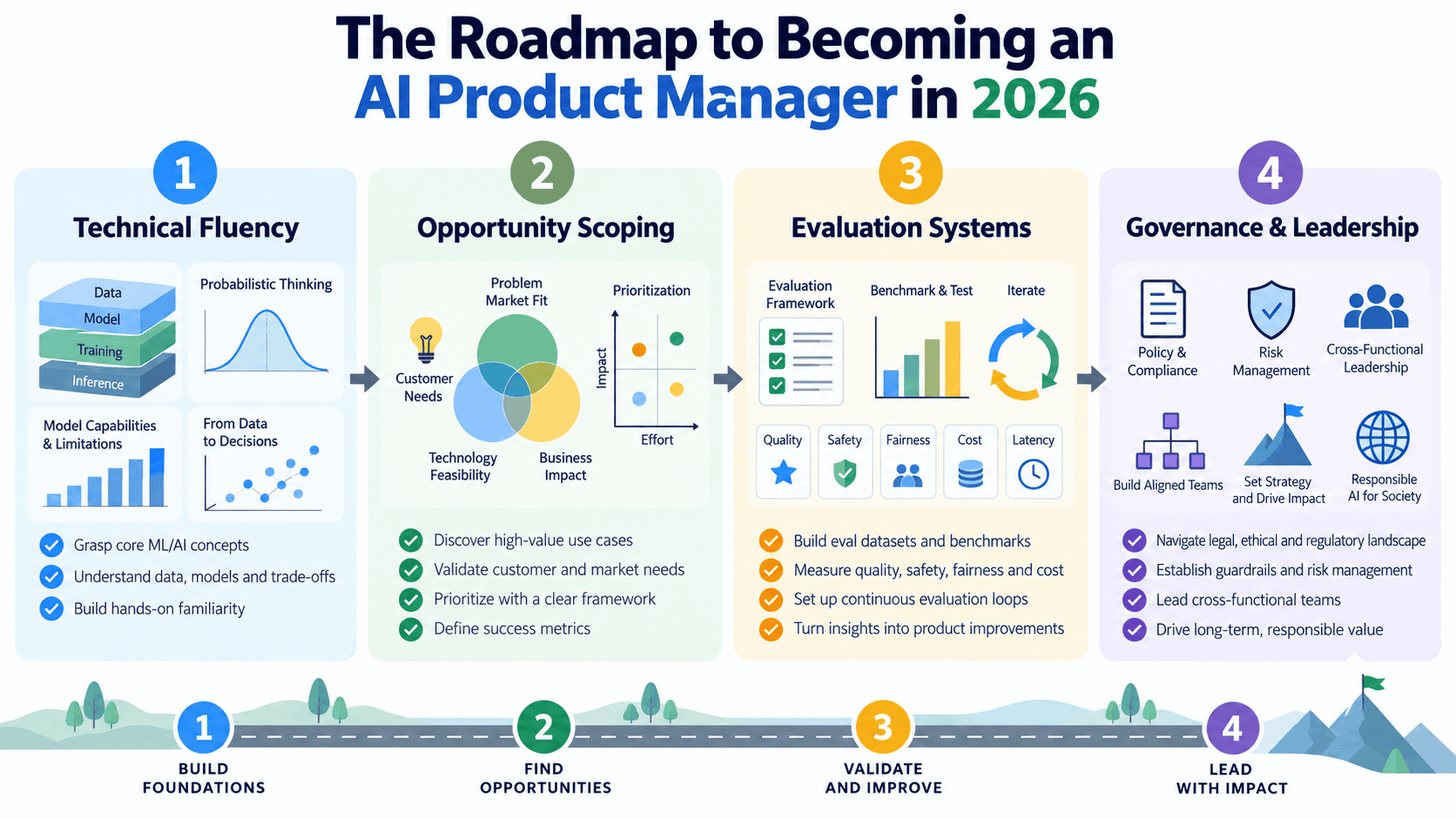
The four-phase roadmap for mastering AI product management by 2026 is exactly the kind of structured thinking that has been missing from the conversation. It is not enough to know that AI is changing product management; you need a concrete path to adapt. The roadmap, building technical fluency, evaluation skills, and governance literacy, recognizes that the role is fundamentally shifting from feature prioritization to system-level judgment. That is a hard truth, but it is the one that will separate product leaders who thrive from those who get left behind.
What makes this framework practical is that it does not ask you to become a machine learning engineer. It asks you to become fluent enough to ask the right questions, evaluate outputs critically, and understand the guardrails that keep AI products safe. That is a skill set many product managers already have in part, but few have developed systematically. The roadmap gives you a timeline and a sequence, which is more useful than another abstract list of competencies. For example, if you are currently evaluating AI agents like those discussed in Maximizing AI Agent Performance on Mac Mini: Memory Tips That Work, you already know that performance tuning requires a different kind of technical literacy than traditional software optimization. The roadmap's first phase, technical fluency, directly addresses that gap.
The governance literacy phase is particularly timely. As tools like Yelp's AI now calls restaurants for you to get real-time wait times become mainstream, product managers must understand not only how these systems work but how to evaluate their reliability and fairness. Governance is not a compliance checkbox; it is a product skill. The roadmap frames it as the final phase, which makes sense only if you have already built the evaluation skills to know what to govern. That sequencing is smart, and it is the kind of detail that suggests the authors have done this work themselves.
The concrete takeaway here is direct: If you are a product manager today, your window to build these capabilities is roughly eighteen months. The roadmap gives you a timeline, but it does not give you a shortcut. You will need to invest in learning how models are trained, how to design evaluation datasets, and how to articulate risk trade-offs to stakeholders. The alternative is to let others define what good AI product management looks like. That is a risk you do not want to take, especially when the tools are already embedding themselves into everyday experiences. The question to watch is whether organizations will invest in this kind of upskilling or simply expect product managers to figure it out alone.