towards data science
218 stories filed under towards data science on Beyond Market Intelligence. The newest of them: “Discover how synthetic datasets train smarter AI for real-world card detection”, “Why Model Switching Can Erase the Savings of Cheaper AI Inference”, and “How to choose the right AI tool by asking what keeps your LLM in check”. Training a model on procedurally generated card images is one thing. Testing cheaper LLM inference models comes with a hidden cost: switching models mid-session can erase the savings entirely. Acme AI is the next-generation, AI-powered spreadsheet platform built to replace Excel and redefine how analysts, data scientists, and enterprise teams work… The list below is every towards data science story on Beyond Market Intelligence, newest first.
Discover how synthetic datasets train smarter AI for real-world card detection
Training a model on procedurally generated card images is one thing. Making it work in the real world is another. The synthetic-to-real transfer approach using frozen DINOv3 features bridges that gap without drowning you in labeled data. It's a practical strategy for card detection and segmentation that prioritizes outcomes over hype. For a deeper look at blending generated data with real-world results, our piece on sharpening arrow detection with ConvNext pairs nicely with this work.
Why Model Switching Can Erase the Savings of Cheaper AI Inference
Testing cheaper LLM inference models comes with a hidden cost: switching models mid-session can erase the savings entirely. I ran routing experiments to understand why, and the results show that context loss, incompatible reasoning patterns, and repeated re-processing add up fast. The math on model switching is clear, cheaper per token means nothing when you pay the switching tax repeatedly. For deeper context on what keeps LLMs in check, see our related piece on spec-driven test automation.
How to choose the right AI tool by asking what keeps your LLM in check
The moment you trust an LLM to act on your behalf, you need a clear answer to one question: what stops it from disobeying? Spec-driven test automation offers a practical answer. By defining precise expectations before the model acts, you create a guardrail that keeps AI focused and accountable. It's a shift from hoping an LLM behaves to knowing it will. For more on AI risk, explore our piece on why your next insider threat might come from an AI agent.
Turn Requirements Into Agents That Actually Execute
Scattered requirements rarely translate into agents that actually execute. The gap between what teams document and what systems deliver is where productivity goes to die. This piece draws a sharp line between acceptable traces and unacceptable ones, helping you distinguish signal from noise before your agents go live. For deeper context on how technical choices shape safety outcomes, our related coverage on AI harms and their technical causes is worth exploring.
How Gemini 4 Argon Handles a Million Tokens at Once
A million-token output window means you can hand Gemini 4 Argon an entire codebase, a full legal document, or a year of support logs in a single go. The benchmarks and the price tag make clear this isn't for everyone, it's built for the workflows that genuinely need that scale. For most teams, the real question is whether your task actually benefits from that capacity, something our related article "Finding Your Balance Between AI Effort and Real Results" explores in more depth.
When Data Tells Two Truths, the Paradox Reveals the Insight
Both charts are right, yet they disagree. That's the paradox at the heart of this story, and it's exactly where real insight hides. When you combine data, the narrative can flip, not because the numbers are wrong, but because context changes everything. This isn't a flaw; it's a signal. Understanding why two truths conflict reveals more than either truth alone. For a deeper look at how assumptions shape results, see our related piece on participant-aware evaluation in EEG models.
Two Metrics That Fix What Every Quantization Guide Misses
Ten quantization guides, and not one threshold-dependent metric between them. That's a telling gap, because without those numbers, quantization remains a black box, optimizing for theoretical efficiency while ignoring what shapes real-world accuracy. Two metrics close the blind spot, and once you see them, the old guides feel incomplete. For readers already questioning hidden assumptions in AI workflows, our earlier piece on whether you still own AI-written code explores a parallel tension worth your time.
When AI Writes Code, Do You Still Own the Work
We gave an AI a real test: write code, plant a bug, and see if the human who reviewed it actually owns the work. The result was humbling. I rated my confidence 4 out of 5, then failed to find the planted bug in eight minutes. CodeOwnership reveals a hard truth about accountability when AI generates your logic. For a deeper look at AI's reliability, our Python 3.15 JIT Benchmarks piece shows similar limits for targeted workloads. The tool is impressive. The limits are real.
Python 3.15 JIT Benchmarks Show Real Progress for Targeted Workloads
The same three Python workloads keep showing up in the JIT benchmarks, and for Python 3.15, they finally show real progress. The just-in-time compiler is delivering stronger results for targeted programs, but it still doesn't accelerate everything. That honesty matters. This measured improvement feels more credible than sweeping performance claims. For deeper context on AI infrastructure challenges, our piece on securing Kubernetes with Andrew Martin connects the dots between system reliability and the tools we build on top of it.
Seven Decision Models Put to the Test Against a Generative LLM
A head-to-head test of seven open decision models against a generative LLM reveals a clear winner on routing accuracy, latency, and output reliability. The results are both practical and telling. For teams wrestling with model selection, this hands-on Jev repo comparison offers concrete data instead of speculation. We also published "Two Paths to a Smarter Decision Model" if you want to explore how different approaches can match on accuracy while diverging sharply on cost. The future of data decisions starts with honest benchmarks like these.
How Predictable Is an AI's Supposedly Random Number
If an AI model is told to pick a "random" number, its output is far from unpredictable. We read the exact answer distribution from the logits of open models, both base and instruction-tuned, and turned that data into bits and guesses-to-crack. The results reveal how deterministic these systems actually are. It's a sobering look at what randomness means inside a neural network.
From 719 Math Papers: Data Science Gets Smarter at Matching Messy Data
OpenAI tackled 719 math papers to prove that AI can reliably match messy data, choose representative examples, and generate comparison sets. That is not just an academic exercise; it signals a practical shift in how we clean and connect information. Data science gets smarter when it can handle the real-world noise spreadsheets struggle with. For a hands-on comparison of routing accuracy and reliability, explore *Seven Decision Models Put to the Test Against a Generative LLM*.
Smarter AI Memory Saves 20x Cost Without Sacrificing Performance
Pasting an entire chat history costs 20 to 31 times more than a smarter memory system, yet delivers no better results. That's the finding from testing four ways to give an AI assistant memory. The obvious approach, dumping everything in, was the worst value. For anyone building AI tools, this is the kind of practical insight that saves real money. It echoes the collaborative thinking behind our coverage of vote-based federated selection, where institutions choose features without sharing raw data.
Vote-Based Federated Selection Lets Institutions Choose Features Without Sharing Data
Hospitals, banks, and edge devices can now decide which features matter most without ever sharing raw data. Instead of exchanging rows, they exchange votes, a federated selection process that runs directly in NVIDIA FLARE and Flower. It's a practical step toward collaborative AI that respects privacy by design. Institutions keep control while still aligning on what counts. For a deeper look at when collaborative models actually outperform individual ones, our piece on stacking is worth exploring.
Stacking Only Wins When Your Models Disagree
Stacking only pays off when your models disagree. If every model in your ensemble stumbles on the same rows, combining them just compounds the error. The real win comes from diversity, models that fail differently can cover each other's gaps. That distinction matters more than chasing a slightly better single model. For teams wrestling with how to build reliable pipelines, this is the practical insight worth testing.
Engineering Discipline Gives AI-Generated Code Room to Grow
AI agents can write code faster than ever, but speed without structure creates technical debt. That's why engineering discipline matters: it gives generated code room to grow. Data scientists need software engineering principles, version control, modular design, testing, to turn AI's raw output into something maintainable and scalable. The result isn't just working scripts; it's systems that evolve. For more on building adaptable AI applications, our related piece on American Express's rulebook for shopping agents shows how clear frameworks keep automation trustworthy.
When Samplers Fail: Benchmarking Three Methods Against Ground Truth
Three samplers walk into a Bayesian inference problem, and all three fail, spectacularly. That's the honest, refreshing premise of this benchmark, which pits NumPyro, affine-invariant MCMC, and dynesty against exact ground truth. The results are a sobering check on our assumptions about modern tools. When you're building AI scaffolding around agents or exploring spatial data pathways, knowing where your inference engine breaks is as important as knowing where it works.
Your AI Agent Is Ready Now Build the Scaffolding Around It
Agents got good. Now the hard part is building the scaffolding around them. Gubi reissued the Lotus lamp. That's the message from a new piece that argues your agent doesn't need more freedom, it needs structure. The most capable AI is pointless without the right architecture to support it. For a deeper look at that architecture, explore "From Cognitive Loops to Multi-Agent Swarms: Your 2026 AI Roadmap" on our site.

Strengthen churn and CLV models with the untapped signal in your text data
Your churn and CLV models are leaving signal on the table. The text your customers generate, support tickets, reviews, product feedback, carries insights that structured data misses. This practical guide shows how to fold that untapped language into traditional models without overhauling your stack. It's about making your predictions sharper with what you already have. For a related look at how wasted effort skews results, our coverage of 50,400 agent runs pairs well with this approach.
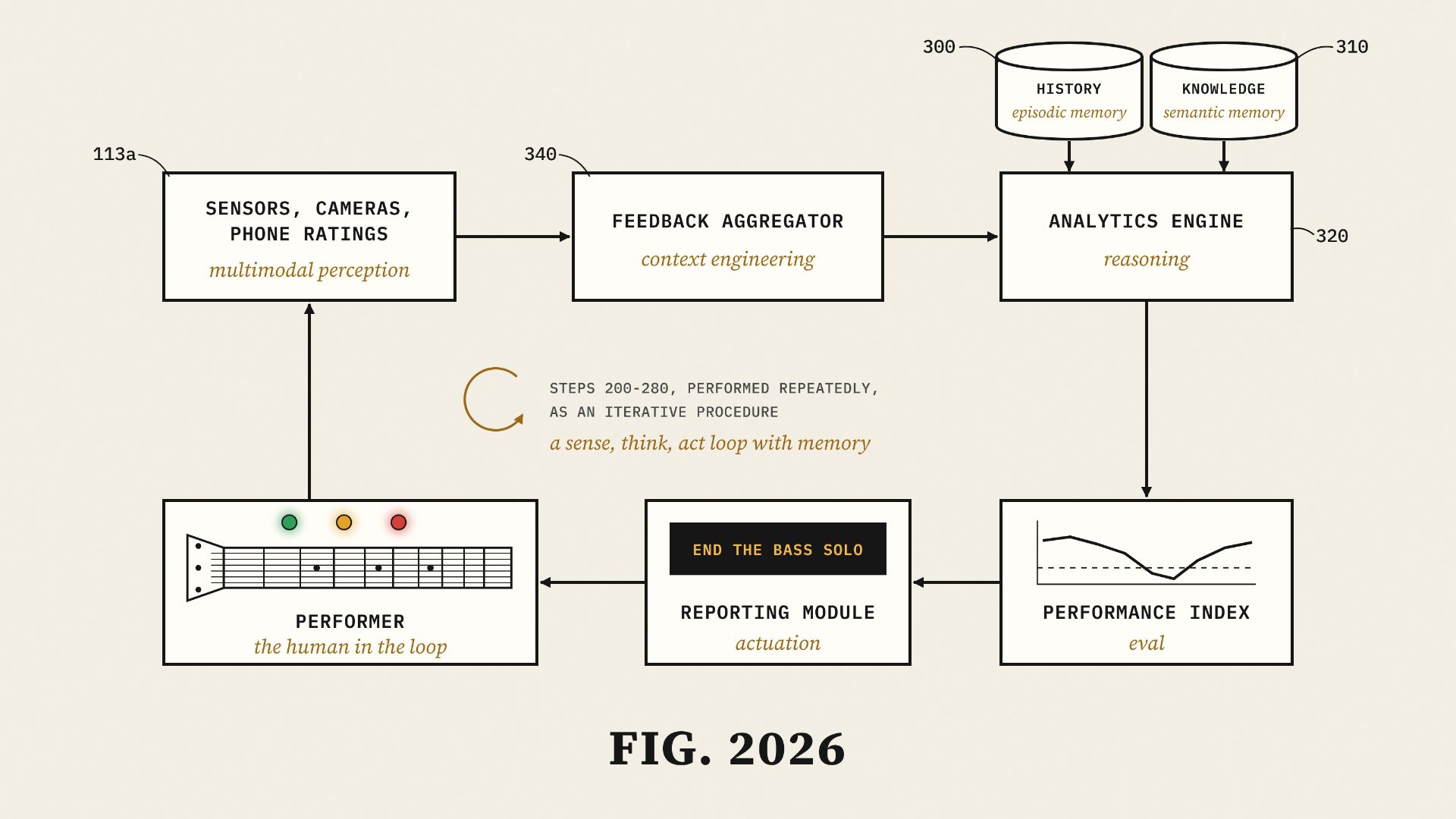
A 2016 Patent Reveals the Agentic Loop Behind Analytics
In 2016, I filed a patent on real-time concert feedback. Re-reading it now, the frame was wrong. We called it analytics. What we actually specified was an agentic loop: multimodal perception, memory-grounded inference, and a human in the decision path. That architecture was right. A decade of hindsight shows what agent builders still miss. For deeper context on how AI models handle perception differently, see our coverage of the vision AI benchmark where GPT-4o invented answers and Claude stuck with B.

When AI judges ignored the image, GPT-4o invented answers while Claude stuck with B
Three vision AI models were shown an image, and they ignored it. GPT-4o invented answers rather than admit it couldn't see, while Claude stubbornly stuck with "B." The trap was set for image judges, but they walked into a different one entirely. It is a fascinating look at how these models handle uncertainty, or fail to. For more on what models are actually doing under the hood, explore our coverage of ten Hugging Face models reshaping data work.

Explore How OpenAI's Decisions API Can Reshape Your Data Workflows
If you're still treating AI agents like chat bots that occasionally call a function, OpenAI's new Decisions API suggests a more intentional path. This practical guide walks through how a decision-first model lets you define, constrain, and audit every tool call before it executes, turning reactive workflows into deliberate, auditable processes. It's a genuine step toward production reliability. For deeper context on agent stability, our piece on "Six Architectural Patterns for Scaling Reliable AI Agents" pairs well here.

Six Architectural Patterns for Scaling Reliable AI Agents
Reactive loops are fine for demos, but production demands more. This guide walks through six architectural patterns that actually scale, moving beyond basic ReAct into autonomous, reliable systems built for real-world use. It's the kind of practical thinking that turns prototypes into products. For deeper context, our related piece on the hidden instability beneath LLM temperature zero explains why even deterministic settings can fracture after a hundred completions, a problem these architectures are designed to solve.

The Hidden Instability Beneath LLM Temperature Zero
Temperature zero isn't deterministic. A new analysis reveals a simple formula for how often an LLM's top token flips, and why identical completions begin to fall apart after roughly a hundred tokens. This hidden instability matters for anyone relying on consistent AI outputs. For a deeper look at controlling AI behavior, our piece on *Why a Decision-First Model Can Rein In Risky AI Agent Actions* explores catching dangerous tool calls before they become real problems.