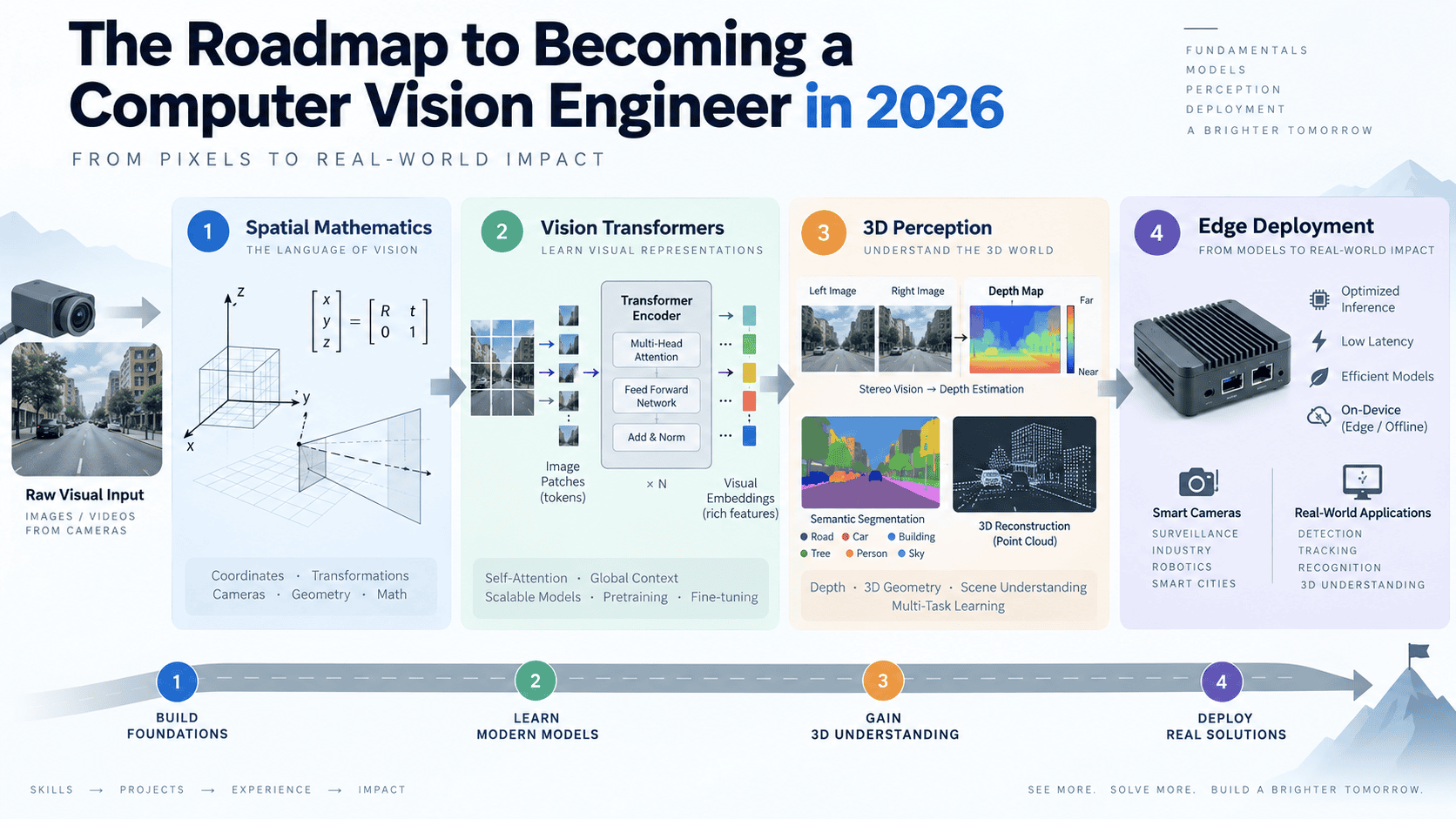
The path to computer vision mastery is often presented as a mystery, a mix of abstract math and elusive job titles. This four-stage roadmap, moving from spatial mathematics through vision transformers to 3D neural rendering and edge deployment, is a welcome antidote. It demystifies the journey and, more importantly, frames it as a practical progression rather than a leap of faith. We appreciate the directness: you start with the foundations, you build on them, and you end with something that runs in the real world.
This structure mirrors a broader shift we are tracking across the tech landscape. Just as Demystifying Transformer Architecture Through Hands-On Implementation argues for learning by building, this roadmap argues for learning by sequencing. You do not jump to 3D rendering without first understanding how a vision transformer attends to spatial data. That is the kind of honest, incremental thinking that separates genuine skill from surface-level familiarity. For our readers, the takeaway is clear: treat your learning like a project plan, not a wish list. Identify which stage you are in and focus your energy on completing that stage before moving forward.
The final emphasis on edge deployment is the most consequential part of this roadmap. Too many engineers build impressive models that never leave the cloud. The real constraint is not model accuracy but inference speed on a device with limited power and memory. This is where the human-centered outcome matters. A model that detects defects on a factory floor in real time is more valuable than a model that does the same thing in a data center after the fact. This focus on deployment aligns with the practical optimism we see in our coverage of tools that make complex workflows more accessible, such as Explore 5 Free AI Coding Agents That Unlock Smarter Spreadsheet Workflows. The goal is not to hoard technical knowledge but to apply it where it improves productivity.
What this roadmap does not address is the constant need to revisit earlier stages. New architectures and optimization techniques appear faster than most engineers can absorb them. The four stages are a starting point, not a final destination. The open question is how you maintain proficiency across all of them while your daily work pulls you toward one. The answer, we suspect, is to build a personal feedback loop. Deploy a model, observe its failures, trace those failures back to the math or the architecture, and fix the root cause. That cycle is the real curriculum. Watch for that discipline, because it is the only thing that turns a roadmap into a career.