Microsoft logs $3.2B from Anthropic investment, but OpenAI was a mixed bag
Our take
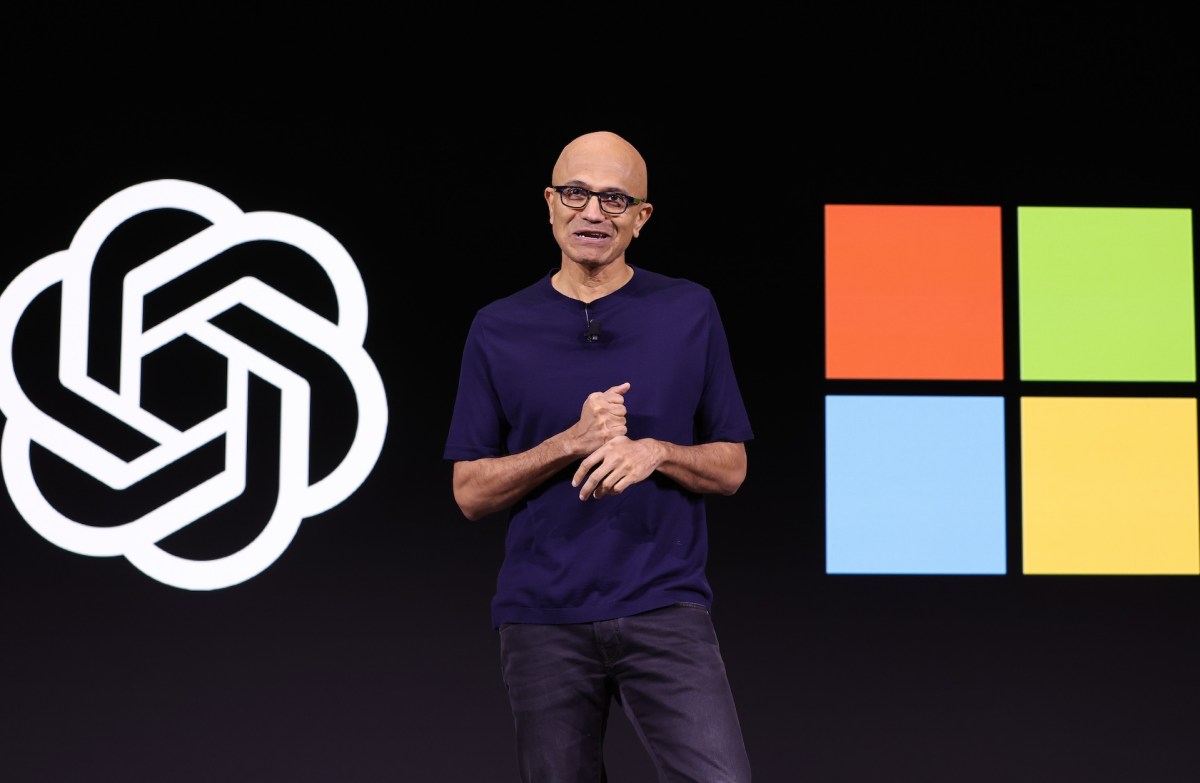
Microsoft’s recent earnings report, while showcasing robust financial performance, offered a fascinating glimpse into the evolving landscape of AI investment. The $3.2 billion gain from its stake in Anthropic is undeniably positive news, signaling a shrewd bet on a rising competitor to OpenAI. This contrasts with a more nuanced picture regarding Microsoft’s OpenAI investment, hinting at complexities and potential shifts in the partnership. It’s a critical moment, as the race to build and deploy increasingly sophisticated AI models intensifies, and the financial realities of these endeavors become clearer. The broader implications extend far beyond Microsoft’s balance sheet, touching upon the future of AI development and the strategies companies are adopting to navigate this rapidly changing field. As Meta continues its aggressive push toward AI agents, exemplified by Mark Zuckerberg’s prediction that billions will soon have personal AI assistants [Mark Zuckerberg predicts that billions of people will have personal AI agents in five years], the need for strategic investment and differentiation becomes paramount. Further highlighting the expanding applications of AI, even in niche areas, is the emergence of AI home management startups like Hint, co-founded by Martha Stewart [Hint, a new AI startup co-founded by Martha Stewart, offers an AI assistant for homeowners].
The Anthropic investment gain underscores the potential rewards of backing strong, independent AI labs. While OpenAI has captured significant public attention and continues to drive innovation, its unique structure and reliance on Microsoft for compute resources have introduced certain dependencies. Anthropic, with its focus on safety and alignment, presents a potentially more controllable and predictable investment, fostering a more diversified AI ecosystem. This isn’t to say OpenAI is faltering – far from it – but Microsoft’s strategy appears to be hedging its bets, recognizing that the AI landscape is not a zero-sum game. The mixed performance of the OpenAI investment likely reflects the high costs associated with developing and training state-of-the-art models, coupled with the ongoing challenges of commercializing AI capabilities at scale. It's a critical reminder that even substantial investments require careful management and a realistic understanding of the long-term return. Professionals across industries are increasingly recognizing the need to understand these developments, as highlighted by insights from Harvard Business School Online [What Professionals Should Know About Data Science and AI, According to Harvard Business School Online], underscoring that success in AI requires more than just technical prowess.
The financial performance of these AI investments isn’t just about immediate profit; it’s about securing a position in a future driven by AI. Microsoft’s willingness to diversify its AI portfolio demonstrates a forward-looking perspective, understanding that reliance on a single provider carries inherent risks. The dynamics between Microsoft and OpenAI are complex, involving not only financial investment but also deeply integrated product development. The nuances of this relationship, and how Microsoft navigates its role as both a partner and an investor, will significantly influence the direction of AI innovation. We’re seeing a shift from the initial hype surrounding AI to a more grounded assessment of its value and the challenges of realizing its full potential. This scrutiny is healthy; it forces companies to focus on tangible outcomes and sustainable business models, rather than simply chasing the latest technological trend.
Looking ahead, the crucial question is whether Microsoft can effectively balance its competing interests in OpenAI and Anthropic. Will it foster a collaborative environment, leveraging the strengths of both labs to drive innovation? Or will the competitive dynamic between the two companies create friction and limit their collective impact? The answer likely lies in Microsoft’s ability to define clear roles and responsibilities for each partnership, ensuring that they complement rather than compete with each other. Furthermore, the continued emphasis on data quality and the human element, as outlined by Harvard Business School Online, will be key to unlocking the true value of these AI investments – ensuring that they serve practical business needs and enhance human productivity, not just create impressive technical demonstrations.
Read on the original site
Open the publisher's page for the full experience