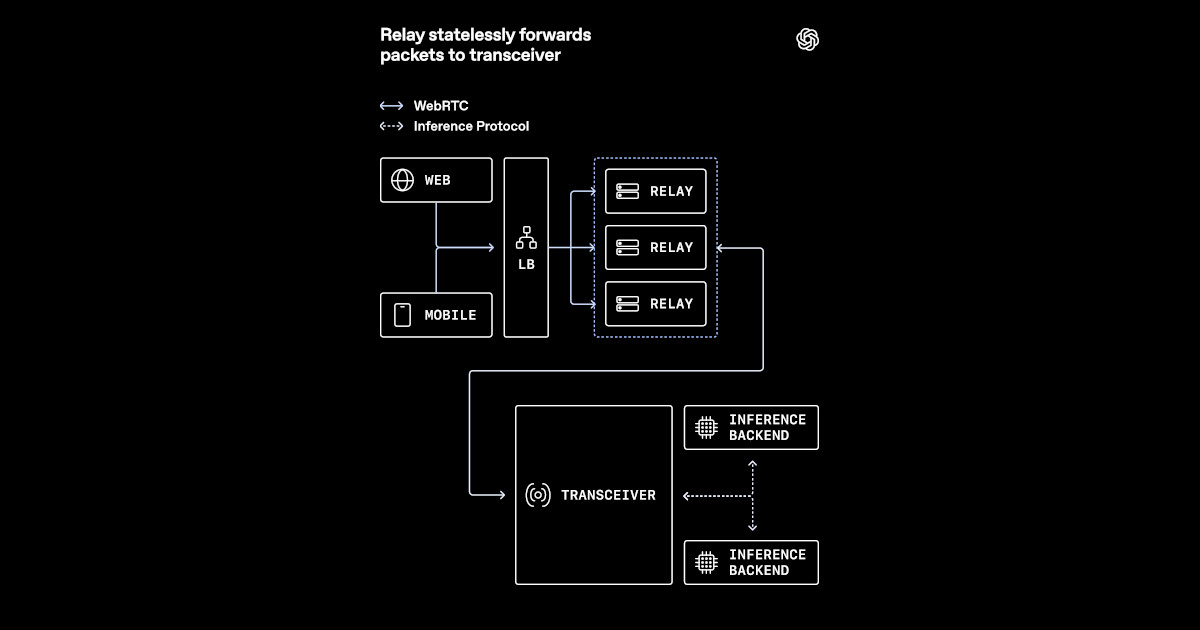
OpenAI’s recent adaptation of WebRTC for low-latency voice AI marks a significant step forward in the realm of real-time communication technology. This innovative relay-transceiver design replaces the conventional media termination model, offering a more scalable and efficient approach that aligns well with modern cloud infrastructures like Kubernetes. By ensuring that WebRTC session states are maintained in a dedicated transceiver layer and leveraging relays to minimize public UDP exposure, OpenAI not only enhances security but also optimizes media routing for users around the globe. This development is particularly relevant as the demand for responsive and efficient voice AI solutions continues to grow, a topic that resonates with insights from articles like The AI Gateway: Scaling Centralized Inference Across Decentralized Teams and Designing a Multi-Agent System for Engineering Support at Scale: A Case Study From Grab.
The implications of this architectural shift extend beyond mere technical enhancements. As organizations increasingly adopt voice AI technologies for diverse applications, from customer service to interactive interfaces, the need for low-latency solutions becomes paramount. Traditional setups often struggle to deliver the responsiveness required in such scenarios, leading to user frustration and disengagement. OpenAI’s approach to restructuring WebRTC not only addresses these challenges but also sets a new standard for performance and reliability in voice AI systems. This is particularly important in light of the growing complexities associated with decentralized teams, as discussed in the aforementioned articles, where streamlined communication channels can significantly boost productivity.
Moreover, this development underscores the importance of keeping pace with technological advancements in a rapidly evolving landscape. Legacy tools and architectures can become bottlenecks, hindering innovation and user experience. OpenAI's proactive stance in rethinking WebRTC architecture embodies a progressive approach that encourages other organizations to reevaluate their own infrastructures. It’s a compelling reminder that to remain competitive, companies must embrace change and be willing to explore transformative solutions that enhance user engagement and operational efficiency. As businesses look for ways to elevate their offerings, this new architecture provides a motivating example of how to innovate without compromising on security or performance.
Looking ahead, the broader significance of OpenAI's advancements in voice AI technology raises several intriguing questions. How will other companies respond to this architectural shift? Will we see a cascade of adaptations across various sectors, leading to a more interconnected and efficient voice AI ecosystem? As organizations strive to harness the potential of AI, the emphasis on low-latency solutions will likely become a critical factor in their success. It will be fascinating to observe how this landscape evolves and whether OpenAI’s pioneering efforts catalyze a wider embrace of similar innovations in voice communication technology. The future of voice AI is not just about technology but about creating meaningful connections that empower users to engage more effectively and efficiently.