Presentation: Parting the Clouds: The Rise of Disaggregated Systems
Our take
The rise of disaggregated cloud database architectures, as explored by Murat Demirbas, represents a significant shift in how we approach data management, moving beyond the limitations of monolithic systems. The core principle – decoupling compute from storage – isn't just a technical curiosity; it’s a pragmatic response to the evolving economics of the cloud. The ability to independently scale these resources unlocks unprecedented flexibility and cost optimization. We’ve seen similar principles at play in other areas of cloud infrastructure, like AWS Lambda's recent advancements allowing for self-managed code storage [AWS Lambda's Self-Managed Code Storage Lifts the Account Quota, Not the Function Size Limit], which further emphasizes the trend toward modularity and resource elasticity. This resonates with Meta’s broader vision for enterprise AI, as highlighted by Zuckerberg’s recent comments [Zuckerberg says Meta’s enterprise AI opportunity extends beyond agents], where adaptable infrastructure is crucial for supporting increasingly complex AI workloads. The underlying concepts, Demirbas notes, are rooted in earlier distributed systems research, demonstrating that the current wave of disaggregation isn't entirely new, but rather a refinement and practical implementation enabled by modern cloud capabilities.
Demirbas’s analysis rightly focuses on the network tradeoffs inherent in disaggregated systems. While decoupling compute and storage offers substantial benefits, the increased network traffic introduces latency and complexity. The exploration of shared-memory evolution and self-assembling database designs suggests a fascinating future where databases dynamically adapt to changing workloads and resource availability. It’s a move away from static, pre-configured architectures toward systems that can intelligently optimize themselves. Cloudflare's move to offer Internal DNS [Cloudflare Makes Internal DNS Generally Available] is another example of cloud providers looking to offer granular control and management of network resources, a capability that will be critical as disaggregated database architectures become more prevalent. The challenge lies in managing this complexity while maintaining data consistency and performance, something that necessitates innovative approaches to distributed consensus and data placement.
The broader significance of this trend extends beyond just database management. It foreshadows a future where entire IT infrastructures are increasingly disaggregated, with specialized compute units and storage tiers optimized for specific tasks. This modularity will enable greater agility and resilience, allowing organizations to rapidly adapt to changing business needs and recover quickly from failures. It also creates new opportunities for specialized hardware accelerators to be seamlessly integrated into the data processing pipeline, further boosting performance and efficiency. While the shift to disaggregation presents engineering challenges, the potential rewards – in terms of cost savings, scalability, and innovation – are simply too compelling to ignore. The move away from tightly coupled architectures necessitates a rethinking of traditional database design principles and a greater emphasis on distributed systems expertise.
Ultimately, the success of disaggregated database architectures will depend on the development of robust tooling and management frameworks that simplify their deployment and operation. The current landscape is still relatively immature, but the momentum is undeniable. The question now is not *if* disaggregation will become mainstream, but *how quickly* and what unforeseen challenges will emerge as we navigate this transition. Will self-assembling databases truly become a reality, or will human intervention remain essential for optimal performance and reliability?
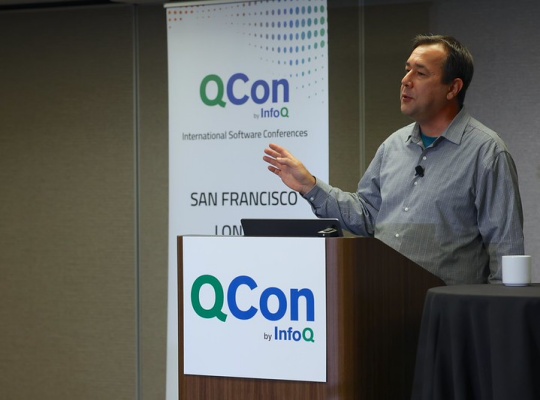
Murat Demirbas discusses the shift toward disaggregated cloud database architectures driven by cloud economics. He explains how decoupling compute from storage enables elastic scaling, cost efficiency, and fault isolation. He shares how classical Paxos roles foreshadowed disaggregation, while analyzing network tradeoffs, shared-memory evolution, and self-assembling database designs.
By Murat DemirbasRead on the original site
Open the publisher's page for the full experience