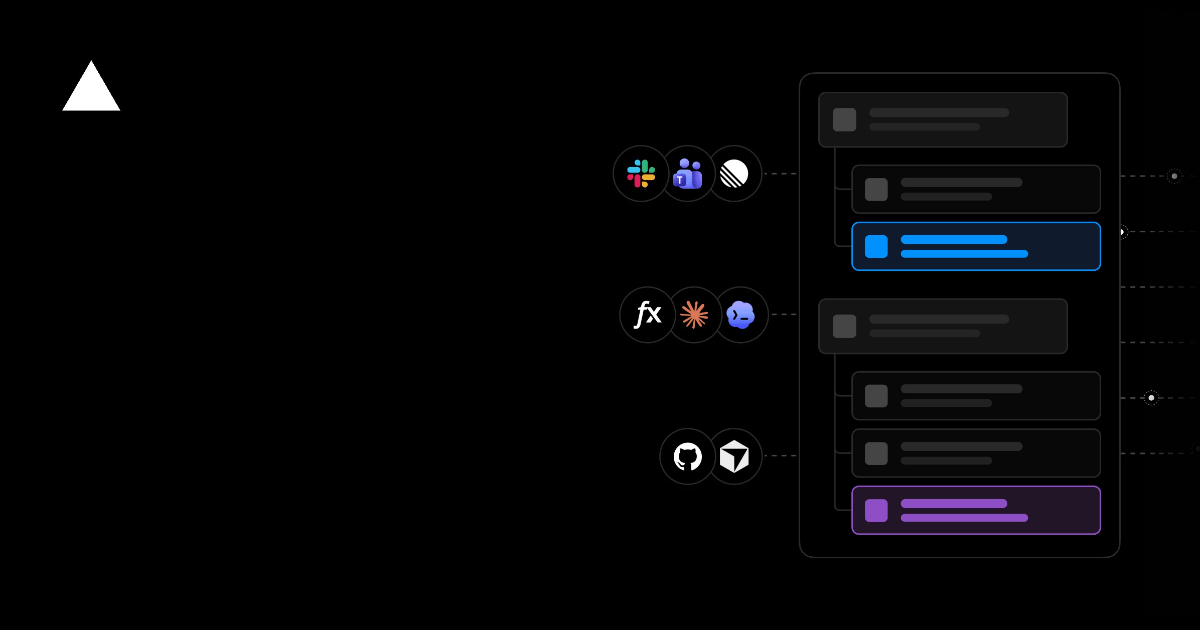
The future of collaboration isn't just about humans working together, it's about humans and AI agents operating on equal footing. Vercel's experimental Board makes that explicit by treating people and coding agents as peers in a shared coordination layer. The Board is a headless message store where both parties can claim leased tasks, declare dependencies, and sync threads with Slack, GitHub, and Linear. This is not another AI assistant that sits beside you and offers suggestions. It is a structural shift: the agent becomes a teammate with the same visibility, the same accountability, and the same right to pick up work. That changes what "collaboration" means in practice.
We have seen teams spend years optimizing their toolchains to reduce friction between developers and systems. GitHub Cuts SSR Time 55% After a Three-Year Migration to CSS Modules showed how a deliberate, long-term investment in infrastructure can pay off in measurable performance gains. Board takes a different approach: instead of cutting latency in the rendering pipeline, it cuts latency in the decision-making pipeline. When an agent can see the same task board as a human, claim a task, and declare dependencies without a handoff, the coordination overhead that slows teams down is drastically reduced. The comparison is instructive, one optimizes the output, the other optimizes the process.
What makes Board interesting is its refusal to put the human in the loop as a gatekeeper. In When AI Judges Disagree, Human Insight Still Leads the Panel, the conclusion was that human judgment remains the final arbiter when AI models disagree. Board flips that dynamic: it does not ask humans to approve every agent action. Instead, it creates a shared context where both sides can see the same information and act independently. The human is not a bottleneck; the human is a collaborator who can step in when the context demands it. This is a more mature vision of AI integration, one that trusts agents to operate within boundaries while keeping humans informed and able to redirect.
The practical takeaway is straightforward: if your team is still treating AI tools as passive assistants that require explicit human triggers, you are leaving coordination time on the table. Board's approach suggests a model where agents can initiate work, claim tasks, and sync across tools without waiting for a human to assign them. The open question is whether teams are ready to extend that trust. Watch how Vercel handles failure cases, when an agent claims a task it cannot complete, or when dependencies conflict between a human and an agent. The design of those recovery paths will determine whether this is a genuine step forward or an experiment that stays on the shelf.