A/B testing
7 stories filed under A/B testing on Beyond Market Intelligence. The newest of them: “Why Your Best Uplift Model Might Not Be the One That Wins”, “Pinterest Fine-Tunes a 4B Language Model to Remap User Journeys”, and “Finding the Right Experiments When Your Team Is Stuck”. A calibrated Qini score of 0.0856 for a Linear DR learner beat the true-CATE ranking's 0.0826 on a million simulated customers. Pinterest replaced its multi-stage clustering pipeline with a fine-tuned 4-billion-parameter language model to remap user journeys. Acme AI is the next-generation, AI-powered spreadsheet platform built to replace Excel and redefine how analysts, data scientists, and enterprise teams work… The list below is every A/B testing story on Beyond Market Intelligence, newest first.
Why Your Best Uplift Model Might Not Be the One That Wins
A calibrated Qini score of 0.0856 for a Linear DR learner beat the true-CATE ranking's 0.0826 on a million simulated customers. That should not happen. When your best uplift model is not the one that actually wins, the metric itself deserves scrutiny. Doubly robust scores offer a fix, grounding evaluation in something more reliable than raw Qini. For a deeper look at how rigorous logic keeps AI honest, see our piece on Z3 solvers.

Pinterest Fine-Tunes a 4B Language Model to Remap User Journeys
Pinterest replaced its multi-stage clustering pipeline with a fine-tuned 4-billion-parameter language model to remap user journeys. The results speak for themselves: a 1.1% lift in email click-through rates and 1.3% higher push opens. This is a smart, focused application of AI, applying a smaller model to a specific inference task rather than chasing scale. It's the kind of practical innovation that makes you rethink what's possible with the tools already at hand.
Finding the Right Experiments When Your Team Is Stuck
The e-commerce team isn't sure what to test, and that's a real bottleneck. Your instinct to hand the backlog to UI/UX researchers and product owners is solid, they see user friction daily. But you can also start small: mine support tickets, session recordings, and checkout drop-off data for patterns. Competitor trends help, yet your own analytics often reveal clearer opportunities. You don't need the perfect experiment yet; you need a starting point.
See Through the Hype of Your AI Feature's Adoption Numbers
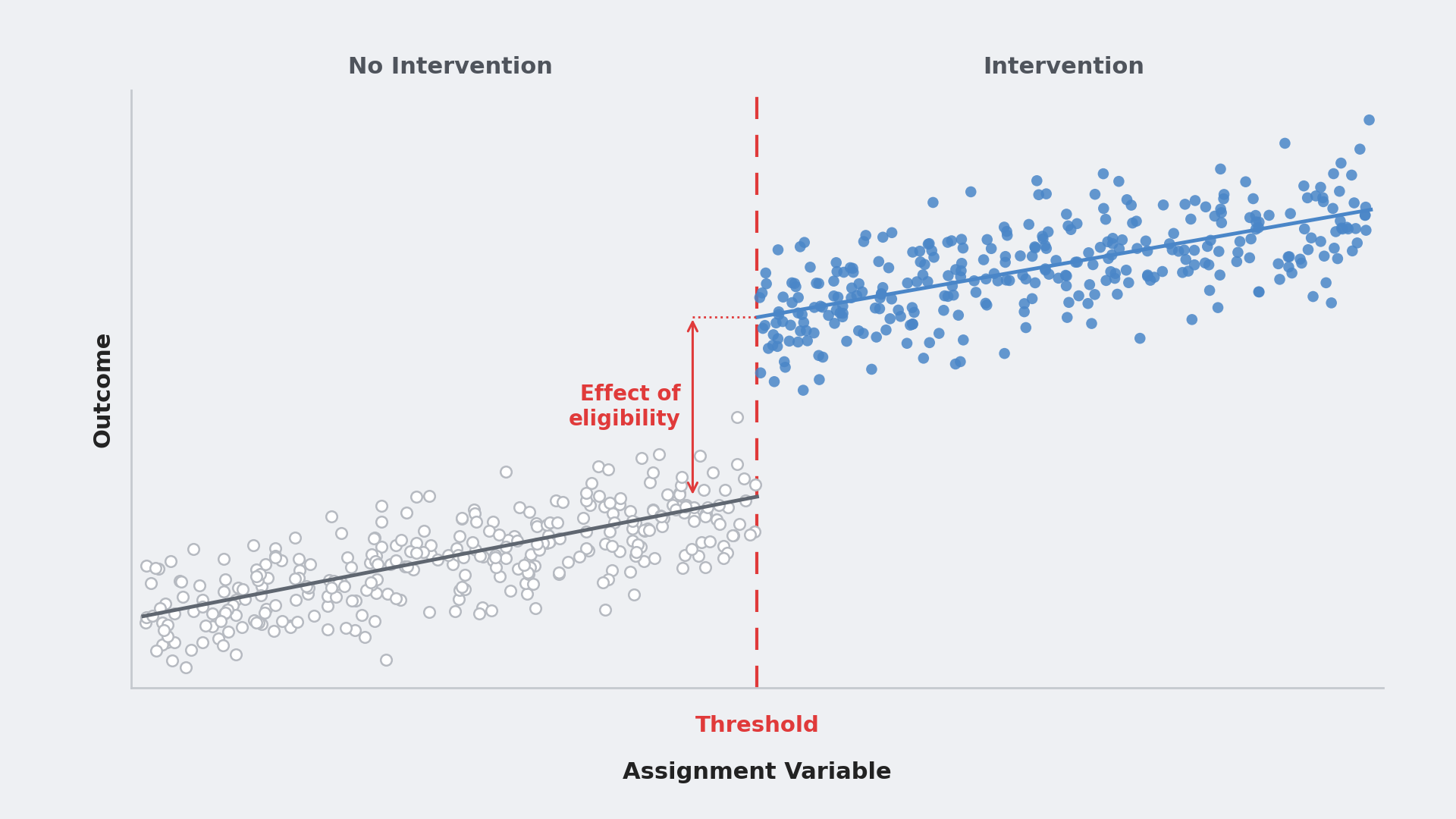
When a team opts into an AI feature, the lift you measure isn't just the tool's effect. It's a selection effect, a reflection of who chose to engage. This guide offers a practical framework for estimating what that opt-in feature actually did, even without randomization. It's a sharp, honest look at a messy problem. For practitioners ready to dig deeper into the mechanics of modern AI systems, our guide to distributed algorithms pairs well with this mindset.

Optimize A/B tests by allocating traffic based on variant cost, not tradition
The default 50/50 traffic split assumes equal cost per variant. That assumption breaks when your treatment costs more than your control. This post tackles the math behind optimal allocation under heterogeneous variant cost, showing how cost-based sampling weights correct the imbalance. It's a practical fix for anyone running experiments where budget constraints matter. For readers interested in how similar efficiency principles apply beyond experimentation, our piece on the Forrester function explores a related mathematical tool for machine learning.

TikTok tests safety limits, sparking questions on user protection
TikTok's experiment to disable a safeguard designed to shield users from harmful content raises a pointed question: how far is too far in the pursuit of engagement? The company wanted to see if the feature made the app less compelling, but the trade-off feels steep. That's a risky calculation, and lawmakers are right to press for answers. It's a familiar tension in tech, one that echoes in our coverage of Meta's recent ad reversal.

Explore why early A/B test significance often misleads your decisions
A single day of statistical significance in an A/B test is not a win. It's a mirage. The post "Stop Calling the First Significant Day a Win" challenges that premature celebration, and it's a critique worth taking seriously. We often chase early signals, but data needs time to stabilize. The rush to declare victory is understandable, yet it undermines the entire process. For those looking to refine their analytical instincts, this pairs well with our piece on catching AI slop before it skews your model.