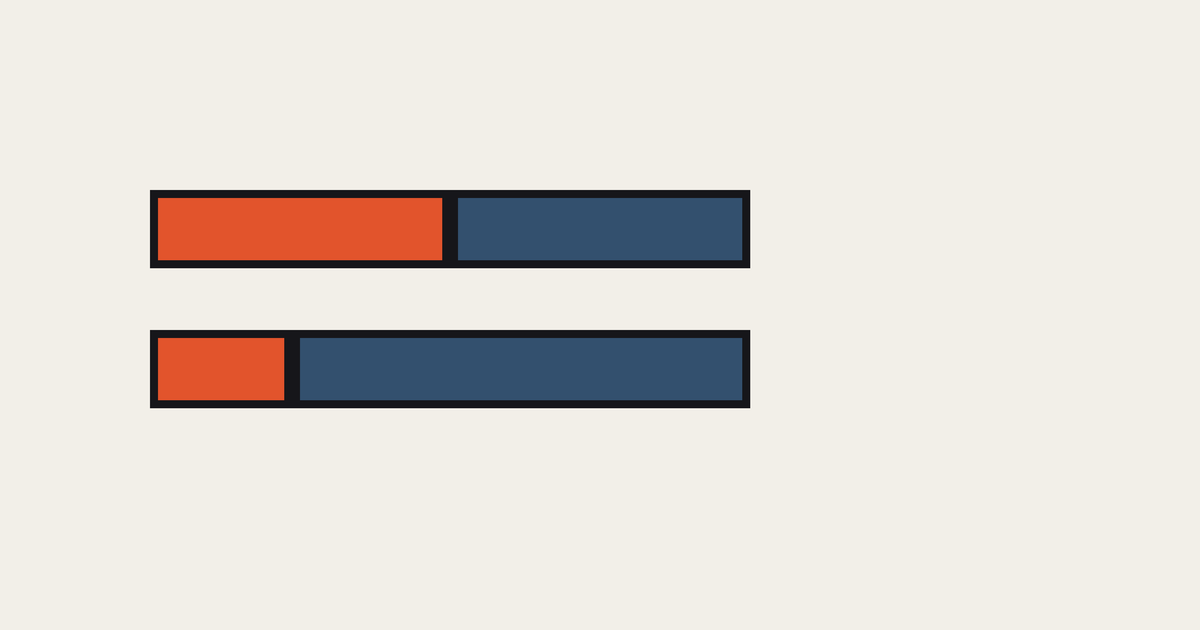
A/B testing remains one of the most trusted tools in data-driven decision making, yet most teams run their experiments on autopilot. The default 50/50 traffic split feels like the safe, neutral choice. An article on Towards Data Science makes a compelling case for why that intuition fails when your treatment carries a different cost than your control. The argument is straightforward: if your new feature requires expensive GPU compute or a paid API call on every request, splitting traffic evenly means you are spending as much on the unproven variant as on the proven one. Cost-based sampling weights shift more traffic toward the cheaper variant while still collecting statistically valid data. This is not academic theory. It is a practical lever that directly affects your experiment budget and your team's willingness to test higher-risk ideas.
We have seen similar pragmatic thinking in other pieces we have covered. Expanding Your Tech Fluency: Key Insights Beyond Artificial Intelligence reminds us that effective data work requires understanding constraints beyond the model itself. Cost-aware sampling is exactly that kind of constraint. Explore the Forrester Function: Beyond Mathematics, a Tool for Machine Learning demonstrates how rethinking a standard mathematical tool can unlock new applications. The same principle applies here: the 50/50 split is a default, not an axiom.
Our honest take is that this concept matters most for teams running continuous experiments at scale. If you run one test per quarter with a small sample, the cost difference between variants rarely justifies the complexity. But when you have dozens of experiments in flight, each costing real money per observation, ignoring heterogeneous costs is wasteful. The concrete takeaway we would share with a reader is this: calculate the per-observation cost of your treatment and control before you launch the test. If the treatment is more than 20% more expensive, run a simulation to find the optimal allocation ratio. Do not trust the default. The math is on your side.
How cost-based allocation interacts with the most common real-world complication, delayed feedback, remains not fully addressed. If your treatment is expensive but also takes longer to show a measurable effect, a skewed allocation might end your experiment before you have enough data to detect a meaningful difference. That trade-off is worth watching. We would urge teams to model not just cost but also time-to-signal before adopting a cost-weighted split. The 50/50 default may be wasteful, but replacing it with a poorly calibrated alternative can be worse. The open question is whether adaptive allocation methods that adjust weights mid-experiment based on both cost and observed effect size can outperform a fixed cost-based split. That is the next frontier worth exploring.