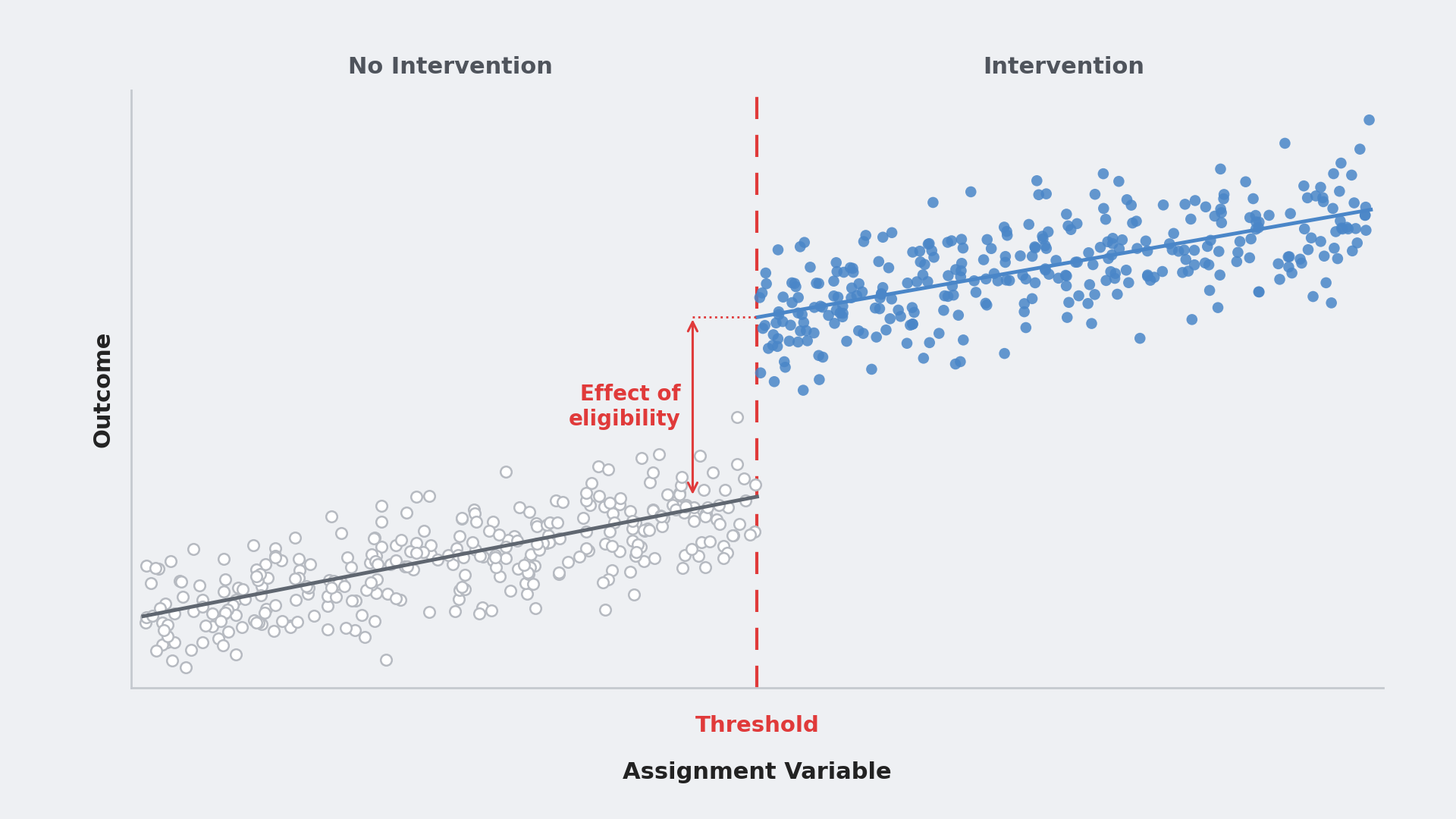
The first thing most teams do when they ship an opt-in AI feature is celebrate the usage spike. The second thing they do is attribute that spike to the feature itself. The selection effect is a useful corrective to that instinct, and it deserves attention not because it is cynical, but because it is precise. If you are asking users to toggle a setting or type a prompt, you are not measuring a product change. You are measuring the people who chose to change their own behavior. That is a fundamentally different dataset.
The core problem: when nobody randomized, every comparison you make is between a self-selected group and everyone else. The people who opt into an AI assistant are likely already more engaged, more comfortable with automation, or more desperate for relief from a specific pain point. They are not a random sample. They are a motivated cohort. So when you see a lift in retention or task completion, you have no clean way to separate the effect of the tool from the effect of the user's own initiative. This is not a niche statistical quibble. It is the difference between building a feature that works and building a feature that merely attracts people who were going to succeed anyway.
What we find compelling here is the practical framing. This is not a theoretical lecture about causal inference. It is a practitioner's guide to estimating the real effect when the ideal experiment is off the table. That means looking for natural experiments, using pre-post comparisons with caution, and being honest about the limits of your own data. It also means building your internal culture around humility rather than hype. If you are a data team or a product lead, the takeaway is direct: before you report that your AI adoption lift is real, ask yourself what selection bias might be doing the heavy lifting. A good answer will not make your feature look worse. It will just make your numbers honest.
This connects directly to the broader challenge of working with LLMs in production. As our related coverage on Unlock LLM Training: A Practical Guide to Distributed Algorithms shows, understanding the mechanics of these systems is one thing. Understanding how users actually interact with them is another. Similarly, the way models navigate structure, as explored in Exploring Paragraph Structure: How LLMs Navigate Token Space, reminds us that the interface between human intent and machine output is never neutral. And for those just starting out, Unlock ChatGPT for Work: A Practical Guide to Getting Started reinforces that adoption is a behavior, not a feature. All of these pieces point to the same lesson: the tool is only half the equation. The other half is the person deciding to use it.
Here is the concrete point to watch. The next time you present an AI feature's impact metrics, expect the question: "What would the numbers look like if the users who never opted in were forced to use it?" If you cannot answer that with something better than a shrug, your lift is probably a selection effect. The fix is not to stop measuring. It is to measure like a skeptic. That means tracking not just who uses the feature, but who does not, and why. It means comparing early adopters to late adopters, not just to non-users. And it means being willing to say, "We do not actually know the causal effect yet." That sentence is not a failure. It is the first honest step toward a real answer.