acceleration
Beyond Market Intelligence keeps acceleration in one place: 7 stories so far. The section currently leads with “Explore how AI-designed chips can accelerate the future of computing”, “Master the Code by Slowing Down in the Age of AI”, and “How Uber Keeps 65,000 Monthly Code Changes From Breaking the Build”. A startup is teaching AI to design chips, learn from each iteration, and improve the next one. Ben Linders argues that real mastery in software engineering comes from slowing down, even as generative AI accelerates output. Acme AI is the next-generation, AI-powered spreadsheet platform built to replace Excel and redefine how analysts, data scientists, and enterprise teams work… The list below is every acceleration story on Beyond Market Intelligence, newest first.

Explore how AI-designed chips can accelerate the future of computing
A startup is teaching AI to design chips, learn from each iteration, and improve the next one. The goal is to automate and accelerate chip design itself. This isn't about incremental upgrades; it's about rethinking the process from the ground up. If AI can master its own hardware, the future of computing gets faster, smarter, and more efficient. For more on how platforms are evolving, see our piece on Figma opening its platform to agents.

Master the Code by Slowing Down in the Age of AI
Ben Linders argues that real mastery in software engineering comes from slowing down, even as generative AI accelerates output. He's right. Tools can produce code quickly, but they don't build understanding. Engineers still need to grasp how systems work to truly learn. Senior developers who coach juniors through deliberate, slower techniques are preserving the craft. For more on what AI agents can, and cannot, do with code, see our coverage of "300K lines refactored for $4,000: what a C codebase taught AI agents."
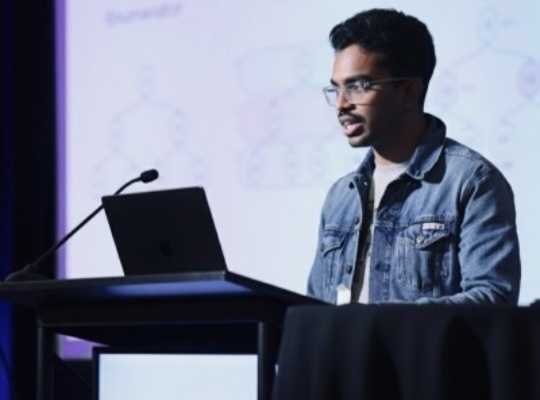
How Uber Keeps 65,000 Monthly Code Changes From Breaking the Build
When you're processing 65,000 code changes a month, keeping the mainline green isn't a hope, it's an engineering discipline. Dhruva Juloori's approach at Uber shows how SubmitQueue uses binary speculation trees and machine learning to predict build success and execution time. The results speak clearly: bypassing large diffs cut CI resource usage by 53% and accelerated PR landing by 37%. This is practical, data-driven problem-solving.

Unlock faster local LLM inference with DSpark speculative decoding
Waiting for the local model to generate its next token can feel like watching paint dry. DSpark speculative decoding changes that. By using a smaller draft model to propose candidates and the larger Qwen3-8B to verify them, it accelerates generation on the same GPU. We appreciate that this works directly with llama.cpp and CUDA, making it practical for your own hardware. It is a straightforward approach to reclaiming speed. For more on the broader concepts, our guide to distributed training is a helpful companion.

Explore how hardware investment is shaping AI's next frontier.
a16z is putting $1.1 billion behind a simple bet: the next wave of AI runs on more than software. The firm, long associated with code-first startups, is now funding the physical infrastructure that keeps pace with model growth. That is a meaningful signal for anyone building in the space. If you are navigating how these systems actually train and scale, our guide to distributed algorithms offers a practical starting point. The hardware story is just beginning.

Mirendil partners with Google Cloud to accelerate self-improving AI research
Mirendil just committed over $100 million to a Google Cloud partnership, and that's a serious signal. This isn't about incremental upgrades; it's about building the compute muscle needed for self-improving AI that targets scientific discovery. We see this as a bold bet on infrastructure that actually keeps pace with ambition. It also makes us think about how we interact with AI on a personal level, like in our piece on questioning an AI clone. This deal could change what those tools are capable of.

Embedding engineers inside enterprises to accelerate real AI adoption
Anthropic and Blackstone are betting that the next trillion-dollar AI opportunity isn't the model itself, but the messy work of making it useful inside a business. That's why Ode has launched, embedding forward-deployed engineers directly into enterprises. It's a grounded bet, and a smart one. Implementation is where adoption stalls, and where value gets unlocked. We've been questioning how AI touches our own workflows, and that kind of scrutiny matters here.