accuracy
accuracy at Beyond Market Intelligence is a file of 35 stories. The newest of them: “Moving Beyond Accuracy to Build Machine Learning You Can Trust”, “Linear Recurrence Matches Transformer Accuracy at a Fraction of the Cost”, and “Two paths to a smarter decision model: equal accuracy, unequal cost”. Accuracy is the starting line for machine learning adoption, not the finish. When you budget-match a linear recurrent model and a transformer down to 15 million parameters on a long-context retrieval task, something unexpected happens: neither learns much. Acme AI is the next-generation, AI-powered spreadsheet platform built to replace Excel and redefine how analysts, data scientists, and enterprise teams work… The list below is every accuracy story on Beyond Market Intelligence, newest first.
Moving Beyond Accuracy to Build Machine Learning You Can Trust
Accuracy is the starting line for machine learning adoption, not the finish. The real challenge is moving from "this model works" to "this model earns our trust." That's where conformal prediction enters the conversation, offering a framework for calibrated, decision-grounded reliability. It's a shift from asking if a model is right to understanding how confident it can be. For teams building toward trustworthy AI, this is the practical next step.
Linear Recurrence Matches Transformer Accuracy at a Fraction of the Cost
When you budget-match a linear recurrent model and a transformer down to 15 million parameters on a long-context retrieval task, something unexpected happens: neither learns much. Accuracy hovers near chance for both. The real story is cost. At 8,192 tokens the linear model runs 2.37× faster, and training time opens a 6-7× gap that only widens with scale. This negative result from Jev's decision-lab is exactly the point, small decision models are accuracy-starved regardless of substrate, so the winning choice becomes efficiency.
Two paths to a smarter decision model: equal accuracy, unequal cost
Two paths to the same decision model, matched within 0.02% on parameters, yet the cost difference is stark. A linear recurrent backbone and a standard attention transformer were built on identical budgets for a long-context retrieval task. At 8K tokens, the linear model runs 2.37× faster. Training? Six epochs took 30 minutes versus 40-45 minutes *per epoch* for the transformer. Neither substrate learned much at 15M parameters, accuracy hovered near chance. The real insight is where cost lives.
Exploring AI routing that trims memory while keeping long-context accuracy high
Memory is the bottleneck in long-context AI, and ALHR offers a refreshingly direct solution. This static binary tree system uses learnable functions to trim the number of keys, reducing VRAM usage while maintaining accuracy. Early tests with tiny stories look promising. It is a pragmatic, scalable approach. For deeper context on how AI learns from human action, see our related coverage on two new approaches shifting that dynamic.
Train a neural network with 57x fewer parameters using this new PyTorch library
MaRN takes a different path to parameter efficiency: instead of training every weight directly, it optimizes a compact latent representation that maps to the full network. The numbers are striking, a 57.7× reduction on an MNIST CNN, but the honesty about trade-offs is what makes this worth attention. Slower training and task-dependent performance are real constraints, not footnotes. For exploratory benchmarks, that transparency matters more than the headline reductions. The library's global and layer-wise mappings give researchers room to test where this approach genuinely fits.
Gemini Argon Tops the Charts but Skips the Test That Counts
Gemini Argon tops the charts, yet it skips the test that counts. That distinction matters. Benchmarks can dazzle, but real-world validation is where trust is built. We see this pattern across the industry, from physics solvers to distributed databases. The lesson is consistent: look past the headline numbers. Explore what a tool does when the pressure is on, not just when it's performing for a score. That's the metric that empowers your actual work.
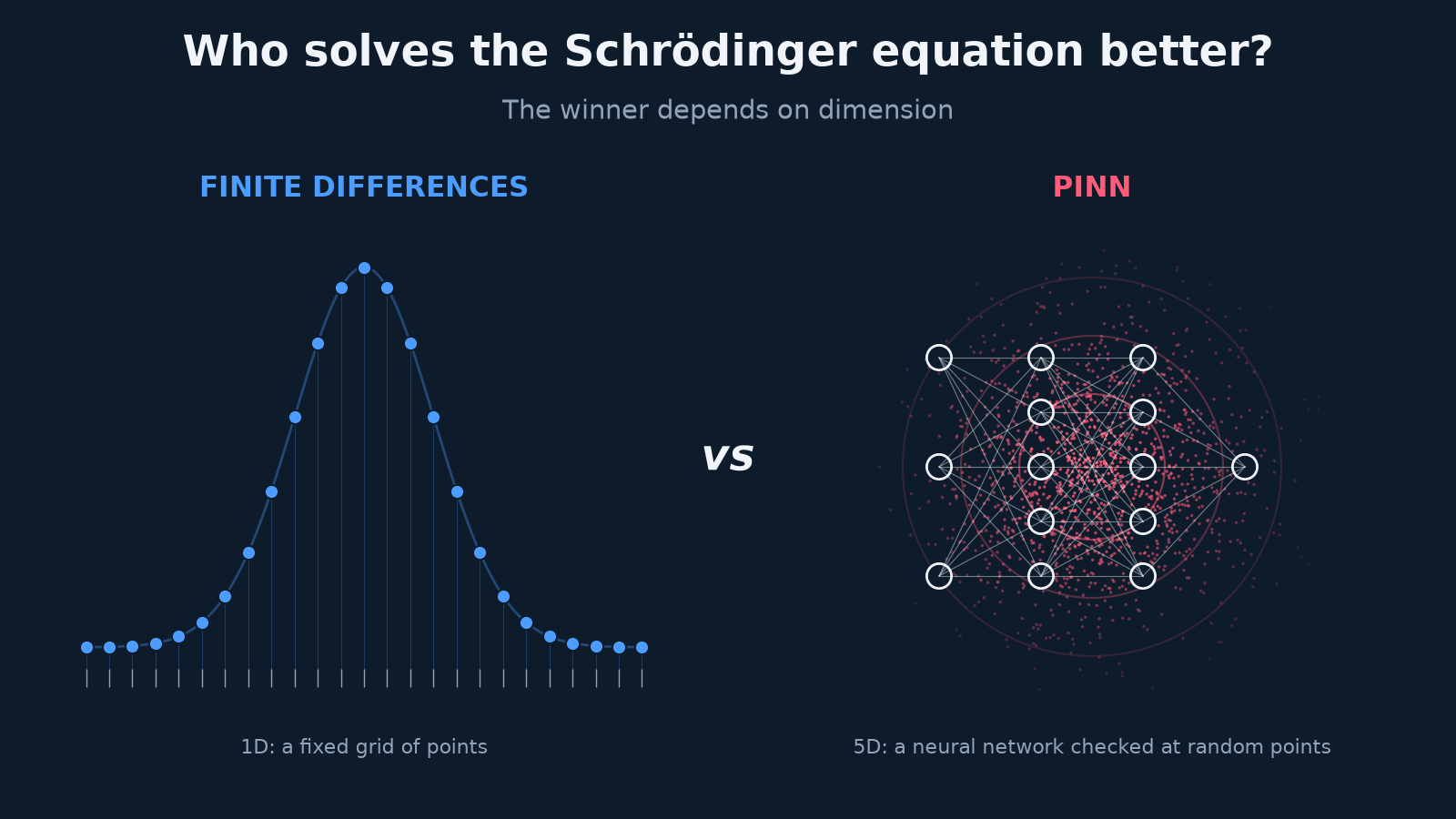
A 1D physics solver wins, but neural networks take the lead in 5D
A 1D physics solver wins; in 5D, neural networks take the lead. We put a physics-informed neural network against a plain finite-difference solver twice, and the winner changed. That shift tells us something important about when AI-powered methods actually outperform classical numerical approaches. It's not a blanket victory, it's conditional, and understanding those conditions matters. For more on how AI adapts to complex environments, see our piece on two AI copies keeping drones in sync with 94% less data.

How DoorDash Built a GenAI Platform for 5,000 Users
DoorDash bet big on open-weights models after starting with vendor-first setups, and that shift is the spine of this story. Swaroop Chitlur and Sidd Kodwani walk through building a GenAI platform for over 5,000 internal users, tackling LLM gateways, agent gateways, and the constant trade-off between accuracy, latency, and cost. For teams wrestling with similar scale, their architectural bets offer a practical blueprint. Read "Small models, smarter labels: confidence scoring without the hype" alongside this for a complementary take on model evaluation.
Small models, smarter labels: confidence scoring without the hype
Small classification models that score confidence over a list of labels, rather than generating free text, deserve more attention. Gokula Krishnan ran his own evals on TypeSafe AI's hosted Jev and the open-source Laya, and his findings are practical. Describing labels by what's in the input, not intent, boosted accuracy from 65% to 77% on AML detection. Calibration matters: Jev's ECE of 0.013 let a 90% confidence filter reach 97.6% accuracy while covering 82% of cases. Laya's untuned ECE of 0.486 didn't
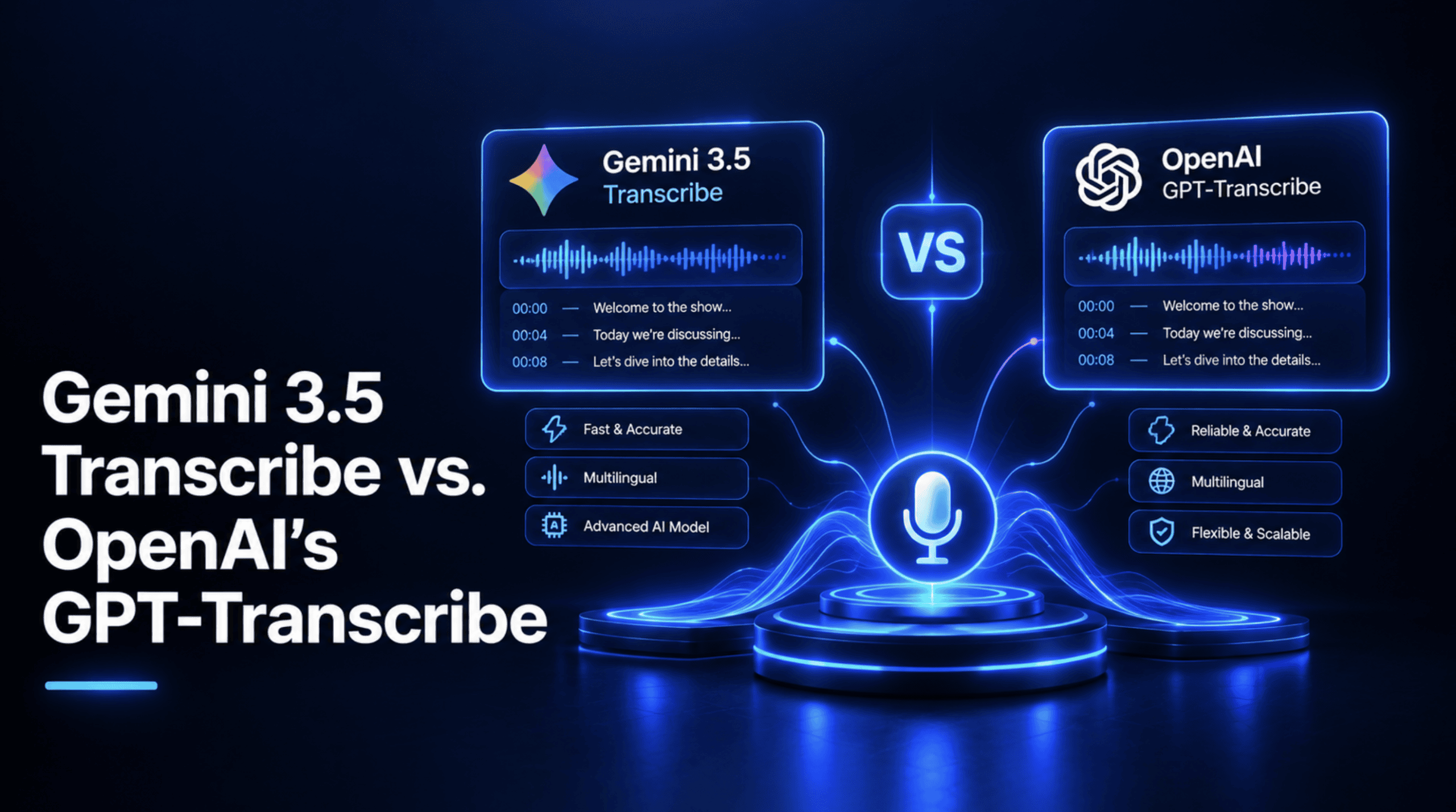
Two AI transcribers compared: real performance where the numbers count
You've read the benchmarks, but what happens when two AI transcribers face real-world data? We pushed them past marketing claims to see where the numbers actually land. The comparison walks through each model's background, a concrete use case with working code, and a side-by-side comparison of the metrics that determine productivity. If you appreciated our breakdown of Qwen3-VL's struggles with dates, this follow-up answers a practical question: which tool earns its place in your workflow?

Clean Data Starts With Catching AI Slop Before It Skews Your Model
Cleaning your training data isn't just about removing obvious junk. When my AI detectors flagged plenty of genuine reviews, filtering them out actually made the sentiment model less accurate. That's the trap: overcorrecting for AI slop can skew your results in the opposite direction. This piece tests three practical ways to spot that noise without tossing the signal. It's a useful, grounded look at a problem many teams will face soon. If you're building models on messy text, this is worth your time.

Jev vs LLMs: Evaluating AI for Practical Decision-Making
Spreadsheets have long forced a choice between speed and judgment. In a new test, TypeSafe AI's Jev tackled 3,080 classification tasks, and the results are worth your attention. The comparison focuses on accuracy, latency, calibration, and confidence, asking whether a dedicated tool can serve as a practical decision layer where LLMs might falter. It is a grounded, useful evaluation. For those exploring how AI systems handle reasoning under pressure, this pairs well with our guide to distributed training algorithms.
Accelerate Numerical Solutions: Introducing LinearSolveBench
Large sparse linear systems are where real numerical work gets slow, and most models stumble trying to write efficient C solvers. LinearSolveBench, a new benchmark from hgarud, directly measures how well a model or harness can produce fast, accurate, and general solvers for these systems. It pushes for algorithmic progress where it matters most: practical performance. If you are exploring how AI handles demanding computational tasks, this is a focused, honest stress test worth your attention.
Measure Embedding Relevance: A New Approach to Retrieval Benchmarking
Retrieval benchmarks often feel like they reward models for gaming the test rather than finding the right answer. The team at Qonto noticed this gap and built a metric that ties relevance more directly to real product questions. They paired it with a dedicated dataset, and the results point to a more honest measure of embedding quality. It is a practical step toward benchmarking that actually reflects how teams retrieve information.
Discover a smarter path through massive data with TabPFN-3.5
Prior Labs just released TabPFN-3.5, and it's a serious step forward for tabular AI. The model tops both TabArena and BeyondArena, handling up to 1 million rows and 20,000 features with ease. What stands out is the range: the Fast variant runs six times quicker, while Thinking trades compute for accuracy, adding 20 Elo on BeyondArena and 44 on TabArena. BeyondArena's gains are particularly strong on text-rich and high-cardinality data, pulling 250 points ahead of the previous baseline.
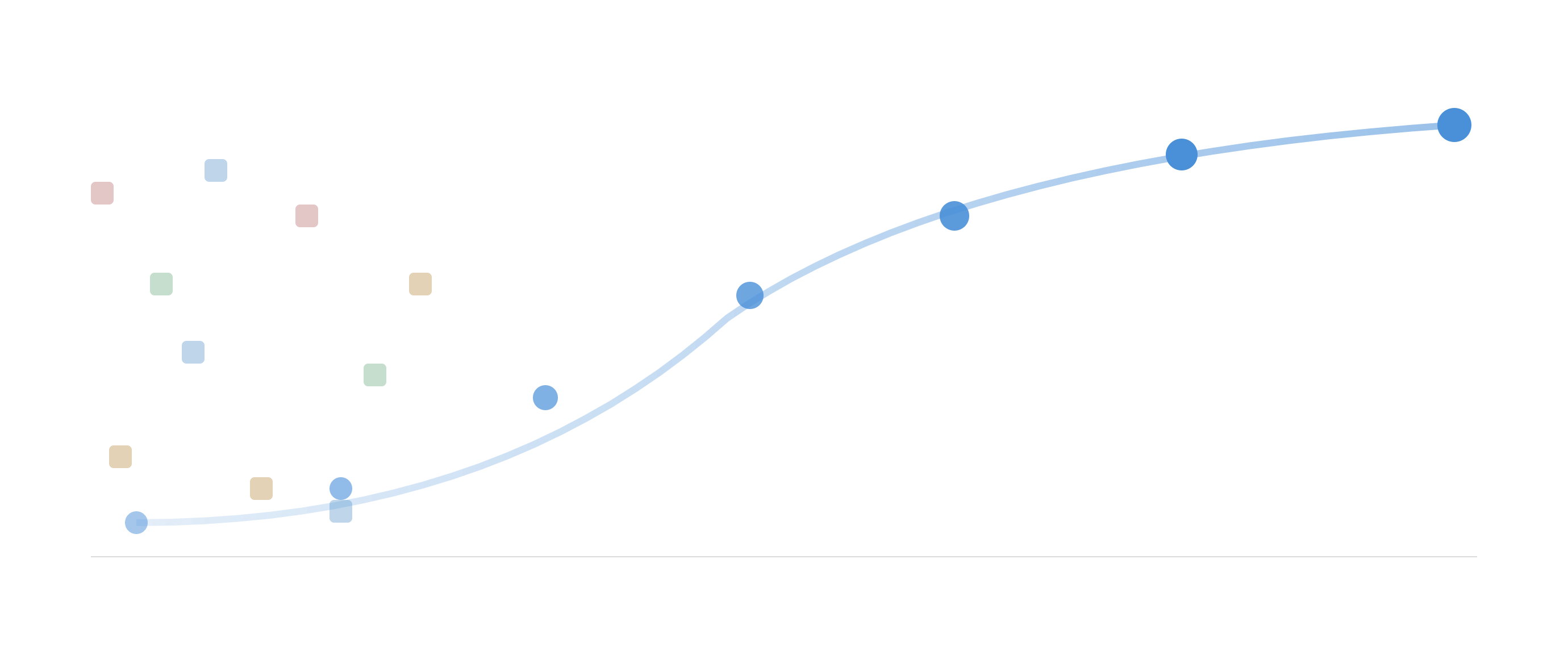
Explore how many labeled examples your text classifier truly needs before scaling up.
Before you default to an LLM API for every text classification problem, consider what a decades-old baseline can already accomplish with the labeled data you have on hand. This piece measures exactly how much more data buys you, turning guesswork into a clear, practical equation. It's a grounded, refreshingly honest look at efficiency. For those ready to move beyond theory, it pairs well with our guide on real-world computer vision deployments, where similar trade-offs shape every decision.

Test your model's foundation before trusting its results
Every model leans on assumptions, but how often do we pause to check if they still hold? This piece tackles that question head-on, arguing that reliability isn't a one-time achievement but a habit of revisiting what we take for granted. It's a sharp reminder that data work rewards curiosity over complacency. If you're building systems, this is worth your attention. For a deeper look at how similar principles apply in practice, our related article on real-world computer vision deployments offers a fitting follow-up.
Reproducibility in ML research needs a more practical path forward.
Reproducibility is drifting out of reach in machine learning, and the reasons are practical, not philosophical. Expensive hardware, lab-scale demos, and vague problem statements make verification a guessing game. When incentives reward selective results, trust erodes fast. That does not mean we abandon the effort. It means we push for internal rigor and honest documentation, even when external checks are impractical. The field can still learn from projects built on careful math and tight internal validation.
Smarter vision, smaller cost: 95% fewer tokens, same accuracy.
A 95% reduction in token usage while holding accuracy steady is the kind of number that makes you look twice. It suggests a meaningful shift in how image-based inference could be priced and scaled. The MOMA Graph benchmark is a solid start, but the real test is replication across broader datasets and stronger baselines. That is the evidence I would want before calling it significant.

Explore how OpenAI's Astra redefines speed and safety in browser use
OpenAI says Astra marks "a new frontier on computer and browser use," promising speed, accuracy, and safety. That is a bold claim, especially given how much trust we place in AI handling everyday tasks. The potential is real, but so is the skepticism. We have covered similar ground in our exploration of real-world computer vision, where deployment challenges often temper the hype. Astra deserves attention, but we should watch how it performs beyond the demo.

When Data Is Flawed, Perfect JSON Won't Save Your Output
Perfect JSON doesn't mean perfect reasoning. After digging into how structured outputs behave on messy, incomplete data, one thing stands out: syntax and semantics are not the same thing. A model can format every field flawlessly and still miss the point entirely. That gap matters. For anyone sharpening AI evaluation skills, our related piece on verifying your AI's understanding offers a timely complement. The takeaway? Structure is a tool, not a verdict.
7,000 papers leaked early: What that GitHub list actually means
A leaked GitHub link claiming to list NeurIPS accepted papers has surfaced, and it's raising more questions than answers. The HTML file reportedly contains around 7,000 submissions, some anonymized, with details that appear suspiciously accurate. If this is real, it's a significant early leak. But it's just as plausible this is a coincidence or a well-constructed guess. We'd advise caution before treating it as fact.

Understanding AI Code Estimates for Better Communication
If you've leaned on Claude for coding, you've likely noticed its time estimates can miss the mark. That's not a flaw to fix; it's a signal about how LLMs process complexity. We think that gap actually makes you a sharper communicator, pushing you to clarify scope and break work into smaller steps. It's a practical lesson in collaboration. For more on building that technical foundation, our guide to distributed training algorithms pairs well with this mindset.
When a scientific calculator becomes a platform for AI discovery
A 67% accuracy on handwritten digits sounds unimpressive, until you remember the entire model fits in your head. This builder trained a binary classifier on the Casio FX-82CE X, hand-punching weights from just six images. The architecture is brutally simple: a 3x3 grid feeding one neuron. That it works at all is a quiet win for minimalism. The real lesson? Even a clunky, manual process reveals how much signal lives in raw data.