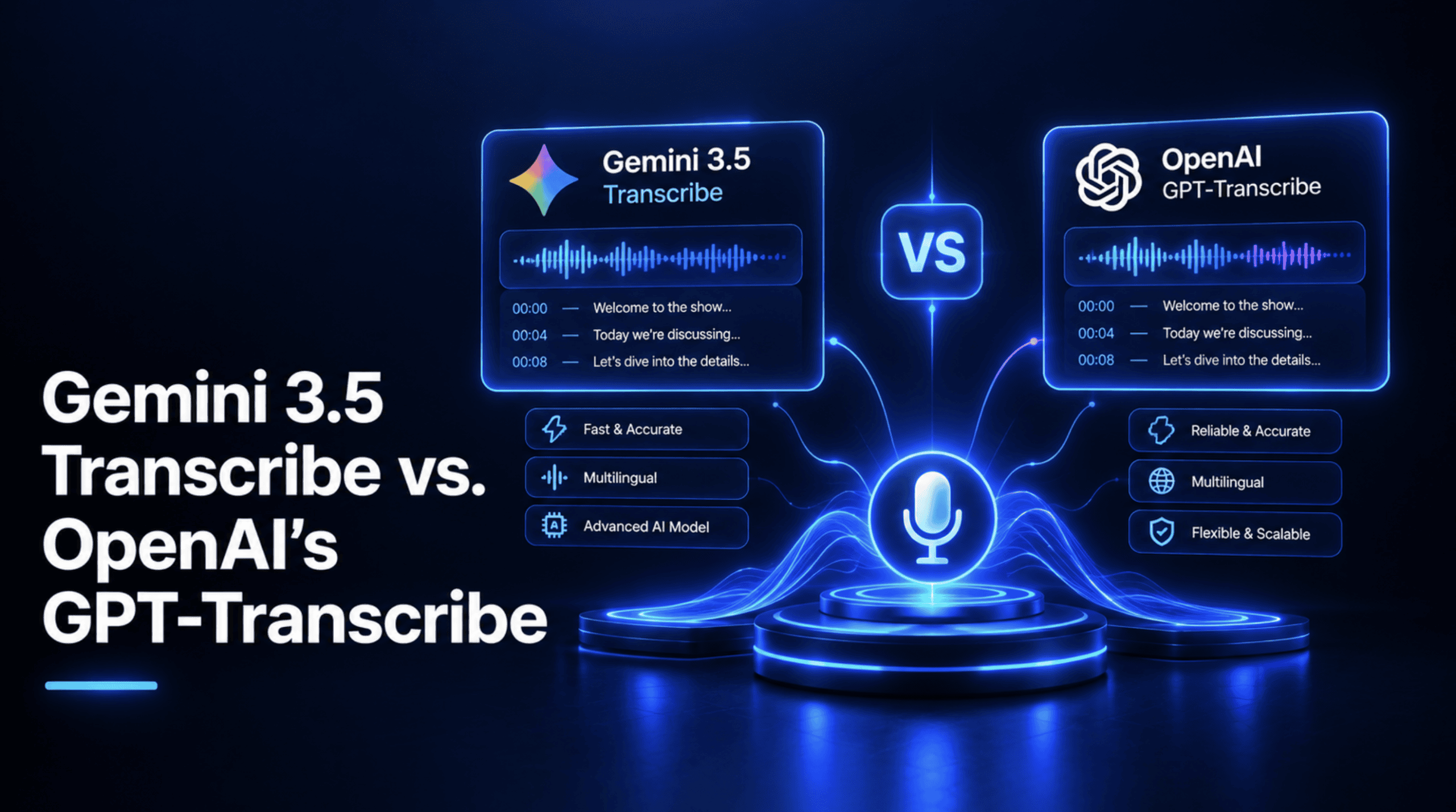
The comparison of two AI transcription tools in this article is refreshing because it focuses on the numbers that actually matter to someone doing real work. Too often, these evaluations get lost in abstract benchmark scores or marketing claims about accuracy. The article provides a concrete use case, working code, and a side-by-side look at performance metrics. This is exactly the kind of practical analysis that helps us move past hype and into informed decision-making. It connects directly to questions we have explored in other contexts, such as when Small AI Model Beats GPT-5.6 on Tax Forms but Stumbles on Dates showed that a smaller, specialized model could outperform a much larger one on a specific task while failing on something as basic as recognizing dates. That pattern resurfaces here: the best tool depends entirely on the job you need it to do.
Our take is straightforward. The article demonstrates that transcription quality is not a single number you can optimize for. Latency, cost per minute, handling of domain-specific jargon, and realistic accuracy under noisy conditions all matter. The piece lays out a workflow and code that lets you test these attributes yourself. This is the correct approach. Instead of promising a universal solution, the analysis empowers you to run your own comparison against your own data. It aligns with the thinking behind Tauon brings faster training and lower loss to AI optimization, where the focus is on practical improvements to training efficiency rather than grandiose claims. The same principle applies here: what works in a controlled demo may fail when you throw a conversation filled with industry acronyms or overlapping speakers at it. The code included in the article is your hedge against blind trust.
What we would tell a reader who asked us about this is simple. Do not choose a transcriber based on a single benchmark. Use the article's method to test both tools on your own recordings. Pay close attention to how each handles the parts of your workflow that are most critical, whether that is medical terminology, legal phrasing, or simply turn-taking in a fast-paced meeting. The one concrete takeaway worth quoting is this: transcription performance is context-dependent, and the only reliable evaluation is one you run yourself with your own data. The article gives you the tools to do exactly that, and skipping that step means accepting someone else's priorities for your use case.
The open question that lingers is about long-term consistency. Both tools performed well in the test scenario, but how do they hold up after hours of continuous audio? Does one drift in accuracy as word patterns repeat? That is a detail to watch if you plan to integrate a transcription tool into a daily workflow. The article sets a strong standard for evaluation, and the next logical step would be to apply that same rigor to extended sessions.