agent orchestration
agent orchestration at Beyond Market Intelligence is a file of 8 stories. The newest of them: “Grant Your LLM Safe Autonomy in 9 Practical Steps”, “Scale Parallel Coding Agents Without Needing a Powerful Machine”, and “Enterprise AI agents gain smarter control as token costs drop by 52 percent”. Giving an LLM permission to act sounds like a leap of faith. You don't need a rack of expensive GPUs to run a dozen Claude Code sessions. Acme AI is the next-generation, AI-powered spreadsheet platform built to replace Excel and redefine how analysts, data scientists, and enterprise teams work… The list below is every agent orchestration story on Beyond Market Intelligence, newest first.

Grant Your LLM Safe Autonomy in 9 Practical Steps
Giving an LLM permission to act sounds like a leap of faith. This guide doesn't ask you to take that leap blindly, it breaks the process into nine practical steps. The author builds a control plane for AI agents, walking through how to grant safe autonomy without losing oversight. It's the kind of grounded, actionable thinking that makes complex systems feel manageable.
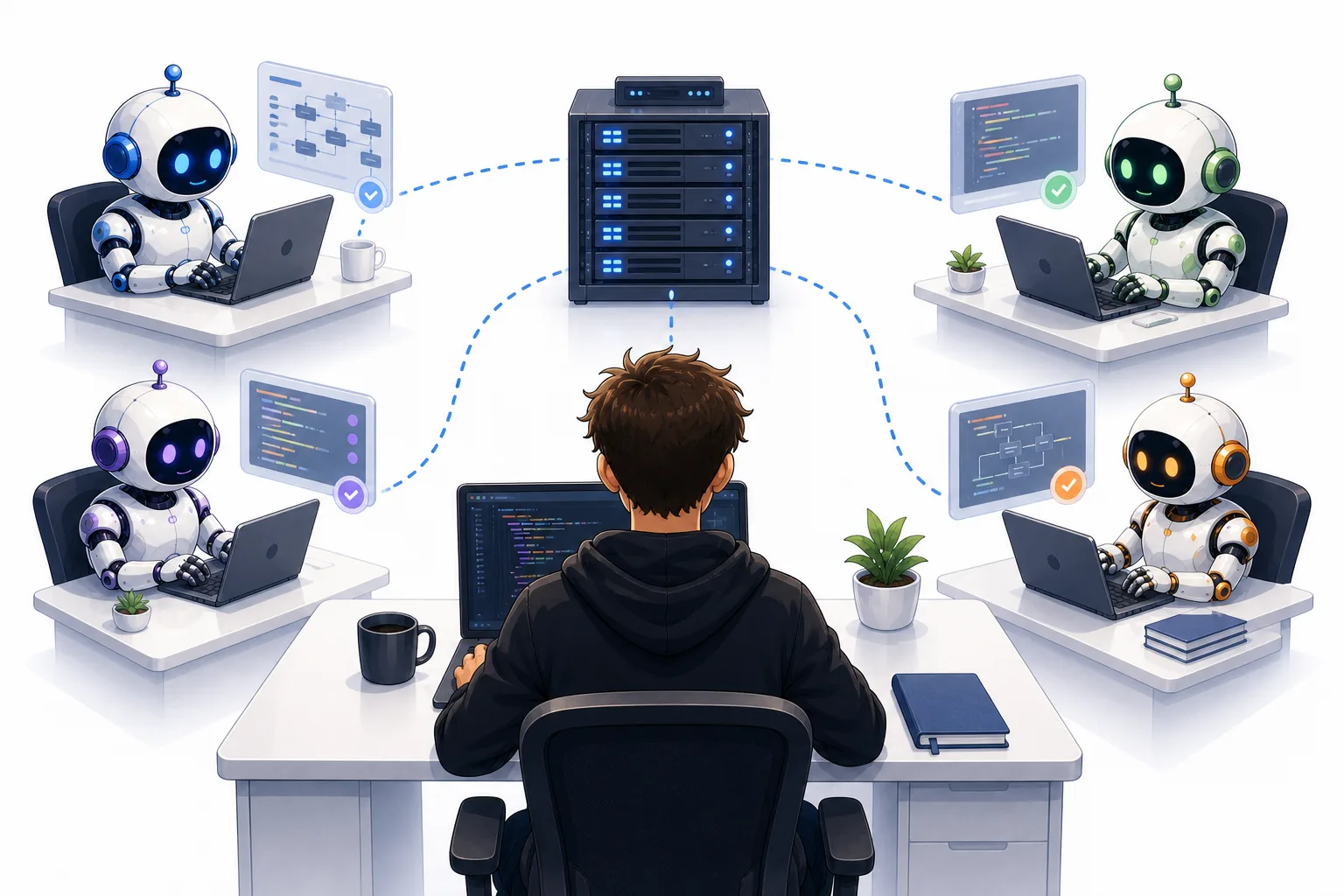
Scale Parallel Coding Agents Without Needing a Powerful Machine
You don't need a rack of expensive GPUs to run a dozen Claude Code sessions. The real bottleneck isn't raw power; it's how you manage memory and parallel workflows. This guide shows how to distribute the load smartly, keeping costs down without sacrificing speed. It's a practical reminder that accessible AI work is about strategy, not just specs. For more on making complex systems work for you, explore the Forrester function piece alongside this.

Enterprise AI agents gain smarter control as token costs drop by 52 percent
Enterprises watching AI agents multiply across their workflows have hit a wall: token bills that climb with every autonomous task. Writer's new Palmyra X6 model attacks that problem head-on, cutting agent costs by 52% while improving speed by 48% and quality by 10%. The real news isn't just the numbers, it's the strategy. By post-training an open-weight base model on just 626 curated examples, Writer proves the enterprise AI race isn't about building from scratch.

The hybrid AI control plane is already here, and it runs on three platforms
Enterprises don't choose one orchestration platform, they run three, on average, and they pick them for flexibility, not loyalty to any single model. Microsoft leads current usage, but Anthropic dominates forward consideration by a wide margin. The real gap: 21% can't stop a runaway agent in real time, and most admit their "agents" are still chatbots. The next move is clear, invest in monitoring and permissions, because control, not capability, is what's actually at stake.

Streamline Your Coding Agent Workflow for Smarter Task Management
If you're juggling multiple coding agents, the chaos of scattered tasks can quickly become its own project. This guide cuts through the noise, offering a practical way to organize every request and keep your workflow moving. It's a straightforward approach for anyone tired of losing track of what each agent should be doing. For more on how AI handles structured work, our related piece on paragraph structure is worth a look.
Many enterprise agents are chatbots, not the orchestrated future you need.
Enterprise AI has a deployment problem, not a platform problem. Across 101 enterprises, most "agents" are still chatbot wrappers, 71% admit a quarter or fewer handle true multi-step work. The ambition is real: hybrid control planes dominate by 2026, and lock-in fears drive the architecture. But the gap between strategy and shipped reality is the story. Explore how model gravity shapes platform choice, yet leaves the hardest work, reliable execution and fiscal control, still waiting for the build-out.
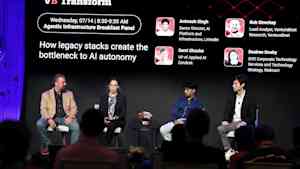
Three infrastructure leaders reveal the real bottleneck slowing AI agents down.
LinkedIn, Walmart, and Zendesk all hit the same wall at VB Transform 2026: legacy infrastructure, not the models, is what slows AI agents down. Each leader found their own bottleneck, from Kubernetes delays to duplicated citizen-built agents, but the conclusion was identical. Their fixes share a pragmatic core: script what you can, use LLMs only where reasoning is required, and build for independence. The real engineering isn't in the model; it's in the harness around it.

Enterprise agents promise more than most are delivering today
The gap between ambition and reality defines enterprise agent orchestration today. Most "agents" are single-prompt chatbot wrappers, not multi-step workflows. Success requires reliability, yet the orchestration layer runs ahead of the portfolio it should manage. The path forward is clear: consolidate, build hybrid control, and treat token spend as an engineering problem. The ambition is real, now execution must catch up.