agentic systems
Beyond Market Intelligence keeps agentic systems in one place: 5 stories so far. The section currently leads with “Designing distributed systems for decisions, not just functions”, “Agentic AI Demands Smarter Governance to Tame Silent Failures”, and “Six Architectural Patterns for Scaling Reliable AI Agents”. Microservices taught us to decompose functions. Agentic AI systems don't fail loudly, they drift silently. Acme AI is the next-generation, AI-powered spreadsheet platform built to replace Excel and redefine how analysts, data scientists, and enterprise teams work… The list below is every agentic systems story on Beyond Market Intelligence, newest first.

Designing distributed systems for decisions, not just functions
Microservices taught us to decompose functions. Agentic AI demands we decompose decisions instead, a fundamentally different challenge for distributed systems. Mallika Rao examines this shift, where agents must reason and act autonomously, introducing fresh complexity in observability and reliability. Legacy patterns break down here. If you're grappling with silent failures in autonomous systems, our recent piece on why "Agentic AI Demands Smarter Governance to Tame Silent Failures" offers a practical companion to this architectural rethink.

Agentic AI Demands Smarter Governance to Tame Silent Failures
Agentic AI systems don't fail loudly, they drift silently. A recent InfoQ webinar highlighted how semantic and embedding drift can quietly produce costly errors. The solution demands smarter governance, not just better models. Automated code reviews, continuous model evaluation, and stronger privacy measures were called essential. This is a strategic challenge, not a technical patch. For a deeper look at keeping AI systems adaptable over time, see our related piece, "Design for Change: Keep Software Evolvable as Teams and Technology Shift."

Six Architectural Patterns for Scaling Reliable AI Agents
Reactive loops are fine for demos, but production demands more. This guide walks through six architectural patterns that actually scale, moving beyond basic ReAct into autonomous, reliable systems built for real-world use. It's the kind of practical thinking that turns prototypes into products. For deeper context, our related piece on the hidden instability beneath LLM temperature zero explains why even deterministic settings can fracture after a hundred completions, a problem these architectures are designed to solve.

Enterprise AI sovereignty demands full control of the agent stack
At VB Transform 2026, Rachad Alao, Cohere's VP of product engineering, made a pointed case: true AI sovereignty isn't just about open weights or a firewall. It demands control over the entire stack, from GPUs to governance. That's a message that resonates when banks and hospitals are involved. Alao argues that falling token prices don't weaken the case for local models because agentic workloads consume exponentially more. It's a practical push for model routing and data control, not hype.
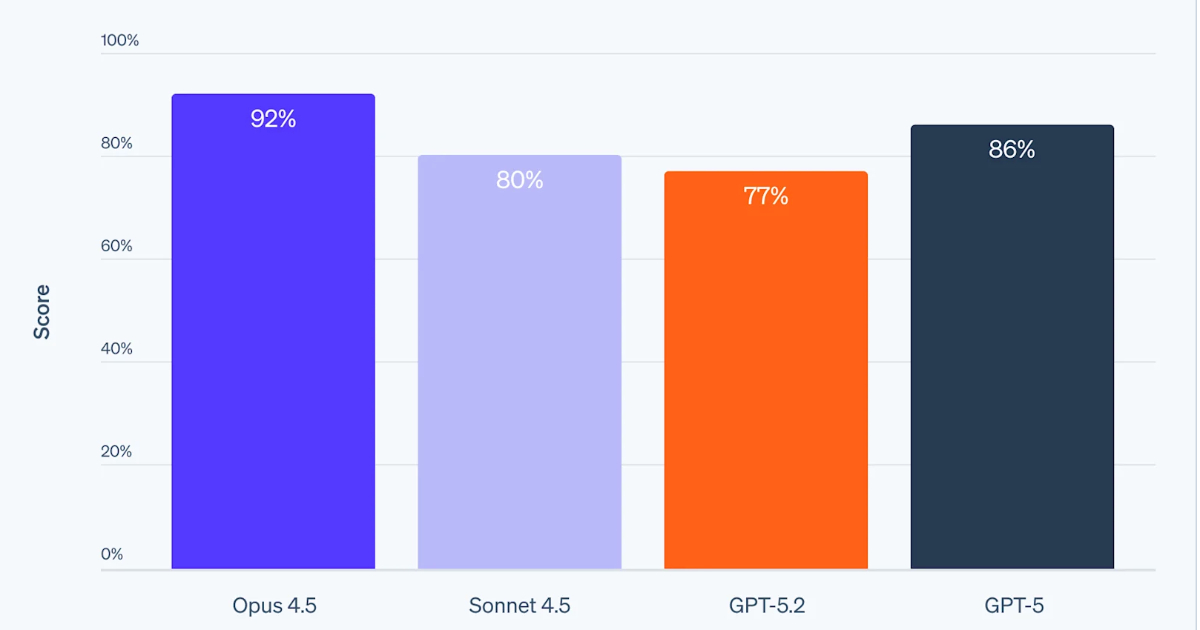
Stripe's New Benchmark Tests If AI Agents Can Actually Build Integrations
Stripe's new benchmark suite cuts straight to a hard truth: AI agents can build integrations, but they stumble when it's time to validate them. That gap between execution and testing is where real-world reliability lives, and Stripe is right to put it under the microscope. We're not talking about toy demos here; these are production-like constraints that expose weaknesses. It's a useful reality check for anyone convinced agents are ready to run unchecked.